Back to food basics: LC-MS/MS essentials
A webinar series for mass spec scientists and a practical training resource for lab managers building confident food testing teams
Welcome to LC-MS/MS essentials: back to food basics, a webinar series designed to refresh, reinforce, and rebuild essential skills in food safety testing. Whether you're just starting out or you're an experienced user of mass spectrometry, this series covers the critical foundations of analytical methods we rely on to ensure safety throughout the food supply chain.
Designed with lab managers in mind, this series also serves as a structured training resource to onboard new analysts, deliver refresher learning, and build consistent competency across the team.
Food 101: Introduction to food testing and LC-MS/MS
Speaker: Holly Lee, Staff Scientist, Food, SCIEX
Designed to help food analysts work smarter, this webinar series builds the LC-MS/MS knowledge and practical skills needed to deliver trusted results with confidence.
What you will learn:
- Why food testing is critical across the global food supply chain.
- The role of regulatory and industry bodies, and why their standards matter.
- The difference between residues and contaminants, and how LC-MS/MS helps detect them.
- A real-world case study demonstrating food contaminant analysis in action.
From contaminants to confidence: Applications of LC-MS/MS in food testing:
Speaker: Carlos Bueno, Senior Application Support Specialist, SCIEX
Learn how LC-MS/MS helps laboratories identify key food contaminants and address common testing challenges with practical solutions to improve efficiency, consistency and confidence.
What you will learn:
- How LC-MS/MS detects key food contaminants, including pesticides, mycotoxins, veterinary drugs and allergens.
- Best- practice sample preparation strategies for more reliable results across challenging matrices
- Why LC-MS/MS is the technique of choice for sensitive, selective contaminant analysis in food testing
Getting started with LC-MS/MS in your lab
Speaker: Jianru Stahl-Zeng, Senior Technical Manager, SCIEX
Take the next step in your food analysis journey with practical LC-MS/MS knowledge designed to help you work smarter, build confidence and deliver reliable results. Learn the fundamental principles behind targeted food testing and how they support efficient, high-quality analysis.
What you will learn:
- How to select the right chromatography column for your analysis.
- What MRM is, how it works, and why it's the gold standard for targeted quantitation.
- How to process LC-MS/MS data and identify compounds using retention time and ion ratios.
Roundtable: Fast track to food analysts - expert tips to trouble shoot faster
Host: Craig Butt, Senior Technical Manager, Food and Environmental
Panelists: Holly Lee, Carlos Bueno, Jianru Stahl-Zeng
Join our panel of food testing experts to discover ways to overcome common lab challenges, reduce rework, and deliver fast reliable results with confidence.
What you will learn:
- Expert tips for solving common food testing challenges to avoid costly delays.
- Best-practices to manage matrix interferences and improve data quality
- Real world insights from experiences food testing experts
Submit your question
No question is too small. No jargon required. Just insight, clarity, and expertise.

Holly Lee
Staff Scientist, Food, SCIEX
Holly completed her PhD with Prof. Scott Mabury at the University of Toronto, studying the biological and environmental processes involved in the fate of PFAS upon consumer disposal. Upon graduation, Holly worked for the Ontario Ministry of the Environment, Conservation and Parks as a senior analytical technologist before moving to SCIEX, where she spent the last 8 years working in mass spectrometry research and development, then transitioning to global technical marketing in food LC-MS/MS applications.

Carlos Bueno
Senior Application Support Specialist, SCIEX
Carlos finished his Bachelor's Degree in Chemistry in 2001. Before starting work as an applications specialist, he worked for 4 years in Madrid's doping control laboratory. Since 2023, Carlos has been with SCIEX as a Senior Application Support Specialist for EMEA. With more than 20 years of experience in Chromatography and Mass spectrometry, mostly focused on the development of applications in food and environmental markets.
Jianru Stahl-Zeng
Senior Technical Manager, SCIEX
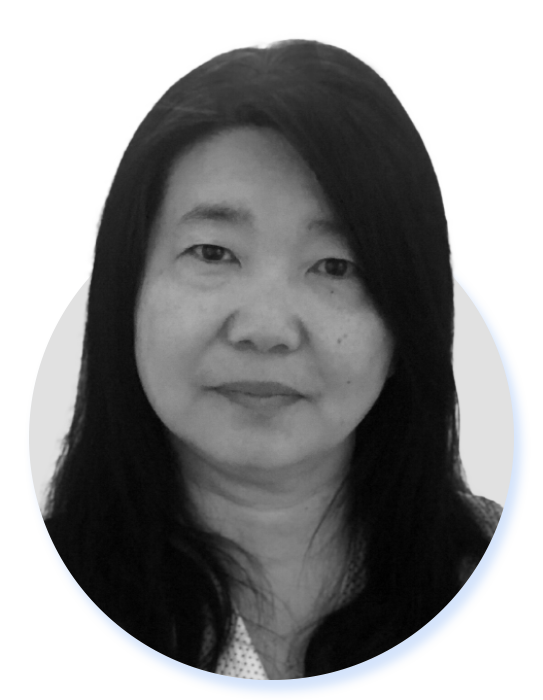
Jianru is Senior Technical Marketing Manager. She has been part of SCIEX since 2001. She initially was part of the application support team and covered not only proteomics, but also small molecules applications. Jianru moved to technical marketing and focused on food and environmental applications. Since 2018 she has been managing the EMEA technical marketing team and projects. Jianru is also the Global Technical Leader for food and environmental applications.

Craig Butt
Senior Manager, Food and Environmental
Craig M. Butt is Senior Manager of the Applied Markets group in the Global Technical Marketing division of SCIEX with over 20 years of mass spectrometry experience. Previously at SCIEX he was an applications scientist where he developed methods for targeted and non-targeted methods in the cannabis, environmental, food and beverage group. He obtained his Ph.D. in environmental chemistry at the University of Toronto, his thesis research investigated the fate of poly- and perfluorinated organic compounds (PFAS) in biological systems. He was a NSERC post-doctoral research fellow in the Nicholas School of the Environment at Duke University, later becoming a research scientist in the department.