Abstract
This technical note describes the simultaneous untargeted metabolite discovery and quantitative analysis of NIST standard reference material (SRM) 1950 plasma using the novel ZT SCAN DIA 2.0 scan mode on the ZenoTOF 8600 system.
Untargeted metabolomics has traditionally relied on data-dependent acquisition (DDA) scan modes on high-resolution mass spectrometers (HRMS) to provide a metabolic “snapshot” of biological samples. However, the stochastic selection of precursor ions and its reliance on MS-level quantitation limit reproducibility and accuracy. In complex biological matrices, data-independent acquisition (DIA; SWATH) provides comprehensive data sampling by generating MS/MS data of all precursor ions within a specified mass range that enables quantitation at the MS/MS level. However, precursor selection is governed by relatively large windows (>3 Da). Consequently, DIA-derived MS/MS data are frequently affected by chimeric signal contributions and co-isolated interferences, thereby reducing confidence in compound identification and quantitation, particularly for small-molecule omics analysis.
Recently, a novel sliding-window DIA approach—ZT Scan DIA 2.0—was introduced for the ZenoTOF 8600 system (Figure 1) that enables post-acquisition deconvolution to generate a narrower effective precursor ion selection window, greatly improving precursor ion specificity over traditional DIA, and yielding better coverage with accurate MS/MS-based quantitation.
Here, NIST SRM 1950 plasma was analyzed using multiple untargeted metabolomics workflows, including DDA and ZT Scan DIA, on the ZenoTOF 8600 system. The data were processed with MS-DIAL 5.6.200820-alpha to assess how coverage indices for the NIST 1950 plasma metabolome vary across analytical workflows. The results show that ZT Scan DIA delivers both broad coverage of the plasma metabolome and quantitative MS/MS data.
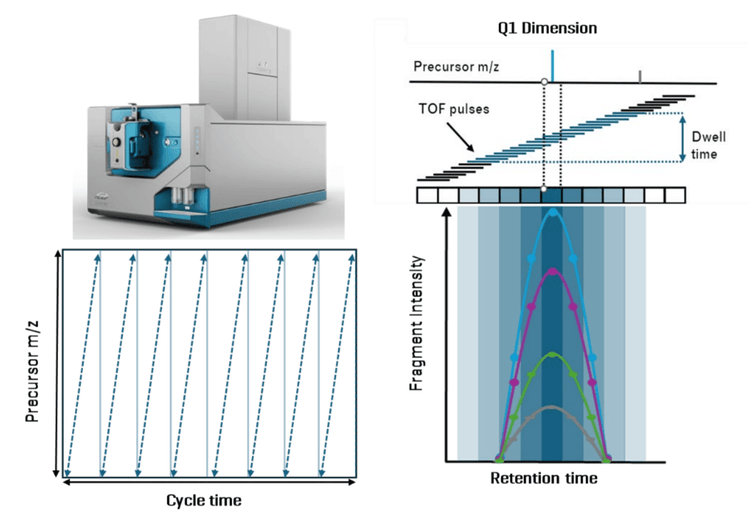
Key features for metabolomics analysis using the ZenoTOF 8600 system
- The high sensitivity and speed of the ZenoTOF 8600 system provide broad metabolic coverage with high confidence using the ZT Scan DIA 2.0 workflow
- ZT Scan DIA 2.0 produces MS/MS-level quantitative data, enabling a higher degree of specificity and accuracy relative to DDA
- The effective Q1 resolution of deconvoluted ZT Scan DIA data is ~ 1.7 Da, which enables post-acquisition data queries with targeted lists of metabolites
Introduction
Metabolomics continues to evolve as a powerful analytical strategy for understanding the chemical state of biological systems [1-3]. By enabling broad, untargeted profiling of endogenous metabolites, mass spectrometry–based metabolomics provides a qualitative and potentially quantitative view of cellular metabolism across diverse sample types. As studies move toward increasingly complex matrices, the demand for greater coverage, higher-quality MS/MS data, and precise quantitation has grown. Modern high-resolution QTOF instruments address many of these needs through improved speed, sensitivity, and linear dynamic range. However, continued advances in data acquisition strategies remain essential for improving data clarity and confidence.
Historically, untargeted metabolomics has relied primarily on DDA-based analyses for metabolite identification. DDA generates selective MS/MS spectra based on precursor ion abundance, enabling compound identification through database searching. However, its stochastic sampling limits reproducibility and MS/MS coverage, especially in complex mixtures where lower-abundance metabolites are often missed. Another drawback of the DDA workflow is that it does not quantify molecules at the MS/MS level, which compromises specificity and quantitative accuracy. These limitations have driven a shift toward the adoption of DIA strategies, which fragment all ions within defined m/z windows, yielding more comprehensive and consistent MS/MS datasets suitable for both qualitative and quantitative analysis.
The development of the Zeno trap [4], an ion accumulation and pulsing device, has ushered in a new era of sensitivity for accurate mass spectrometry (Figure 1). When activated, the Zeno trap boosts MS/MS sensitivity, delivering a reported 4-20x improvement for SWATH DIA workflows [5]. ZT Scan DIA (Zeno Trap–enabled Scanning DIA) builds on this capability by combining a continuously scanning quadrupole with Zeno-trap ion-pulsing to significantly enhance MS/MS sensitivity, thereby improving quantitative accuracy and coverage depth [6]. Unlike conventional DIA approaches, in which fragment ions may originate from multiple co-isolated precursor ions, the ZT Scan DIA workflow assigns fragments to near-unit-resolution precursor bins, thereby substantially reducing chimeric spectra. ZT Scan DIA 2.0 was specifically designed for high-confidence small-molecule analysis. (For simplicity, this workflow will be referred to generically as ZT Scan DIA throughout this report.) Unlike traditional DIA methods that rely on fixed or variable isolation windows, ZT Scan DIA uses a sliding precursor-ion selection window. This approach enables post-acquisition deconvolution to improve precursor specificity, reduce false-positive compound identification, and enhance quantitative robustness—critical advantages for small-molecule omics where iso-baric overlap and matrix interferences are common. ZT Scan DIA has previously demonstrated enhanced quantitative coverage in proteomics (6); the experiments described in this report focus on small molecules, particularly polar metabolites.
Here, the NIST SRM 1950 plasma extract was analyzed on the ZenoTOF 8600 system to compare untargeted metabolomics using DDA and ZT Scan DIA. The NIST SRM 1950 plasma is a well-characterized biological sample commonly used for quality control in metabolomics analyses [7]. Experiments were also conducted on the ZenoTOF 7600+ system for benchmarking, but these results are not the focus of this report. The quantitative power of ZT Scan DIA is also demonstrated, enabling quantitation of metabolites at the MS/MS level and providing a digital record of the sample from which targeted compound lists can be extracted retrospectively for quantitative analysis.
Materials and methods
Sample preparation: NIST SRM 1950 plasma was extracted with 4 volumes of ice-cold methanol and vortexed for 10 s. A 1:10 volume equivalent of QReSS internal standards to plasma was added, and the sample was vortexed for 10s. The mixture was allowed to rest for 1 hr at 4 ºC, vortexed again for 10 s, centrifuged at 15,000 × g for 10 min, and the supernatant was decanted. The supernatant was dried under a stream of nitrogen, and the metabolites were resuspended in water containing 0.1% formic acid to a final concentration of 1 µL of extract per 0.2 µL of plasma equivalents. The solution was directly analyzed by high-performance liquid chromatography electrospray ionization tandem mass spectrometry (HPLC-ESI-MS/MS) using a 0.5 µL plasma-equivalent on-column injection (2.5 µL injection). The QReSS internal standards (Vial 1) were purchased from Cambridge Isotope Laboratories, and the stock solutions were prepared according to the manufacturer’s instructions [8].
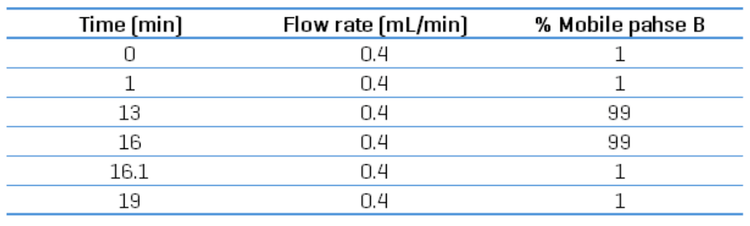
Chromatography: Samples were analyzed using an Exion LC system with an Acquity Premier CSH Phenyl-Hexyl column (1.7 µm, 2.1 x 100 mm; Waters). Mobile phase A was 0.1% formic acid in water, and mobile phase B was 0.1% formic acid in methanol. A simple linear gradient from 0 to 99% B was used at a flow rate of 0.4 mL/min. The HPLC rinse solvent was water/methanol/iso-propanol/acetonitrile (1:1:1:1, v/v). The gradient conditions are shown in Table 1. A 2.5 µL injection was used (0.5 µL plasma equivalents), and the column temperature was maintained at 50°C. The total runtime was 19 min.
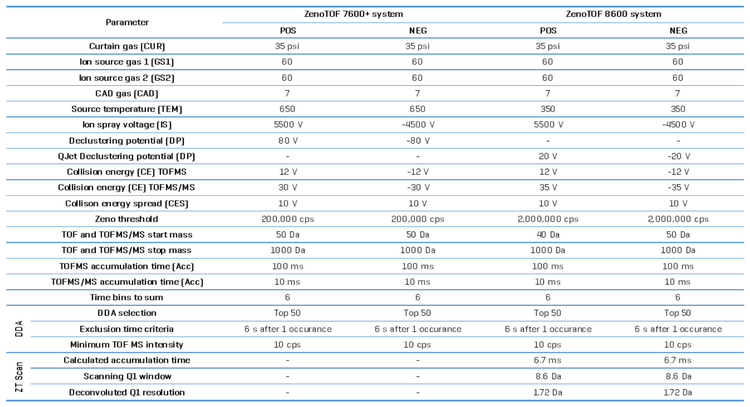
Mass spectrometry: Metabolomics analysis of NIST SRM 1950 plasma extracts was performed using two instruments: the ZenoTOF 7600+ and 8600 systems. Instrument calibration was maintained using the automated calibrant delivery system (CDS), which calibrated every five samples with an ESI calibration solution specific to the positive- or negative-ion mode (ZenoTOF 7600+ system) or with the new universal calibration solution for both modes (ZenoTOF 8600 system). DDA and ZT Scan DIA experiments were performed using collision-induced dissociation (CID) in the positive- and negative-ion modes. Instrument parameter settings are listed in Table 2.
The systems were configured for CID-based DDA experiments to select the top 50 most abundant ions for fragmentation. Dynamic background subtraction (DBS) with a mass tolerance of 50 mDa was applied to both experiments to minimize noise and maximize the MS/MS quality. Once a precursor ion was selected and fragmented, it was dynamically excluded from candidate selection for 6 s. The TOFMS accumulation time was set to 100 ms, and the accumulation time for the dependent TOF MS/MS analysis was 10 ms. A detailed description of the ZenoTOF 7600 system instrument parameters and their relevance to metabolomics DDA experiments has been previously published (9); the parameter descriptions therein apply to the ZenoTOF 7600+ and 8600 systems.
ZT SCAN DIA experiments are designed similarly to SWATH experiments in that a window size is chosen. In the SCIEX OS software, a sliding scale is provided that emphasizes coverage vs. selectivity. Choosing a narrow window size (i.e., high selectivity) improves the deconvoluted Q1 resolution, potentially at the expense of coverage. To calculate the Q1 window size that is achieved after deconvolution, divide the sliding window size by 5. In these experiments, the window was set as narrowly as possible (8.4 Da), corresponding to a Q1 window size of ~1.75 Da. Note that the duty cycle and accumulation times depend on the window size, and the method automatically calculates their effects.
To simplify data analysis in MS-DIAL software, ensure that data for each injection are saved to a separate data file. MS-DIAL software does not parse each experiment within an aggregate data file, so the data are processed as a composite, with a single results file generated. To separate individual experiments from a data file when multiple experiments have been saved under the same data file name, two tools are available to split them into separate results files: ProteoWizard (https://proteowizard.sourceforge.io/) and the SCIEX MS Data Converter 2.0.1, available at SCIEX.com. When converting, the data format output should be centroid.
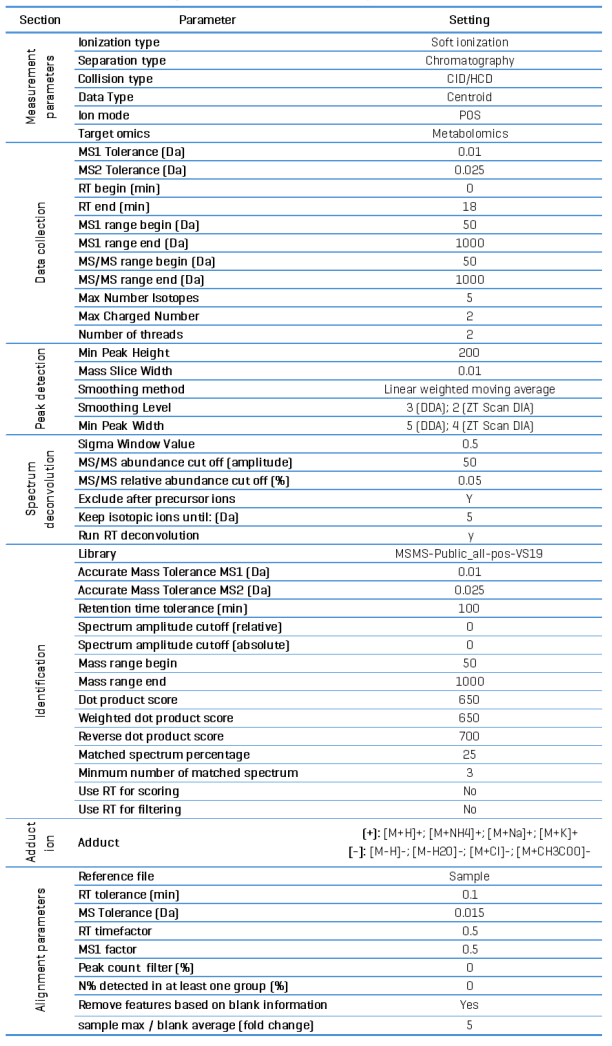
Data processing: Data acquired from DDA and ZT SCAN DIA experiments were processed using MS-DIAL 5.6.082520-alpha software, which will be referred to generically as MS-DIAL 5.6 in this report. This version of MS-DIAL, available at the MS-DIAL website (https://systemsomicslab.github.io/compms/msdial/main.html), was adapted from the MS-DIAL 5.5 versions to process ZT SCAN DIA data.
The software processes DDA and SWATH data analysis as in the 5.5 versions [10,11], but MS-DIAL 5.6 can deconvolute ZT Scan DIA data to resolve the Q1 dimension and improve the correlation between the TOFMS and its corresponding TOF MS/MS spectrum. This is particularly important for small-molecule DIA data analysis, where convolved spectra make it difficult to unambiguously identify metabolites.
Optimal data processing settings for MS-DIAL 5.6 were determined through an iterative process using DDA data (Table 3). The same settings were applied to ZT Scan DIA data, except for 2 smoothing parameters, as indicated. The overall optimization process was governed by varying settings to achieve optimal results and maximize the number of high-quality reference-matched metabolites.
In MS-DIAL, quality scoring is governed by an algorithm that combines multiple dot-product variants (i.e., dot product, reverse dot product, and weighted dot product), mass accuracy, and retention time to generate a composite quality score [10]. For this work, we focused on metabolites with quality scores of 1.6 or higher. This value was identified as a suitable threshold for reliable compound identification through manual inspection of the data. Referencing the raw data for confirmation is an approach that should be applied to all metabolomics data, regardless of the processing software used. Here, the different dot-product scores were adjusted so that the number of reference-matched metabolites, which depends heavily on these scores, approximated the number of metabolites with quality scores ≥ 1.6.
Quantitative data processing was performed using the SCIEX OS software Analytics module. DDA data can be used for quantitation at the TOFMS level, and ZT Scan DIA data provide quantitative measurements based on the MS/MS data.
Processed metabolomics results were visualized using MS-DIAL 5.6 software and the Explore and Analytics modules of SCIEX OS, respectively.
Results
DDA analysis of NIST SRM 1950 plasma
The value and strength of untargeted metabolomics come from its ability to identify molecules in complex biological matrices. The quality of an experiment is assessed by metabolite coverage, which depends heavily on the instrument's speed, sensitivity, linear dynamic range, and the precursor ion selection criteria. The ZenoTOF series of instruments features a detector that processes signals at 133 Hz. In practice, this speed corresponds to ~ 100 MS/MS events per second while maintaining a constant mass resolution of >35K. This speed enables DDA experiments to be designed with more dependent scans, which generally translates into better coverage. Here, a Top 50 strategy was used, previously identified as optimal for the ZenoTOF 7600 system [9]. Zeno trap pulsing improves the instrument duty cycle to >90%, thereby dramatically increasing sensitivity. For the ZenoTOF 7600+ system, the instrument sensitivity is ~10X higher than that of previous-generation QTOF instruments, and the ZenoTOF 8600 system is ~ 10X more sensitive than the ZenoTOF 7600 system. Greater sensitivity enables better detection of low-abundance molecules, with the ZenoTOF 8600 system achieving the best coverage.
NIST SRM 1950 plasma extracts were analyzed by DDA analysis. Using MS-DIAL 5.6 software with the parameter settings listed in Table 3, metabolites were identified from DDA data acquired on the ZenoTOF 7600+ and 8600 systems in the positive and negative ion modes. The results are summarized in Table 4. The data revealed 258 reference-matched metabolites across the two ionization modes. This number, however, is potentially misleading unless the results are manually curated and confirmed. It is this truism that makes comparative metabolomics challenging, particularly between different instruments. Unless there is clear, open disclosure of how the data are acquired and processed, the absolute numbers of metabolites reported are somewhat meaningless. It is for this reason that the metabolomics and lipidomics communities do not seem to have embraced the total number of analytes identified as the final measure of a small molecule omics experiment. Rather, it is the quality of the data and the data processing that generate confidence in the experimental results. With high-quality data and transparency into the specifics of data processing, confidence in the results can also be high.
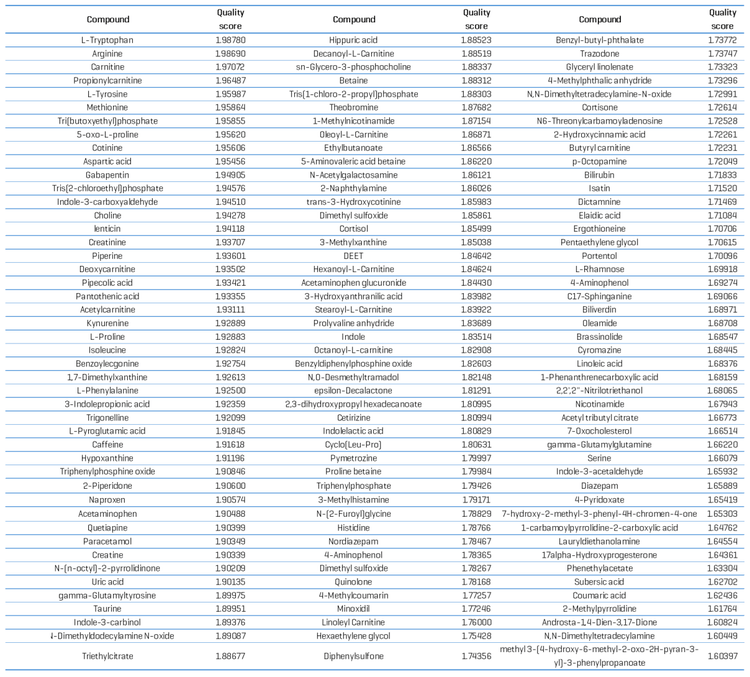
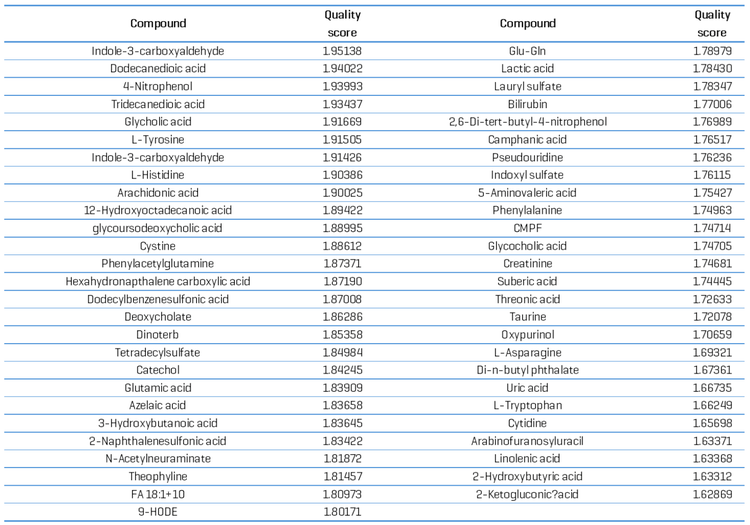
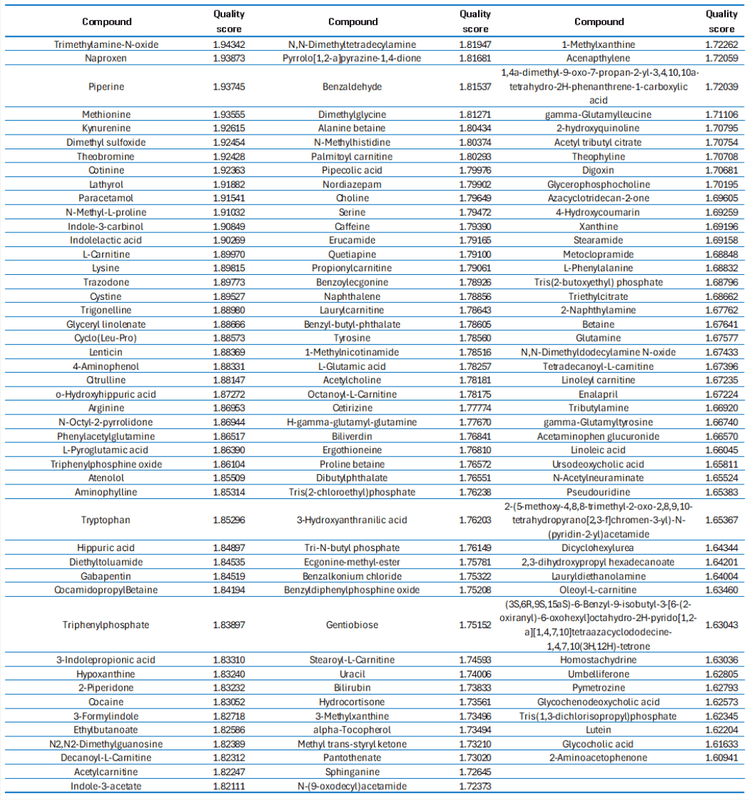
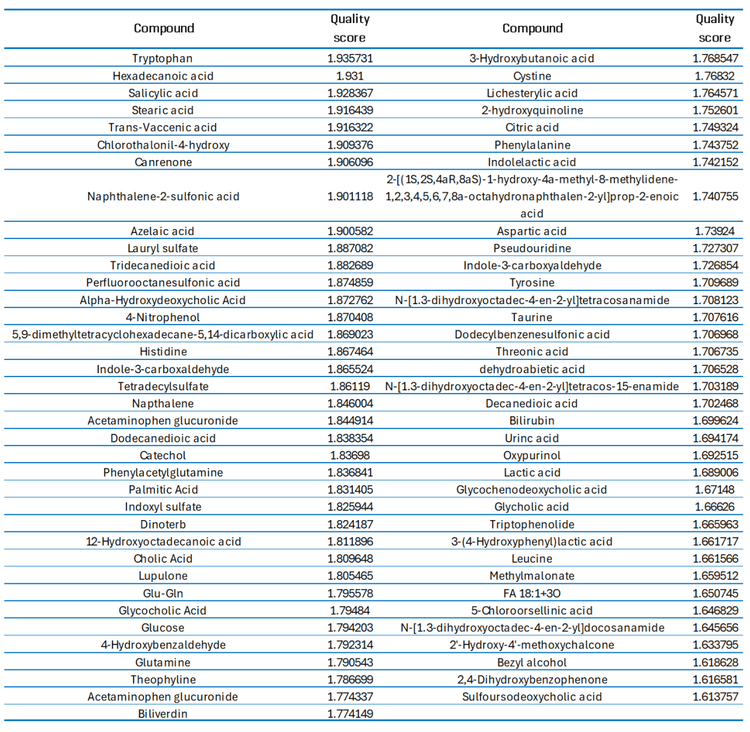
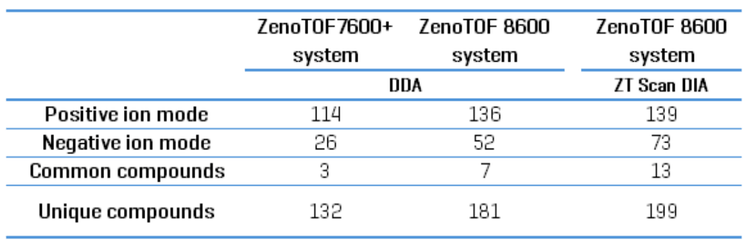
Upon close inspection, the initial DDA results obtained directly from MS-DIAL 5.6 [summarized in Table 4] contain duplicate entries due to inconsistent nomenclature in the compound database. The results also include complex lipids (e.g., PC, LPC, and PE) for which the extraction procedure was not optimized and were not the primary targets in these metabolomic studies. Consequently, complex lipids, phthalates, and duplicates were removed from the list of reference-matched compounds. Additionally, metabolites with quality scores below 1.6 were excluded. To further improve confidence, each qualified compound was manually inspected in MS-DIAL 5.6 and/or SCIEX OS. After curation, the initial set of 258 reference-matched compounds was reduced to 181 unique compounds (Table 5). These compounds are listed in Table 6 (positive ion mode) and Table 7 (negative ion mode). The compound names with their respective quality scores are provided. In some cases, compound names provided by the processing software were simplified or corrected for spelling.
The same samples were analyzed by DDA analysis using the ZenoTOF 7600+ system. The results generated by these data using MS-DIAL 5.6 software were subjected to the same rigid standards as the data acquired on the ZenoTOF 8600 system. There were fewer curated matches (132 vs. 181; Table 5), which is attributed to the higher sensitivity of the ZenoTOF 8600 system and has been shown previously with the ZenoTOF 7600 system [12,13]. A comprehensive list of identified compounds using the ZenoTOF 7600+ system is not shown.
Analysis of NIST SRM 1950 plasma using
ZT Scan DIA 2.0 ZT Scan DIA offers two significant advantages over the conventional DIA techniques, SWATH and Zeno SWATH. First, SWATH-based DIA requires that the collision cell be emptied between MS/MS acquisitions for each discrete DIA window, resulting in an overhead of 1-2 ms per MS/MS event (6). As the acquisition speed increases, this cumulative overhead time requirement can reduce the overall duty cycle. In contrast, the ZT Scan DIA approach does not have this limitation, enabling higher duty cycles even at high acquisition speeds. Secondly, in conventional DIA, fragment ions can be assigned to precursors only if their retention times fall within the width of the Q1 transmission window. However, ZT Scan DIA overcomes this limitation through deconvolution, which enables more accurate correlation between the precursor ion and the MS/MS spectrum. During analysis, each fragment becomes visible when the quadrupole transmits the leading edge of the precursor ion m/z and disappears when the trailing edge of the quadrupole mass range passes it (Figure 1). Thus, fragments can be mapped to the precursors, which adds the Q1 dimension to the m/z, intensity, and RT dimensions. The Q1 dimension from ZT scan DIA data is used to distinguish precursor signal from interferences with a different m/z that can come from internal fragmentation and adducts, or losses occurring at low collision energy. It also helps reduce interference from co-eluting isobaric analytes, contaminants, and high background noise, which adversely affect analyte quantitation, especially at the MS level, even with very high-resolution instruments.
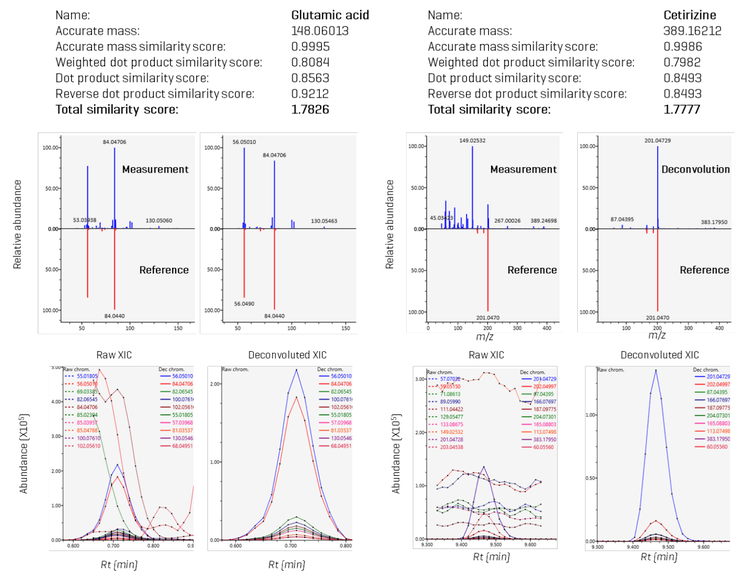
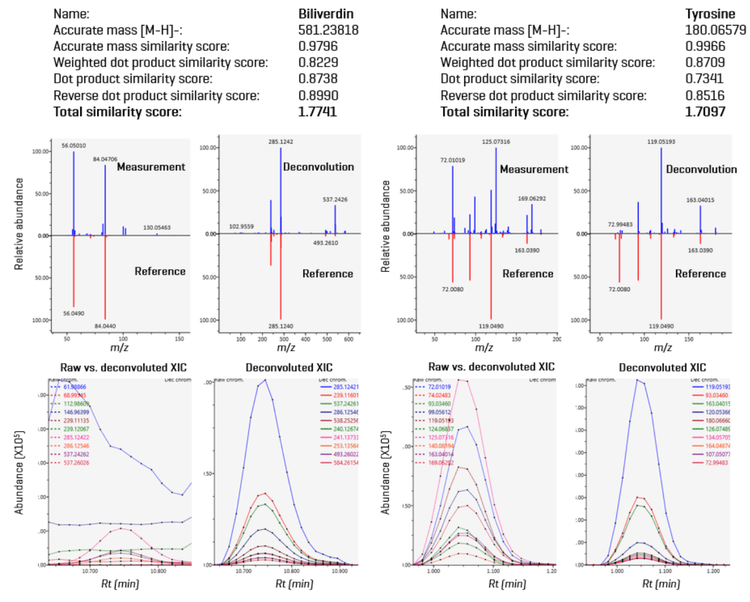
A similar figure is shown for the ZT Scan DIA analysis in negative ion mode (Figure 4), with the compounds biliverdin and tyrosine highlighted. As shown in the positive ion mode, the panels demonstrate the power of Q1 deconvolution to improve the quality of metabolomics data and subsequent identification.
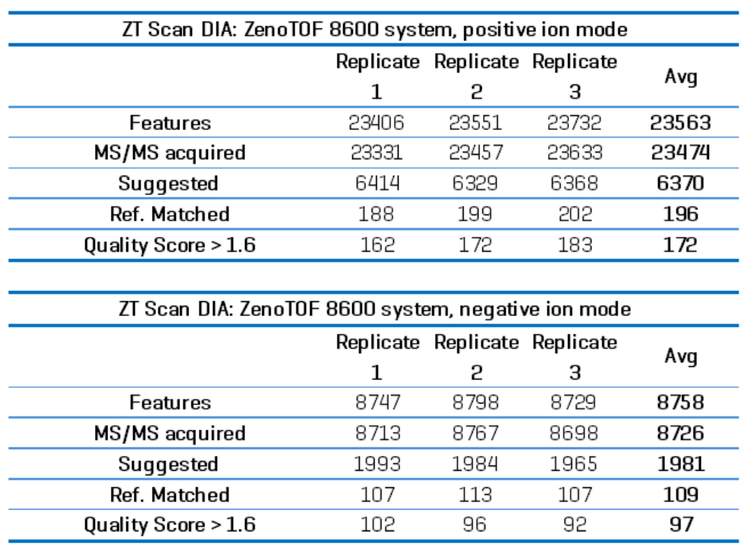
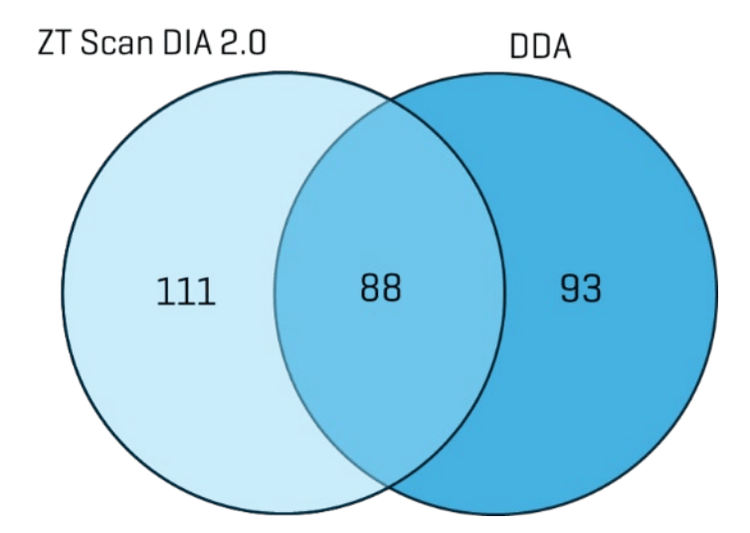
An overall summary of the DDA- and ZT Scan DIA-based analyses is presented in Table 11. The greatest difference in the number of curated, reference-matched compounds across the experiments was between the DDA experiments run on the ZenoTOF 7600+ and 8600 systems. The improved coverage of the ZenoTOF 8600 system is attributed to its higher sensitivity [12,13]. The results from DDA and ZT Scan DIA runs on the ZenoTOF 8600 system were similar, with a modest improvement for the DIA approach. The greatest difference, however, lies in the ability to directly use ZT Scan DIA data for quantitative analysis at the MS/MS level, a workflow not possible with DDA-based data.
Quantitative analysis of metabolites derived from ZT Scan DIA data
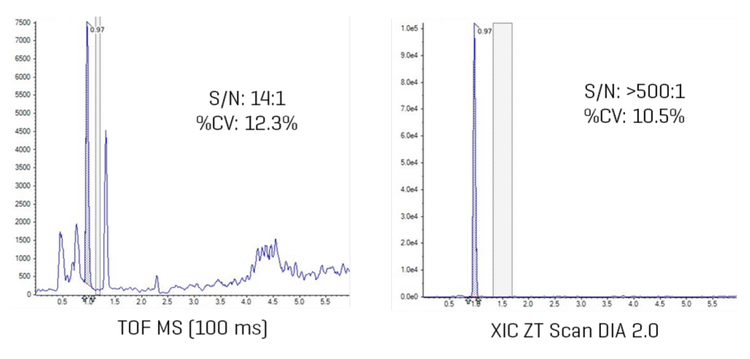
The traditional discovery experimental workflow for metabolomics, DDA, is effective at identification, provided there is an adequate library against which to search, but it falls short in providing highly specific and accurate quantitative information about the molecules. Due to the stochastic nature of DDA precursor targeting, an ideal experiment acquires 1-2 spectra per compound. This is appropriate for compound coverage but does not provide quantitative data at the MS/MS level. In DDA workflows, quantitation is typically performed at the TOFMS level, where co-eluting and isobaric species contribute to elevated baselines and chimeric signals, reducing signal-to-noise and specificity. Quantitation using product ions is more compound-specific than TOF MS data alone, regardless of instrument resolution, because of the high isobaric overlap in small-molecule omics experiments. ZT Scan DIA data provide both types of information: qualitative for compound identification and quantitative at the MS/MS level for specific and accurate quantitation.
A visual comparison of the differences between quantitative analysis of compounds using DDA (TOFMS level) and ZT Scan DIA (TOF MS/MS level) is shown for pseudouridine (Figure 5). The left panel displays the XIC from a survey TOFMS scan, which is typically used for quantitation in DDA experiments. The baseline is high, indicated by the low signalto-noise ratio (S/N), and several other peaks co-isolate within the 10 mDa mass window of pseudouridine. The right panel shows the XIC from ZT Scan DIA MS/MS data, with only one major peak, exhibiting much higher S/N than the TOFMS XIC.
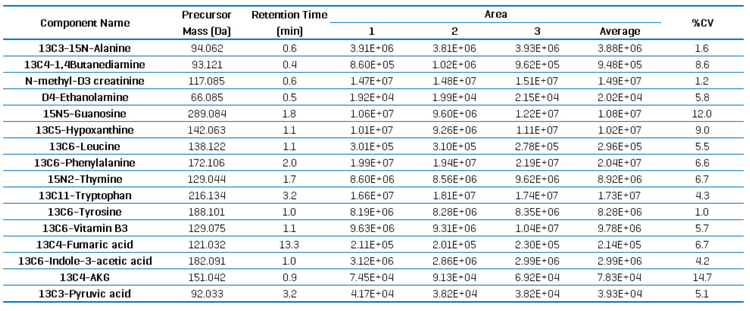
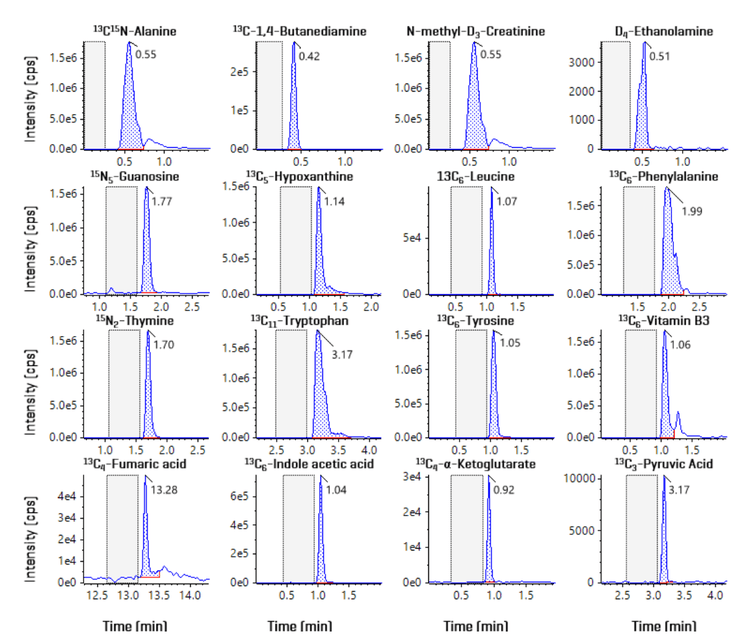
To test the ability of ZT Scan DIA to quantify compounds, a target list was generated for the QReSS standards added during plasma extraction. For this demonstration, the positive ion mode ZT Scan DIA data were used. In the Analytics module of SCIEX OS software, the accurate precursor and fragment masses were entered into the target list, and the data were processed as usual to generate a results file, summarized in Table 12. The compounds extracted from the ZT Scan DIA data were confirmed by precursor and product ion masses and their retention times in a separate MRMHR (high-resolution MRM) experiment with neat standards on the ZenoTOF 7600+ system (data not shown). The average of 3 replicate injections yielded % CV values < 20%. The integrated peaks for each compound are shown in Figure 6.
Although this report presents an untargeted metabolomics analysis, the ability to query ZT Scan DIA data post-acquisition makes this workflow targeted as well. The data file collected during analysis is essentially a digital record of the sample, containing all precursor ions within the specified mass range, along with their respective MS/MS spectra. As shown in Table 8, the number of features is very close to the number of MS/MS spectra acquired. Due to the sliding Q1 window used in analysis, the effective width of Q1 is 1.75 Da, which is significantly smaller than the widths of the fixed or variable windows used in traditional SWATH. This makes it much easier to correlate a precursor ion with its MS/MS spectrum. As technology evolves, the potential for an even smaller window at or below unit-mass resolution could eliminate the need to run dedicated MRMHR experiments in a targeted assay. That data would already have been acquired during the ZT Scan DIA analysis and would be available for retrospective data analysis. These same data can, as demonstrated here, be processed with MS-DIAL 5.6 to potentially identify other metabolites of interest.
Conclusions
In summary, the ZenoTOF 8600 system was used to collect untargeted metabolomics data with two methods: DDA and ZT Scan DIA 2.0. The ZenoTOF 8600 identified more curated compounds than the ZenoTOF 7600+ because of its higher sensitivity and ability to detect lowerabundance molecules. ZT Scan DIA resulted in a modest increase in the number of identified compounds and produced data that can be quantified at the MS/MS level. Another goal of this study was to clarify how the data were acquired and processed, and to provide a full report of the results to showcase data quality. Comparing results across different platforms can be challenging, especially in metabolomics, where there is little standardization, and various software platforms and databases are used, making data processing largely opaque. Instead of focusing only on the number of metabolites identified, this work emphasizes the importance of data transparency, precursor specificity, and MS/MS-level quantitation to build confidence in untargeted metabolomics results.
- Optimized parameter settings for MS-DIAL 5.6-alpha software were identified and used in the analysis of DDA and ZT Scan DIA workflows
- The ZT Scan DIA workflow generated a modest 10% increase in metabolite identification compared to DDA, but it also generated highly specific and accurate MS/MS-based quantitative data for the identified compounds
- Deconvolution of ZT Scan DIA data significantly decreased chimeric spectral overlap, improving the correlation between the precursor and product ion spectra
- ZT Scan DIA data can be probed with targeted compound lists to generate MRM – like quantitative results
References
-
Broeckling, C. D., Beger, R. D., Cheng, L. L., Cumeras, R., Cuthbertson, D. J., Dasari, S., Davis, W. C., Dunn, W. B., Evans, A. M., Fernández-Ochoa, A., Gika, H., Goodacre, R., Goodman, K. D., Gouveia, G. J., Hsu, P. C., Kirwan, J. A., Kodra, D., Kuligowski, J., Lan, R. S., Monge, M. E., … Mosley, J. D. (2023). Current Practices in LC-MS Untargeted Metabolomics: A Scoping Review on the Use of Pooled Quality Control Samples. Analytical chemistry, 95(51), 18645–18654. https://doi.org/10.1021/acs.analchem.3c02924
-
Defossez, E., Bourquin, J., von Reuss, S., Rasmann, S., & Glauser, G. (2023). Eight key rules for successful datadependent acquisition in mass spectrometry-based metabolomics. Mass spectrometry reviews, 42(1), 131–143. https://doi.org/10.1002/mas.21715
-
Hajnajafi, K., & Iqbal, M. A. (2025). Mass-spectrometry based metabolomics: an overview of workflows, strategies, data analysis and applications. Proteome science, 23(1), 5. https://doi.org/10.1186/s12953-025-00241-8
-
Chernushevich, I. V., Merenbloom, S. I., Liu, S., & Bloomfield, N. (2017). A W-Geometry Ortho-TOF MS with High Resolution and Up to 100% Duty Cycle for MS/MS. Journal of the American Society for Mass Spectrometry, 28(10), 2143– 2150. https://doi.org/10.1007/s13361-017-1742-8
-
Zeno trap: Defining new levels of sensitivity. (2021) SCIEX white paper, RUO-MKT-19-13373-B. https://sciex.com/content/dam/SCIEX/pdf/brochures/zenotrap-whitepaper.pdf
-
Sayers, R, Tran, K, and Walsh, N. Continuing the data independent acquisition (r)evolution: Introducing ZT Scan DIA for quantitative proteomics. SCIEX white paper MKT-31731- A. https://sciex.com/content/dam/SCIEX/pdf/technotes/technology/ztscan-dia-introduction.pdf
-
Rupasri Mandal, Jiamin Zheng, Lun Zhang, Eponine Oler, Marcia A. LeVatte, Mark Berjanskii, Matthias Lipfert, Jun Han, Christoph H. Borchers, and David S. Wishart. Comprehensive, Quantitative Analysis of SRM 1950: the NIST Human Plasma Reference Material Analytical Chemistry 2025 97 (1), 667- 675. https://doi.org/10.1021/acs.analchem.4c05018
-
Metabolomics QReSS Kits for Untargeted and Targeted Mass Spectrometric Analysis. Cambridge Isotope Laboratories, Inc white paper https://cil.showpad.com/share/nT9aGsCAtXpVid9wEdRzl
-
Baker, PRS and Proos, R. [2022] Untargeted data-dependent acquisition (DDA) metabolomics analysis using the ZenoTOF 7600 system. SCIEX white paper RUO-MKT-02-15367-A. [https://sciex.com/content/dam/SCIEX/pdf/tech-notes/lifescience-research/metabolomics/RUO-MKT-02-15367- A_Untargeted_Metabolomics_on_the_ZenoTOF_7600_Instrum ent_Final_to_Kapost.pdf](https://sciex.com/content/dam/SCIEX/pdf/tech-notes/life-science-research/metabolomics/RUO-MKT-02-15367-A_Untargeted_Metabolomics_on_the_ZenoTOF_7600_Instrument_Final_to_Kapost.pdf "https://sciex.com/content/dam/SCIEX/pdf/tech-notes/lifescience-research/metabolomics/RUO-MKT-02-15367- A_Untargeted_Metabolomics_on_the_ZenoTOF_7600_Instrum ent_Final_to_Kapost.pdf
")
-
Takeda, H., Matsuzawa, Y., Takeuchi, M., Takahashi, M., Nishida, K., Harayama, T., Todoroki, Y., Shimizu, K., Sakamoto, N., Oka, T., Maekawa, M., Chung, M. H., Kurizaki, Y., Kiuchi, S., Tokiyoshi, K., Buyantogtokh, B., Kurata, M., Kvasnička, A., Takeda, U., Uchino, H., … Tsugawa, H. (2024). MS-DIAL 5 multimodal mass spectrometry data mining unveils lipidome complexities. Nature communications, 15(1), 9903. https://doi.org/10.1038/s41467-024-54137-w
-
Tsugawa, H., Cajka, T., Kind, T., Ma, Y., Higgins, B., Ikeda, K., Kanazawa, M., VanderGheynst, J., Fiehn, O., & Arita, M. (2015). MS-DIAL: data-independent MS/MS deconvolution for comprehensive metabolome analysis. Nature Methods, 12(6), 523–526. https://doi.org/10.1038/nmeth.3393
-
Baker, PRS, Liuy, S, Causon, J, Sayers, R, Mollah, S, and Jones, E. Improved metabolite identification using the ZenoTOF 8600 system to analyze NIST SRM 1950 plasma by DDA analysis. SCIEX white paper MKT-34922. https://sciex.com/content/dam/SCIEX/pdf/tech-notes/lifescience-research/metabolomics/ruo-mkt-34922_improveduntargeted-metabolomics-analysis-on-the-zenotof-8600- system.pdf
-
Baker, PRS, Causon, J, Sayers, R, Mollah, S, and Jones, E. Improved lipid identification using the ZenoTOF 8600 system for untargeted lipidomics analysis. SCIEX White paper RUOMKT-34458-A. https://sciex.com/content/dam/SCIEX/pdf/tech-notes/lifescience-research/improved-lipid-identification-using-thezenotof-8600-system-for-untargeted-lipidomicsanalysis_ruo-mkt-34458-a.pdf
-
Ozbalci, C, Chiapparino, A, Duban-Deweer, S, Hachini, J, Saint-Pol, J, and Baker, PRS. The simultaneous processing of DDA and SWATH data by MS-DIAL software improves coverage for untargeted lipidomics analysis. SCIEX white paper MKT-33774-A. https://sciex.com/content/dam/SCIEX/pdf/jp/2025/ddaand-swath-lipidomics.pdf