Abstract
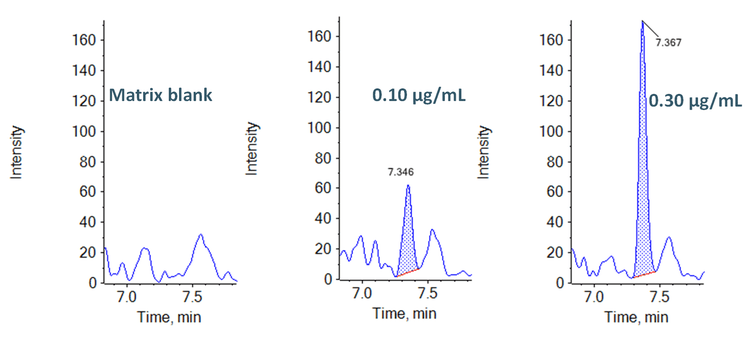
This technical note demonstrates a sensitive method for quantitation of bevacizumab in human serum using high-resolution mass spectrometry. A lower limit of quantitation (LLOQ) of 0.10 µg/mL was achieved in human serum samples (Figure 1).
Bevacizumab is an IgG1 type mab introduced in 2004 for treating different cancers.1 Bevacizumab is the first antiangiogenic agent, which functions by binding to the VEGF gene, causing a reduction in the formation of microvascular growth of tumor blood vessels.2 Since bevacizumab is approved for treating metastatic colorectal, renal, pulmonary and ovarian cancers, it is essential to effectively facilitate measurements of bevacizumab at toxicokinetic and pharmacokinetic concentration levels in biological matrices.
This technical note demonstrates a reliable and highly sensitive workflow for supporting the quantitative analysis of bevacizumab in human serum using a high-resolution accurate mass spectrometer.
Key benefits for analysis of bevacizumab using the ZenoTOF 7600 system
- Sensitive quantitation of monoclonal antibody (mAb): Achieve 0.10 µg/mL LLOQ for quantitation of bevacizumab in human serum.
- Low serum consumption: Reach low-level quantitation using 10 µL human serum with increased MS/MS sampling efficiency using Zeno MRMHR
- Effortlessly meet critical quantitative performance criteria: Achieve accurate quantitative performance with %CV <10% at all concentration levels across a linear dynamic range (LDR) of 3 orders of magnitude
- Streamlined data management: SCIEX OS software, a 21 CFR Part 11-compliant platform, simplifies data acquisition and processing
Introduction
Bevacizumab is a recombinant humanized monoclonal immunoglobulin G1 (IgG1) antibody (93% human, 7% murine sequences molecular weight 149 kDa) that selectively inhibits all isoforms of human vascular endothelial growth factor (VEGF). Due to its inhibition property, bevacizumab is often combined with other mAbs to treat different cancers. According to a recent study, patients receiving bevacizumab had different clinical results where variation was observed in the severity of their side effects, including vascular disorders.3
Due to the differences in patient results, highly sensitive assays are necessary to ensure precise and accurate detection and quantitation when assessing pharmacokinetic and pharmacodynamic effects.
Methods
Standard preparation: 1 mg of bevacizumab stock solution was procured from Medchem Express. The dilutions were made in PBS for further processing. Trypsin was procured from Promega.
Sample preparation: Dilutions were performed in human serum to prepare spiked sample concentrations ranging from 0.01 µg/mL to 100 µg/mL.
Sample preparation was performed using 10 µL of spiked human serum, 200 µL of protein A beads and 200 µL of PBS. Protein A beads were washed three times with PBS before use. Samples were gently shaken for 30 minutes at room temperature, followed by two PBS washes. The beads were resuspended in 150 µL of digestion buffer containing 150mM ammonium carbonate and 1mM calcium chloride before denaturation at 95°C for 5 minutes. After allowing it to cool to room temperature, 2 µg of trypsin was added to each sample followed by on-bead digestion for 2 hours at 50°C. Digestion was stopped by adding 3 µL of formic acid. Samples were separated from the beads and transferred to vials for LC-MS/MS analysis.
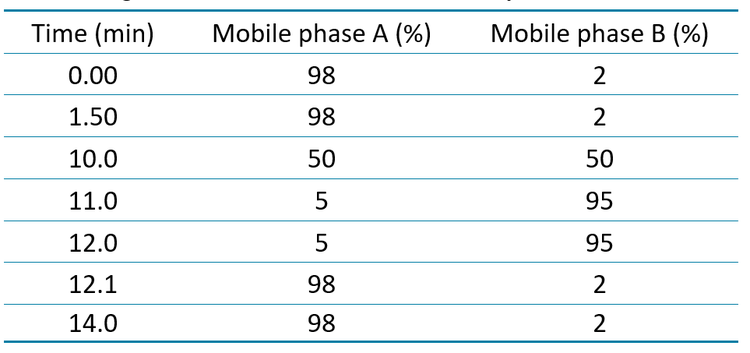
Chromatography: Analytical separation was performed on the ExionLC AE system using a Phenomenex Kinetex C18 (2.1 × 100 mm, 1.7 μm) column at a 0.3 mL/min flow rate. Mobile phase A was 0.1% (v/v) formic acid in water and mobile phase B was 0.1% (v/v) formic acid in acetonitrile. The column temperature was set to 40°C. The gradient conditions used are summarized in Table 1. A 20 μL sample was used for LC-MS/MS analysis.
Quantitative performance on the ZenoTOF 7600 system
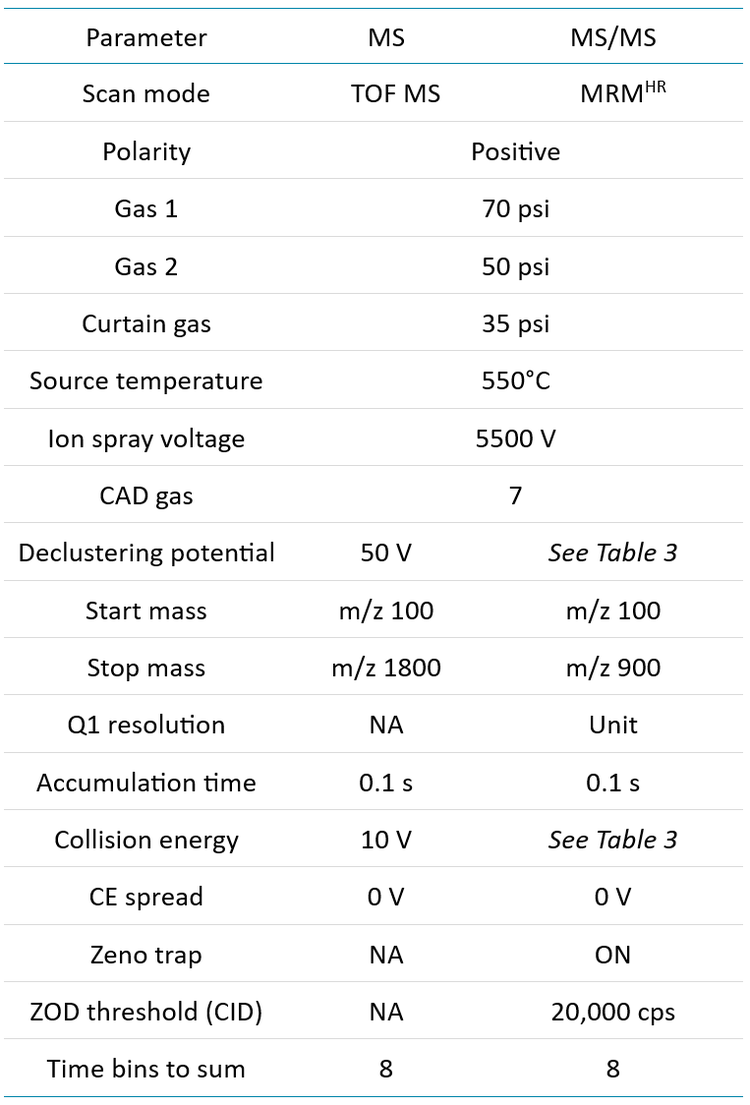
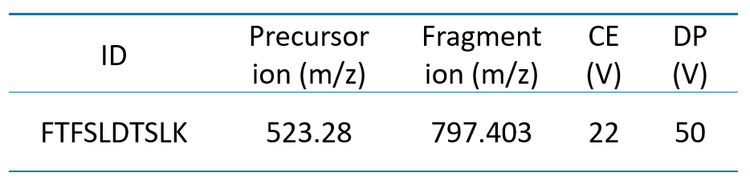
The Zeno MRMHR method offers superior sensitivity and selectivity for quantifying bevacizumab in human serum. The Zeno trap on the ZenoTOF 7600 system improves the efficiency of total MS/MS sampling, making it a useful tool for quantitative workflows that demand high sensitivity.
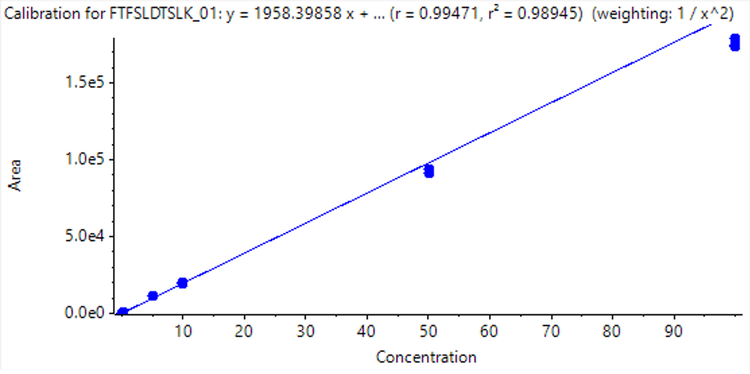
The Zeno MRMHR method achieved excellent linearity, accuracy and precision from 0.10 µg/mL to 100 µg/mL for bevacizumab. The on-bead digestion immunoprecipitation workflow resulted in clean samples that enabled a minimal human serum volume of 10 µL for the sensitive quantitation of bevacizumab.
Linearity was achieved across concentrations ranging from 0.10 to 100 µg/mL (Figure 2), achieving an LDR of 3 orders of magnitude.
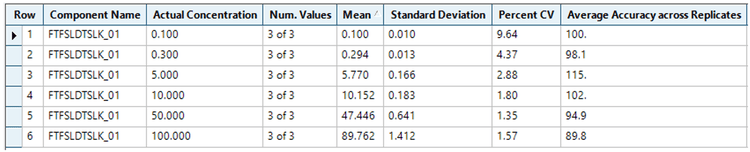
Analytical performance was evaluated based on the requirement that the accuracy of the calculated mean should be between 80% and 120% at the LLOQ and between 85% and 115% at higher concentrations. The %CV of the calculated mean of the concentration should be below 20% at the LLOQ and below 15% at all higher concentrations.4
This assay's accuracy was within ±15% of the nominal concentration and %CV was <10 for the quantitation of bevacizumab in human serum (Figure 3). Calculated % accuracy and %CV values were within the acceptance criteria at each concentration level.
Compliance-ready SCIEX OS software
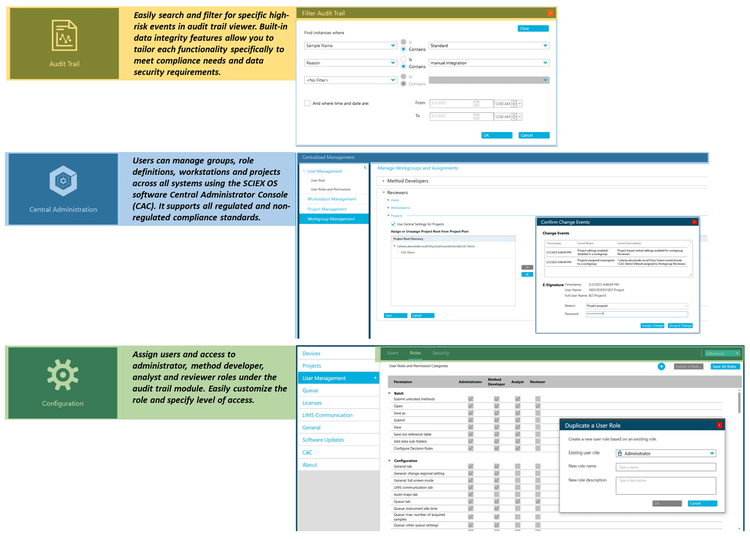
Equivalent SCIEX OS software capabilities for regulated bioanalysis can be executed on the ZenoTOF 7600 system, ensuring high fidelity when performing method transfers while retaining critical compliance features.
SCIEX OS software is a closed system and requires records and signatures to be stored electronically, meeting the regulations outlined by 21 CFR Part 11. SCIEX OS software can open raw data files from any visible storage location within a closed network by using designated processing workstations. Figure 4 illustrates the features of SCIEX OS software that are used to monitor the audit trail, acquire and process data, and configure user access. The audit trail feature enables users to audit critical user actions and locks in data integrity. The Central Administrator Console (CAC) feature allows users to centralize acquisition and processing using a single platform to maximize efficiency for multi-instrument laboratories, independent of compliance standards. The configuration module allows users to assign roles and access as the administrator, method developer, analyst, and reviewer.
Conclusions
- An LLOQ of 0.10 µg/mL was achieved for the quantitation of bevacizumab in human serum
- Low-level quantitation was achieved using 10 µL human serum given the increased MS/MS sampling efficiency with Zeno MRMHR
- Linearity was achieved at concentrations ranging from 0.10 µg/mL to 100 µg/mL, achieving an LDR of 3 orders of magnitude
- Comparable quantitative performance was demonstrated with accurate and highly reproducible (%CV <10%) results on the ZenoTOF 7600 system
- A single platform for streamlined data acquisition, processing, and management with SCIEX OS software was presented
- Retain data management and compliance-readiness (21 CFR Part 11) features using SCIEX OS software to support regulated bioanalysis on the ZenoTOF 7600 system
References
- N. Ferrara, K.J. Hillan, H.P. Gerber, W. Novotny, Discovery and development of bevacizumab, an anti-VEGF antibody for treating cancer, Nat. Rev. Drug Discov. 3 (5) (2004) 391–400. Doi.org/10.1038/nrd1381
- Walsh G. Biopharmaceutical benchmarks 2014. Nat Biotechnol. 2014;32(10):992–1000. Doi org/10.1038/nbt.3040.
- Ranpura V, Hapani S, Wu SH. Treatment-related mortality with bevacizumab in cancer patients a meta-analysis. JAMA J Am Med Assoc. 2011;305(5):487–94. DOI10.1001/jama.2011.51
- Bioanalytical Method Validation, May 2018.