Abstract
This technical note demonstrates a sensitive, accurate, and highly reproducible method for the quantitation of small molecules using the novus V55 system. A lower limit of quantitation (LLOQ) of 0.5 pg/mL was achieved for the analysis of midazolam, imipramine, and clozapine in human plasma (Figure 1). The novus V55 system combines robust quantitative performance with a compact footprint, enabling reliable small molecule analysis without compromising analytical confidence.
The advancement of highly potent therapeutics administered at low doses has driven the need for highly sensitive bioanalytical methods to quantify trace-level analytes in complex biological matrices. However, the inherent complexity of such matrices often necessitates elaborate extraction procedures, making it difficult to achieve in routine bioanalytical settings. In this study, the quantitation of 3 small molecule compounds, midazolam, imipramine, and clozapine in human plasma was successfully demonstrated using the novus V55 system with a simplified sample preparation approach. This streamlined method delivers robust quantitative performance while enabling faster sample processing, thereby supporting bioanalytical workflows on a more efficient and sustainable MS platform.
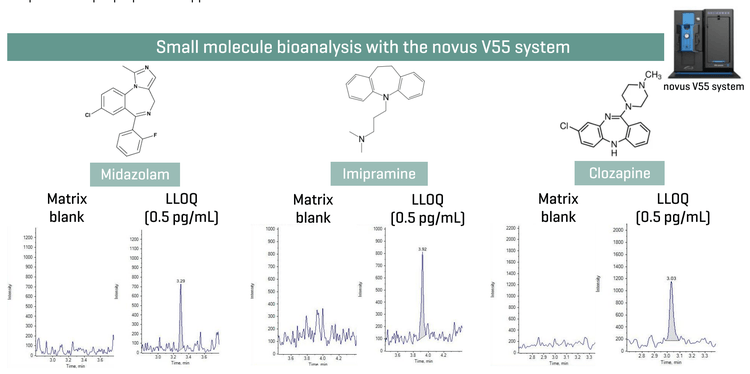
Key benefits of small molecule quantitation in human plasma using the novus V55 system
- Low-level quantitation of small molecules: Achieve 0.5 pg/mL LLOQ for the quantitation of imipramine, midazolam, and clozapine in human plasma.
- Minimal sample volume: Perform sensitive quantitation with only 100 µL plasma using a simple sample preparation workflow.
- Small footprint without compromising quantitative fidelity: Achieve accurate quantitative performance with %CV <9 at all concentration levels across a linear dynamic range (LDR) of 3.3 orders of magnitude using the most compact triple quadrupole mass spectrometer in its class.
- Streamlined data management: Simplify data acquisition and processing using SCIEX OS software, a 21 CFR Part 11-compliant platform.
Introduction
The quantitative determination of midazolam, imipramine, and clozapine in human plasma is important in clinical, pharmacokinetic, and bioanalytical research. These compounds represent distinct therapeutic classes—midazolam as a benzodiazepine sedative1, imipramine as a tricyclic antidepressant2, and clozapine as an atypical antipsychotic3, each characterized by complex pharmacokinetics, narrow therapeutic windows, and a strong dependence on individual patient variability. Accurate and reliable measurement o f their plasma concentrations is therefore essential to ensure therapeutic efficacy while minimizing the risk of adverse effects.
In this study, midazolam, imipramine, and clozapine were analyzed in human plasma using the novus V55 system. This platform offers a compact design that ensures highly reliable quantitative performance while supporting energy-efficient operation, making it well suited for modern bioanalytical laboratories.4
Methods
Standard preparation: Imipramine, midazolam, and clozapine were procured from Sigma-Aldrich, and 1 mg of each stock was accurately weighed and dissolved in methanol to a final concentration of 1 mg/mL. The spiking solution was prepared using 50:50 (v/v) water: acetonitrile as the diluent.
Sample preparation: Imipramine, midazolam, and clozapine were spiked into human plasma at concentrations from 0.5 to 1000 pg/mL. 100 µL of blank and spiked plasma was taken and precipitated with 300 µL of acetonitrile. After precipitation, the sample was vortexed for 5 min and centrifuged at 2200 rcf for 10 min. The 300 µL supernatant was transferred into a vial containing 300 µL of water, vortexed, and transferred to the autosampler vials for further analysis.
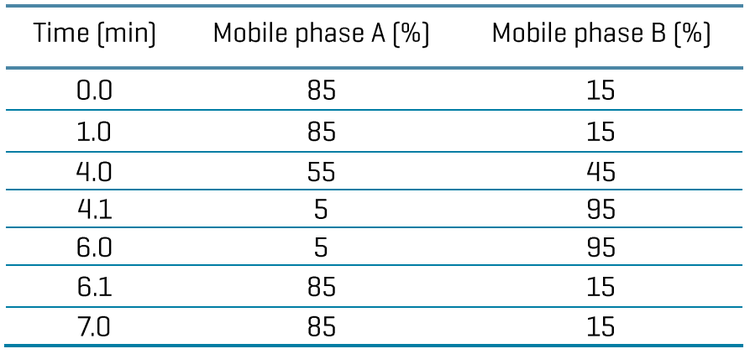
Chromatography: Analytical separation was performed on the ExionLC AD system using a Phenomenex Kinetex polar-C18 column (100 x 2.1 mm, 2.6µm) at a flow rate of 0.6 mL/min. Mobilephase A was 5 mM ammonium formate with 0.2% formic acid in water, and mobile phase B was acetonitrile. The column temperature was set to 40°C and the autosampler temperature to 8°C. The gradient conditions are summarized in Table 1. A 10 µL sample was used for the LC-MS/MS analysis.
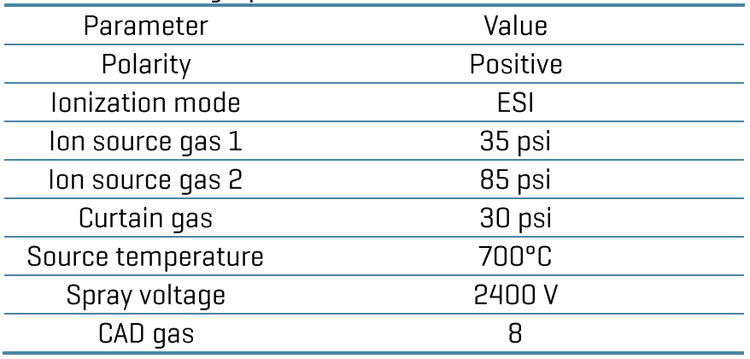
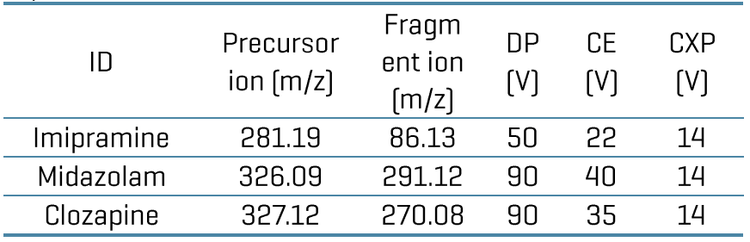
Quantitative performance on the novus V55 system
The technical note demonstrates a low-pg/mL quantitative assay of small molecules (midazolam, imipramine, and clozapine) in human plasma using the novus V55 system.
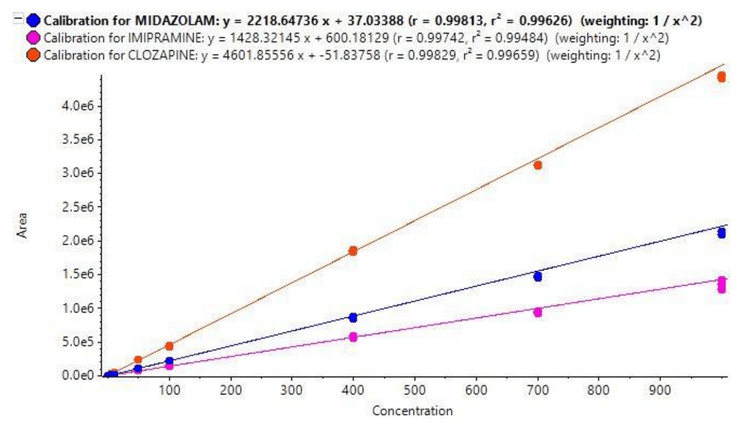
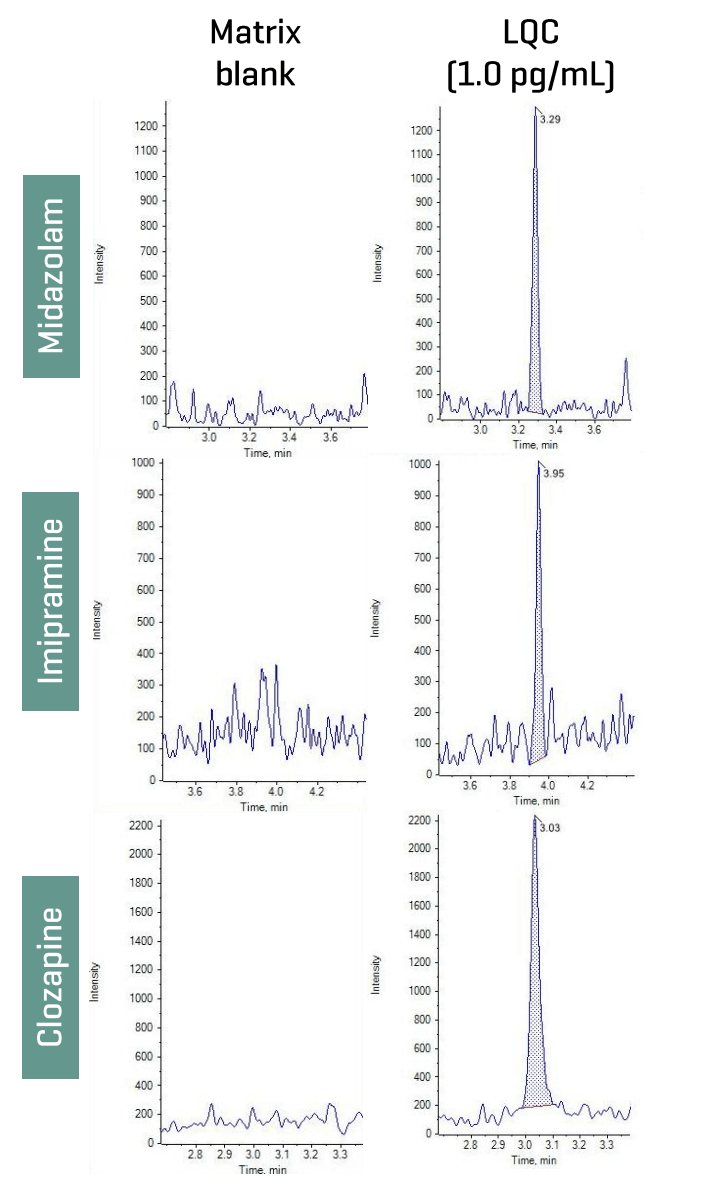
Triplicate injections were performed across concentrations ranging from 0.5 pg/mL to 1000 pg/mL. An LLOQ of 0.5 pg/mL was reached for all 3 small molecules in human plasma, with no interference observed in the matrix blank (Figure 1). An LDR of 3.3 orders of magnitude was achieved. A weigh ting factor of 1/x2 was used, with a coefficient of determination (r2) >0.994, indicating excellent linearity across the calibration range (Figure 2).
XICs of the matrix blank and 1 pg/mL for midazolam, imipramine, and clozapine are shown in Figure 3. Quantitation at 1.0 pg/mL for all 3 small molecules was successfully achieved with no interference from the matrix blank.
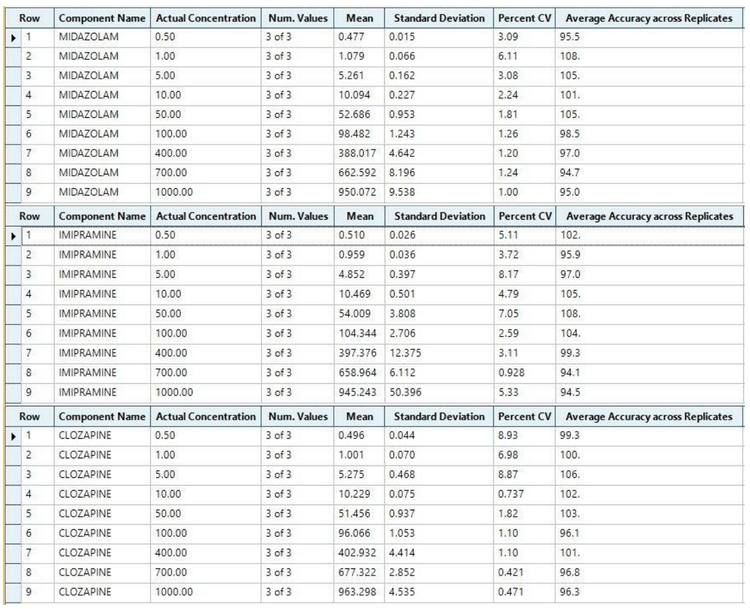
Analytical performance was evaluated based on the requirement that the accuracy of the calculated mean should be between 80% and 120% at the LLOQ and between 85% and 115% at higher concentrations. The %CV of the calculated mean should be below 20% at the L LOQ and below 15% at all higher concentrations.5
The accuracy was within ±8% of the nominal concentration, and the %CV was <9 for the quantitation of small molecules in human plasma (Figure 4). Calculated %accuracy and %CV values were within the acceptance criteria at each concentration level.
Compliance-ready SCIEX OS software
Equivalent SCIEX OS software capabilities for regulated bioanalysis can be executed on the novus V55 system, ensuring high fidelity when performing method transfers while retaining critical compliance features.
SCIEX OS software is a closed system and requires records and signatures to be stored electronically, in compliance with 21 CFR Part 11. SCIEX OS software can open raw data files from any visible storage location within a closed network by using designated processing workstations.
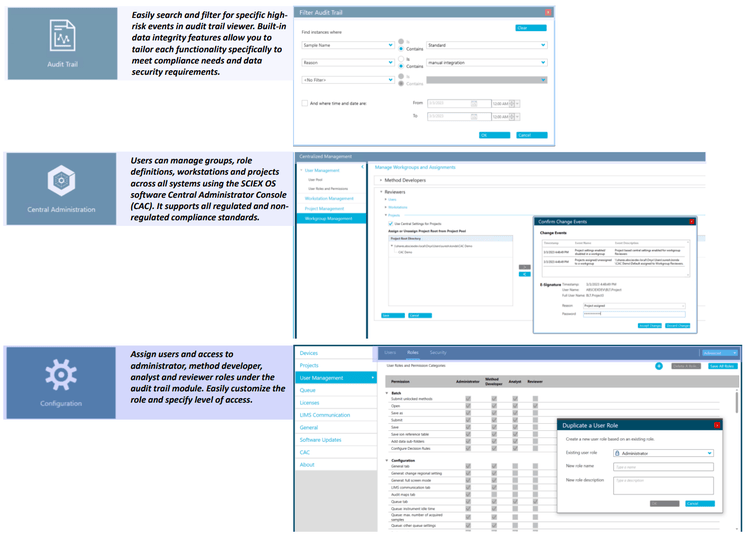
Figure 5 illustrates the features of SCIEX OS software used to monitor the audit trail, acquire and process data, and configure user access. The audit trail feature enables users to audit critical user actions and locks in data integrity.
The Central Administrator Console (CAC) feature allows users to centralize acquisition and processing on a single platform, maximizing efficiency for multi-instrument laboratories regardless of compliance standards. The configuration module allows users to assign roles and access as the administrator, method developer, analyst, and reviewer.
Conclusions
- An LLOQ of 0.5 pg/mL was achieved for the quantitation of midazolam, imipramine, and clozapine.
- Good quantitative performance was demonstrated, with accurate and highly reproducible results (%CV < 9%) on the novus V55 system.
- Linearity was achieved at concentrations ranging from 0.5 pg/mL to 1000 pg/mL with an r2 >0.995 for all three compounds with an LDR of 3.3 orders of magnitude.
- A simple extraction procedure was employed with a minimal sample volume of 100 µL.
- Maintain quantitative rigor while reducing operating costs with the novus V55 system, the most compact triple quadrupole mass spectrometer in its class.
- Retain data management and compliance-readiness (21 CFR Part 11) features using SCIEX OS software to support bioanalysis on the novus V55 system.
References
- Mu Chen, Wenzhe Lu, Yang Lu, Lijuan Kang, Harry Zhao, Zhongping John Lin, Weimin Wang,Daniela Fraier and Giorgio Ottaviani. An ultra-sensitive LC–MS/MS method to determine midazolam levels in human plasma: development, validation and application to a clinical study. Bioanalysis. 2017, Jan. doi: https://doi.org/10.4155/bio2016-0191
- PK Gillman. Tricyclic antidepressant pharmacology and therapeutic drug interactions updated. British Journal of Pharmacology. 2007. Doi: https://doi.org/10.1038/sj.bjp.0707253
- Agid, O, Crespo-Facorro, B, de Bartolomeis, A, Fagiolini, A, Howes, O.D.; Seppala, N.; Correll, C.U. Overcoming the barriers to identifying and managing treatment-resistant schizophrenia and to improving access to clozapine: A narrative review and recommendation for clinical practice. Eur. Neuropsychopharmacol. 2024. DOI: 10.1016/j.euroneuro.2024.04.012
- Rahul Baghla, Ian Moore. Achieve next level sensitivity for the evolution of routine bioanalysis. RUO-MKT-02-14859-A.
- Bioanalytical Method Validation, May 2018