Abstract
This technical note describes a QTRAP LC-MS/MS method for the identification and MRM-based quantitation of the N-nitroso atomoxetine (NNATO) impurity in atomoxetine (ATO) active pharmaceutical ingredient (API) using the novus V55 system — QTRAP (Figure 1). A limit of quantitation (LOQ) of 0.025 ng/mL was achieved on the novus V55 system — QTRAP, with reliable quantitation and confident MRM > EPI-based identification (IDA-driven) within a compact design.
Atomoxetine, a selective norepinephrine reuptake inhibitor widely prescribed for the treatment of attention‑deficit/hyperactivity disorder (ADHD)1, contains a secondary amine functional group that renders it susceptible to nitrosamine formation under conducive conditions. Given the potential carcinogenicity of nitrosamines, regulatory agencies mandate the stringent control of these impurities. Considering a maximum daily dose of 100 mg and an acceptable intake limit of 100 ng/day for nitrosamines2, the corresponding specification limit is approximately 1 ng/mg in the drug substance. Therefore, sensitive analytical methods are required to accurately quantify nitrosamine impurities at trace levels in the API.
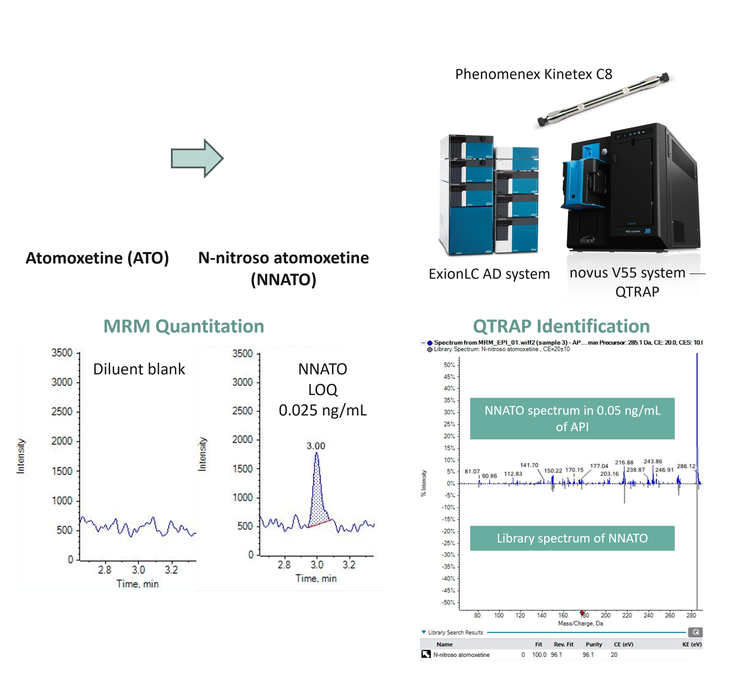
Key benefits or analysis of NDSRIs using the novus V55 system — QTRAP
- Low pg/mL level of quantitation: Achieve 0.025 ng/mL LOQ for the quantitation of NNATO using the novus V55 system — QTRAP.
- Identification of impurity in API: NNATO impurity was confidently identified using reliable full scan MS/MS data acquisition with IDA-driven MRM > EPI (enhanced product ion) scan.
- Robust analytical performance: Achieve accurate quantitative performance with %CV <6 for NNATOat all concentration levels.
- Small footprint without compromising quantitative fidelity: Reach optimal quantitative performance using the most compact triple quadrupole mass spectrometer in its class.
- Streamlined data management: Simplify data acquisition and processing using SCIEX OS software, a 21 CFR Part 11-compliant platform.
Introduction
Nitrosamine drug substance–related impurities (NDSRIs) are highly potent probable carcinogens structurally linked to the API.3 They are classified 5 five categories (Class 1–5) using the Carcinogenic Potency Categorization Approach (CPCA), based on acceptable intake and structural features that are activating or deactivating. Nitrosamines can affect multiple organs, and based on the structure of atomoxetine (ATO), it is categorized under Class 2 as per CPCA guidelines.4
The probability of formation of NNATO in ATO is higher due to the presence of a secondary amine, while ATO is also highly reactive because its unbound amine groups can facilitate the formation of other NDSRIs. Since the probability of forming an NDSRI is much higher, the FDA has set a regulatory intake limit of 100 ng/day.2 Given the maximum daily dose of 100 mg/day and the regulatory limit, NNATO should be analyzed at levels below 1 ng/mg.
In this study, a quantitative evaluation of NNATOwas performed in ATOAPI. Reliable MRM quantitation paired with confident MRM > EPI-based identification was achieved using the novus V55 system — QTRAP, thereby enabling streamlined NDSRI workflows in pharmaceutical laboratories with enhanced energy-efficiency solutions.
Methods
Standard preparation: Calibration curve dilutions of NNATO were prepared across a range of concentrations ( 0.025 ng/mL to 50 ng/mL ) and analyzed in triplicate.
Sample preparation: A 1 mg/mL ATOsolution was prepared. The spiked API samples were prepared by adding NNATO to 1 mg/mL ATO solution, resulting in NNATO levels of 0.05, 0.1, and 1 ng/mg in the API.
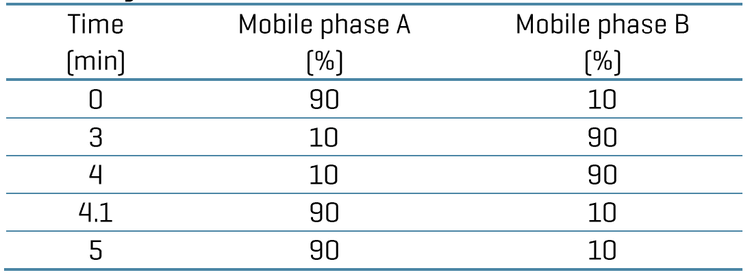
Chromatography: Sample separation was performed using an ExionLC AD system at a flow rate of 0.5 mL/min on a Phenomenex Kinetex C8 column (100 x 2.1 mm, 2.6 µm, 100 Å). The column temperature was maintained at 40°C. A 5-minute gradient was run using 0.1% formic acid in water as mobile phase A and acetonitrile as mobile phase B (Table 1).An injection volume of 5 µL was used for analysis. A 50:50 (v/v) acetonitrile/water mixture was used as the needle wash solvent.
UV chromatography: UV data were collected using an ExionLC AD system equipped with a D2 lamp. The API detection wavelength was set to 2 10 nm.
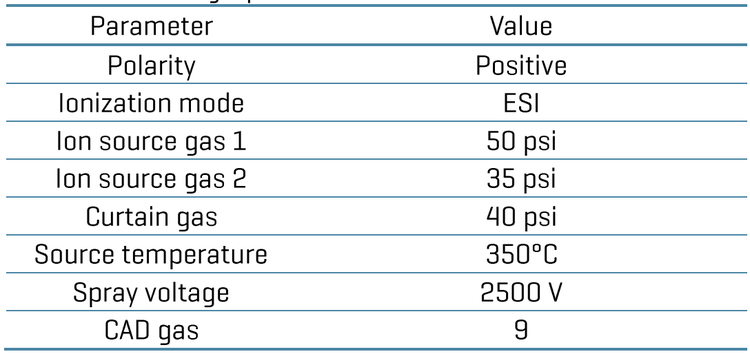
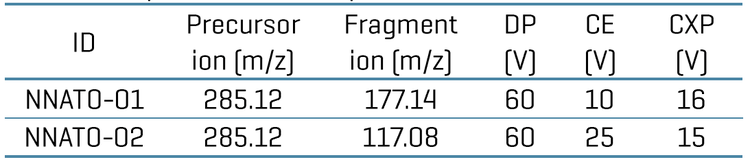
Mass spectrometry: Analysis was performed on the novus V55 system — QTRAP. The optimized source and gas parameters used for the analysis are listed in Table 2, and the MRM parameters are included in Table 3.
Identification of NNATO in ATO API using QTRAP
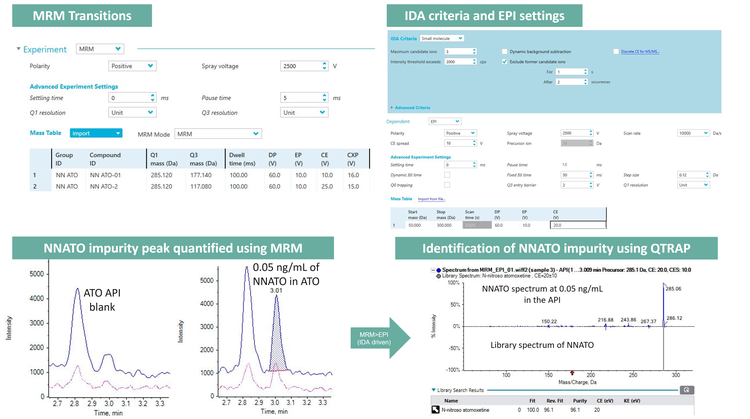
Confirmation of NNATO was performed using 2 product ions (quantifier and qualifier) as shown in Figure 2 . In addition, a full product ion spectrum was acquired using an IDA method and compared against a reference library for further confirmation on the novus V55 system — QTRAP. An MRM–IDA–EPI method was developed in which the MRM transition triggered an IDA event to acquire an EPI spectrum, as illustrated in Figure 2 (top).
An ATO API blank and an ATO API sample spiked with 0.05 ng/mL of NNATO were analyzed. The product ion spectrum obtained from the spiked sample was compared with that of the NNATO reference standard, yielding a spectral match of 100% (Figure 2, bottom). This result provided additional confirmation of NNATO, beyond the quantifier and qualifier ions.
MRM quantitative performance
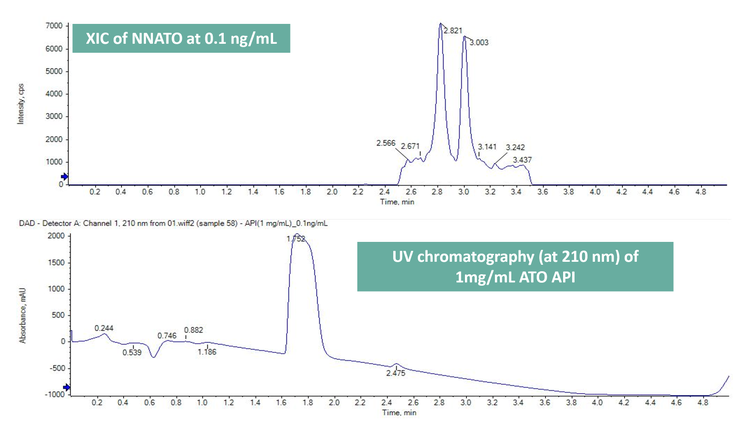
Baseline separation of ATO API and NNATO was achieved using the Phenomenex Kinetex C8 column (100 x 2.1 mm, 2.6 µm, 100 Å). A retention time of 3.0 min was observed for NNATO by LC-MS/MS analysis (Figure 3). Furthermore, UV chromatographic analysis of the ATO API at 210 nm yielded a retention time of 1.7 min. A ~1.3 min difference in retention time between ATO and NNATO was observed, demonstrating good baseline separation and an optimal setup for reliable quantitative performance. An additional peak was observed at 2.8 minute in the ATO API. The peak was detected in both the quantifier and qualifier ions, suggesting the possible presence of an isomer.5 Further investigation using appropriate reference standards is required to confirm the identity of this peak.
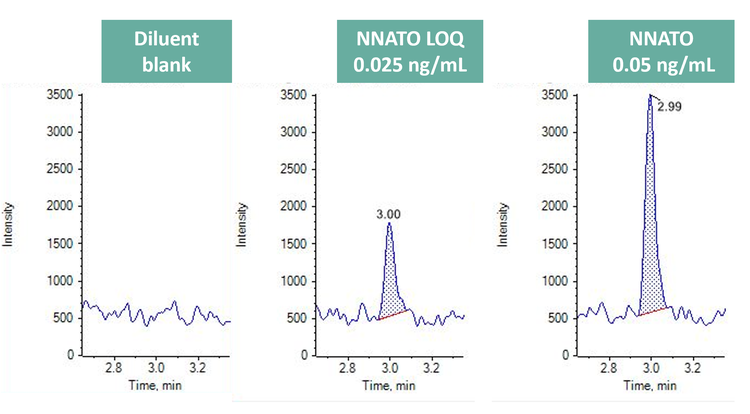
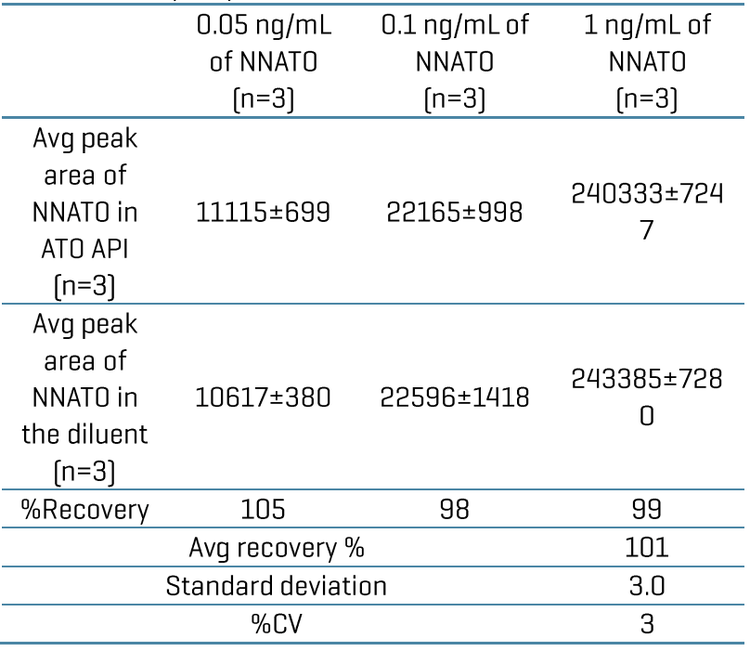
An LOQ of 0.025 ng/mL was achieved for the quantitation of NNATO with no interference in the diluent blank (Figure 5). The regulatory intake limit (1 ng/mg) was calculated based on a maximum daily dose of 100 mg/day. Therefore, NNATO was analyzed at three concentrations: 0.05, 0.1, and 1 ng/mL.
The average recovery was calculated for NNATOat 3 concentrations, with NNATO spiked at 0.05, 0.1, and 1 ng/mL and compared against the average area from the neat standard solution. An average recovery of 101% was achieved across 3 concentrations, with %CV less than 3.
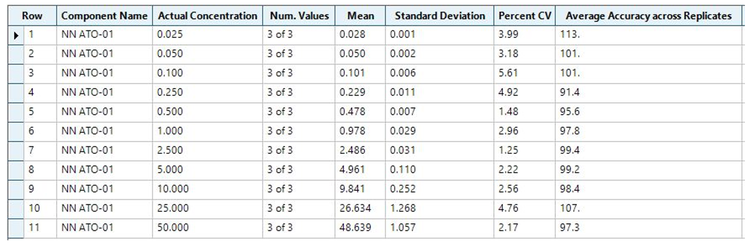
Analytical performance was evaluated based on the criteria that the accuracy of the calculated mean should be between 80% and 120% at the LOQ and between 85% and 115% at the higher concentrations. In addition, the %CV of the calculated mean of concentration should be <20% at the LOQ and <15% at all higher concentrations.
The assay accuracy was within ±13% of the actual concentration, and the %CV was less than 6% for NNATO. The calculated percentage accuracy and %CV values were within the acceptance criteria at each concentration level (Figure 6).
Compliance-ready SCIEX OS software
Equivalent SCIEX OS software capabilities for NDSRI analysis can be executed on the novus V55 system — QTRAP, ensuring high fidelity when performing method transfers while retaining critical compliance features.
SCIEX OS software is a closed system and requires records and signatures to be stored electronically, meeting the regulations outlined by 21 CFR Part 11. SCIEX OS software can open raw data files from any visible storage location within a closed network by using designated processing workstations.
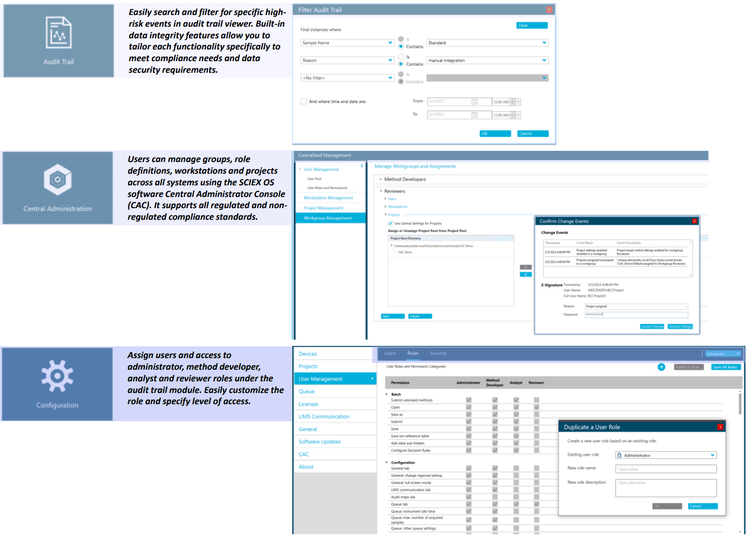
Figure 7 illustrates the features of SCIEX OS software used to monitor the audit trail, acquire and process data, and configure user access. The audit trail feature enables users to audit critical user actions and locks in data integrity.
The Central Administrator Console (CAC) feature allows users to centralize acquisition and processing using a single platform to maximize efficiency for multi -instrument laboratories, independent of compliance standards. The configuration module allows use rs to assign roles and access as the administrator, method developer, analyst, and reviewer.
Conclusions
-
Quantitation of NNATO
- An LOQ of 0.025 ng/mL was achieved for the quantitation of NNATO. Good quantitative performance was demonstrated with accurate and highly reproducible (%CV < 6) analysis for NNATO using the novus V55 system — QTRAP.
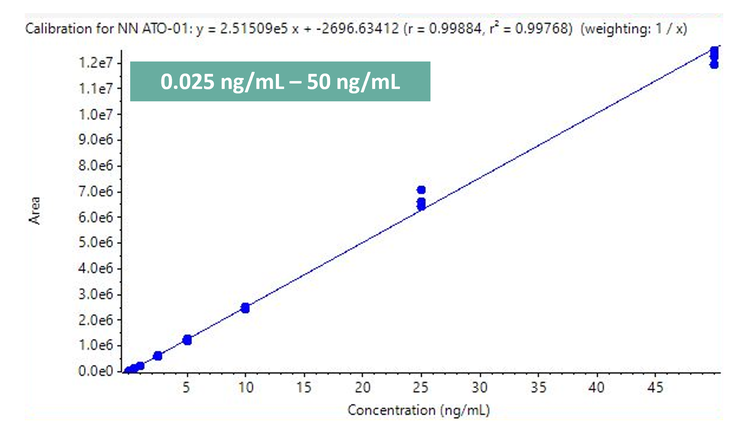
- Linearity was achieved at concentrations ranging from 0.025 ng/mL to 50 ng/mL with an r2 >0.998 for NNATO.
- Maintain quantitative rigor while reducing operating costs with the novus V55 system — QTRAP, the most compact triple quadrupole mass spectrometer in its class.
-
Analysis and identification of NN ATOin ATOAPI
- NNATO impurity in ATOAPI was identified and verified by comparing the impurity MS/MS spectra with the NNATO standard MS/MS spectra.
- Accurate quantitation with good baseline separation of NNATO and ATOAPI was achieved.
- An average recovery of 101% was achieved with %CV <3 where NNATO was analyzed at 0.05, 0.1, and 1 ng/mg of API, below and at the calculated specification limit of 1 ng/mg.
-
Software compliance
- Easily acquire, process, and visualize results for NDSRI analysis using SCIEX OS software.
- Utilize library matching on SCIEX OS software for seamless identification of unknown NDSRI impurities.
References
- Fu, Di; Wu, D.-D.; Guo, H.-L.; Hu, Y.-H.; Xia, Y.; Ji, X.; Fang, W.-R.; Li, Y.-M.; Xu, J.; Chen, F.; Liu, Q.-Q. The Mechanism, Clinical Efficacy, Safety, and Dosage Regimen of Atomoxetine for ADHD Therapy in Children: A Narrative Review. Frontiers in Psychiatry 2022, 12. https://doi.org/10.3389/fpsyt.2021.780921.
- Samaneh Kabul; Alatorre, C.; Montejano, L. B.; Farr, A. M.; Clemow, D. B. Real‑World Dosing Patterns of Atomoxetine in Adults with Attention‑Deficit/Hyperactivity Disorder. CNS Neuroscience & Therapeutics 2015, 21 (12), 936 –942. https://doi.org/10.1111/cns.12442.
- Recommended Acceptable Intake Limits for Nitrosamine Drug Substance-Related Impurities (NDSRIs). https://www.fda.gov/regulatory-information/search-fda-guidance-documents/cder-nitrosamine-impurity-acceptable-intake-limits.
- Garnock-Jones, K. P.; Keating, G. M. Atomoxetine. Pediatric Drugs 2009, 11 (3), 203–226. https://doi.org/10.2165/00148581-200911030-00005.
- Sellers, J. A.; Olsen, B. A.; Owens, P. K.; Gavin, P. F. Determination of the Enantiomer and Positional Isomer Impurities in Atomoxetine Hydrochloride with Liquid Chromatography Using Polysaccharide Chiral Stationary Phases. Journal of Pharmaceutical and Biomedical Analysis 2006, 41 (4), 1088 –1094. https://doi.org/10.1016/j.jpba.2006.01.063.