Abstract
Increased legalization of cannabis for medical and recreational use requires that various residue levels such as pesticide levels be tested as they pose potential health risks to consumers. A fully verified method is presented for the analysis of those pesticides comprising the Oregon Pesticide List as well as key cannabinoids, includes SOP, methods and report templates. LOQ’s in cannabis flower were achieved with ±20 %CV for all pesticides on the Oregon list on the QTRAP 6500 System including some pesticides traditionally monitored by GC-MS. Most were achieved with the QET 4500 System, representing a cost effective option.
Overview
Increased legalization of cannabis for medical and recreational use substantiates the need for a standardized robust and reproducible method for quantitation of pesticide residues and relevant psychotropic cannabinoids in cannabis products. Pesticide application in agricultural industries is intended to protect crop yield from pests or pathogens. Insecticides, acaricides, fungicides or other protective chemical reagents on crops pose potential health risks both to field employees via exposure as well as consumers through consumption. Pesticides and pesticide action levels may be regulated differently by state. Currently, the most comprehensive list of pesticides and their respective MRLs allowed in plant products is known as the Oregon List of Pesticides.
Several pesticides on the Oregon List have been historically monitored by GC-MS including complicated sample preparation with derivatization and relatively long sample run times. Here, a fully verified LC-MS method is presented using two different SCIEX triple quadrupole mass spectrometers for the analysis of those pesticides comprising the Oregon Pesticide List.
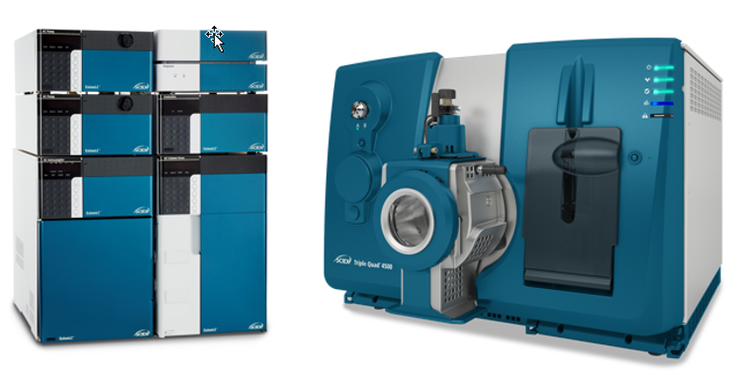
The QET 4500 System presents a cost-effective platform for achieving the majority of the Oregon List Maximum Residual Limits (MRL) in cannabis flower matrix. The highly sensitive SCIEX Triple Quad™ / QTRAP® 6500+ System is capable of meeting the MRLs for the full list in cannabis flower matrix. Cannabis flower shows the most severe matrix- induced ion suppression on the target analytes and, therefore, the performance of this method in flower represents performance in the most difficult matrix.
The SCIEX vMethod Application for Quantitation of Pesticide Residues in Cannabis Matrices 1.0 provides a step by step SOP that is suitable for use for ISO 17025 compliance, acquisition methods with optimized source and analyte parameters as well as a quantitation method using MultiQuant™ Software.

Key features of the complete solution
- A simplified sample preparation protocol complete with analysis of all 59 compounds (pesticides and cannabinoids) using electrospray ionization (ESI) and LC-MS/MS.
- A 16 minute gradient maximizes separation of endogenous isobaric interferences for pesticide analysis.
- A five-minute gradient separates all ten isobaric cannabinoids from each other and ensures precision of quantitative analysis.
- Dilution with six pesticide deuterated internal standards and two cannabinoid internal standards during sample preparation allows for maximization of recoveries for the most analytes as well as the ability to correct for analyte recovery efficiency
- Fast polarity switching on the SCIEX Triple Quad / QTRAP Systems enables monitoring of targets in both negative and positive polarities in a single fast method.
Methods
Standards and internal standards (IS): Pesticide standards were purchased from RESTEK (Bellefonte, PA). The complete list of pesticides monitored can be found in the SCIEX vMethod Application for Quantitation of Pesticide Residues in Cannabis Matrices 1.0. Deuterated internal standards were purchased from Toronto Research Chemicals (Toronto, Canada). Cannabinoid standards and deuterated internal standard were purchases from Cerilliant (Round Rock, TX). The complete list of cannabinoids monitored can be found in SCIEX vMethod Application for Quantitation of Pesticide Residues in Cannabis Matrices 1. Acetonitirile, methanol, water, formic acid, acetone and ammonium formate were purchased from Sigma-Aldrich (St.Louis, MO).
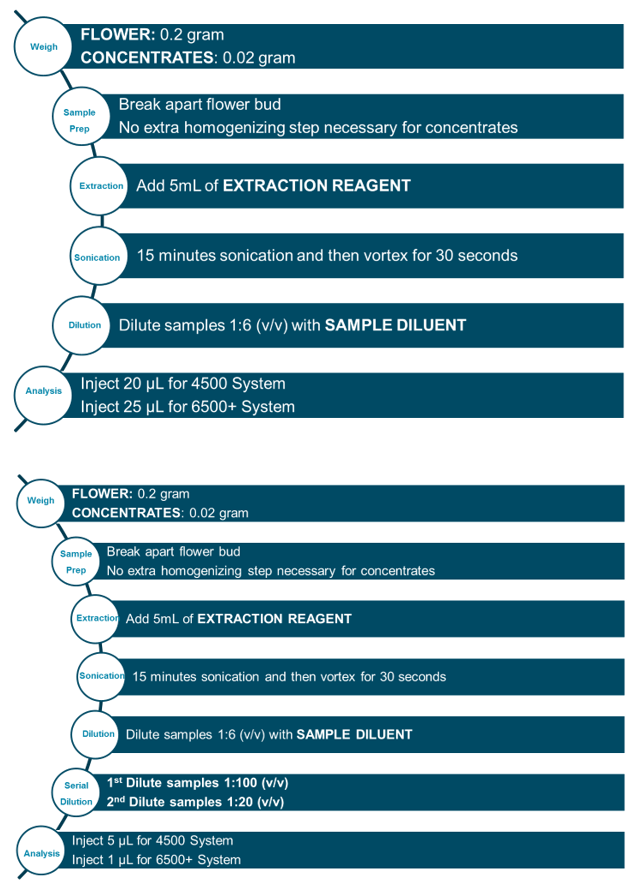
Sample preparation: Calibrators and quality controls were made in acetonitrile and then diluted with 75:25 (v/v) methanol:water. Unknown cannabis matrices were analyzed using 0.2 gram of cannabis flower or 0.02 gram of cannabis concentrates diluted in 5 mL of acetonitrile which was sonicated, vortexed and centrifuged. The extract was then diluted in 1:6 (v/v) using 75:25 (v/v) methanol and water.
LC-MS/MS injection volumes are 20 µL for a QET 4500 System and 25 µL for a QTRAP 6500+ System. The maximum injection volume for this method is 25 µL in order to maintain symmetrical peak profiles of early eluting Daminozide and Acephate.
The sample extract was also used for cannabinoid potency analysis by further diluting 1:2000 (v/v) serially. The suggested LC-MS/MS injection volumes are 5 µL for a QET 4500 System and 1 µL for a QTRAP 6500+ System. An outline of the sample preparation procedures for pesticides and cannabinoids is shown in Figure 2.
Chromatography: Chromatographic separation was achieved using Shimadzu LC-20AD binary pumps or with a SCIEX ExionLC™ AC System and a Phenomenex Kinetex Biphenyl Column (2.6 µm, 4.6 x150 mm) at flow rate of 1 mL/min.
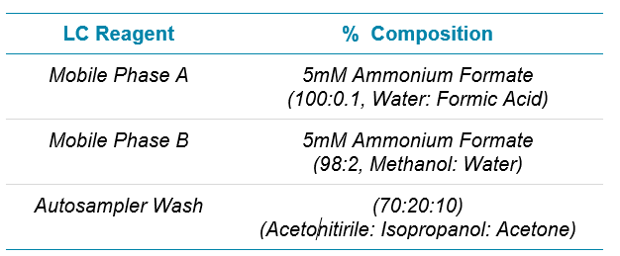
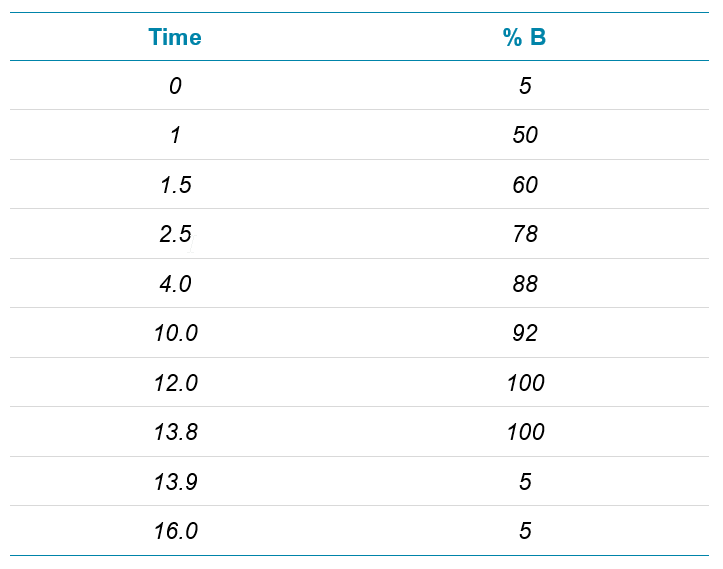
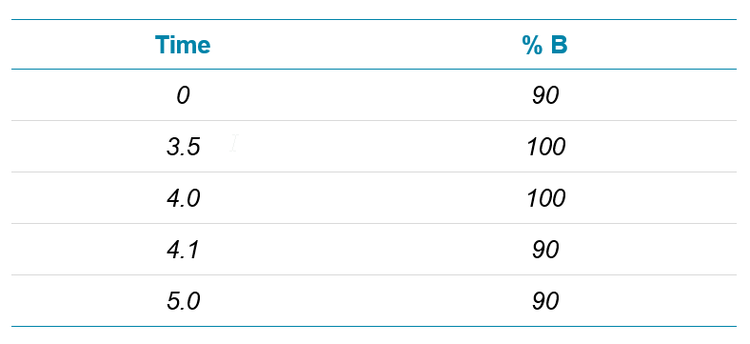
The analytical column is heated to 30°C for analysis using the CTO-20AC integrated column oven for pesticide analysis and 35°C for cannabinoid testing respectively. The eluents used for the separation are shown in Table 1 and the gradient profile is shown in Table 2 for pesticide residue testing and Table 3 for cannabinoid testing.
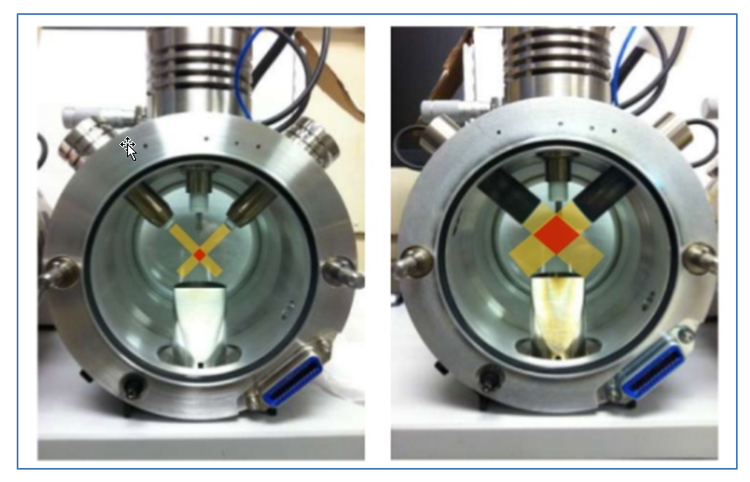
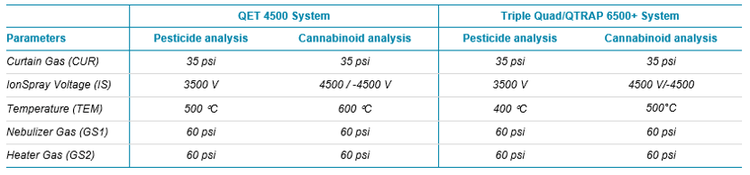
Mass spectrometry: MS analysis was performed using either a SCIEX QET 4500 System or a QTRAP 6500+ System. Optimized source parameters for the Turbo V™ Ion Source or IonDrive™ Turbo V Ion Source are shown in Table 4. Parameters are identical except for adjustments in heater temperature (Figure 3).
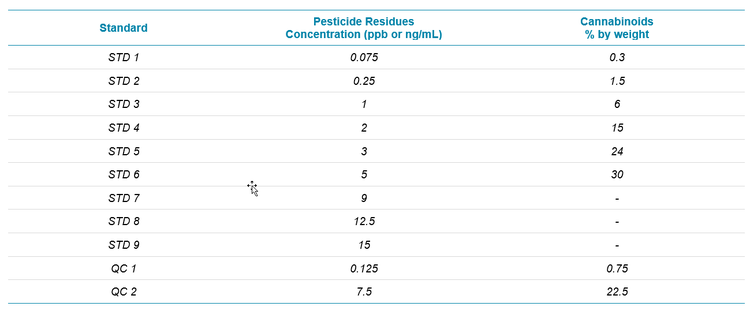
Two MRM transitions were monitored for each analyte while one transition was monitored for each of the internal standards. In the pesticide panel, the Scheduled MRM™ Algorithm was used to monitor compounds during a 60 second expected retention time window to maximize dwell times and optimize the cycle time such that all analytes have at least 12 measurements across the baseline of the peak. For a complete list of all target analytes monitored, refer to SCIEX vMethod Application for Quantitation of Pesticide Residues in Cannabis Matrices 1.0. Due to the variable ionization efficiencies of the different pesticide groups and the commercial standards being at the same concentration, a 9-point calibration curve is coupled with 2 quality controls to ensure accuracy for quantitation analysis (Table 5).
Cannabinoid results are reported as % by weight and the calibration level for each standard as well as quality control in solvent are listed in Table 5.
Data processing: Quantitation was performed using MultiQuant™ Software 3.0.2 using 1.5 Gaussian smoothing and 1/x weighted variable quadratic or linear regression for the QET 4500 System. The detector on the QTRAP 6500+ System allows for a greater dynamic range compared to the QET 4500 System, therefore all calibration curves are analyzed with 1/x weighted linear regression.
Several pesticides containing different isomers were integrated with a peak split factor of 10 and a noise percentage level of 50% in MultiQuant Software. Examples of this integration are found in Figures 5 for Propiconazole, Cyfluthrin, and Cypermethrin.
Chromatography Results
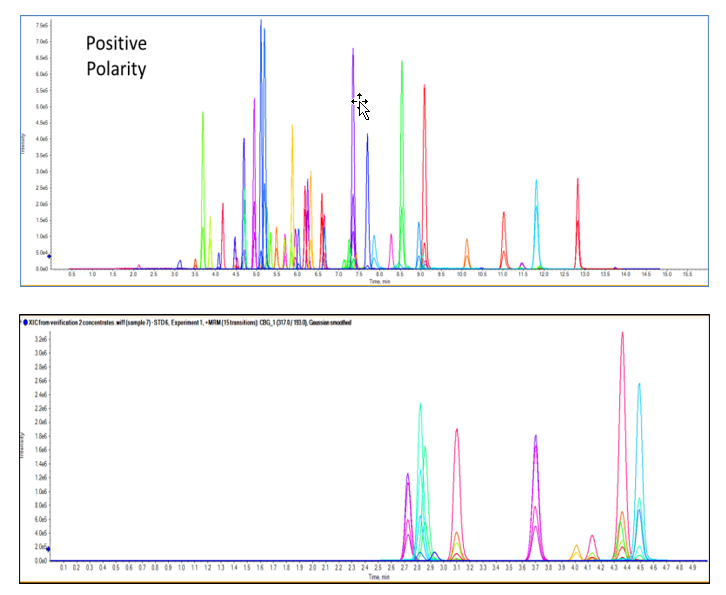
The biphenyl column chemistry provides retention of early eluting pesticides as well as chromatographic separation of endogenous pyrethrin-like compounds found in cannabis flower. A representative elution profile of target analytes in solvent can be found in Figure 4 (top) for pesticides and Figure 4 (bottom) for cannabinoids.
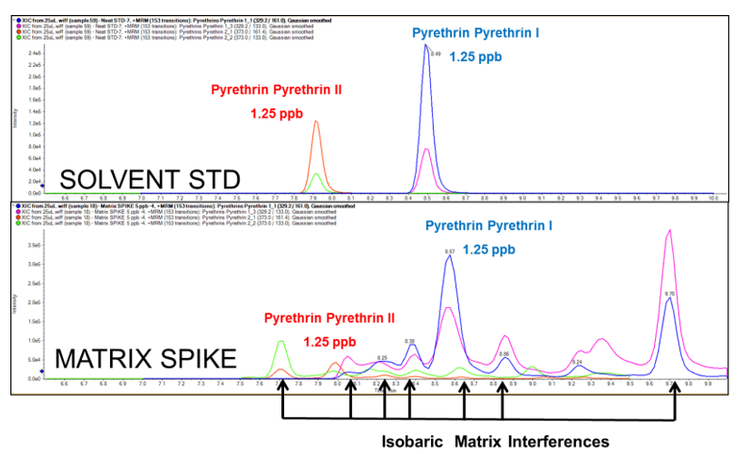
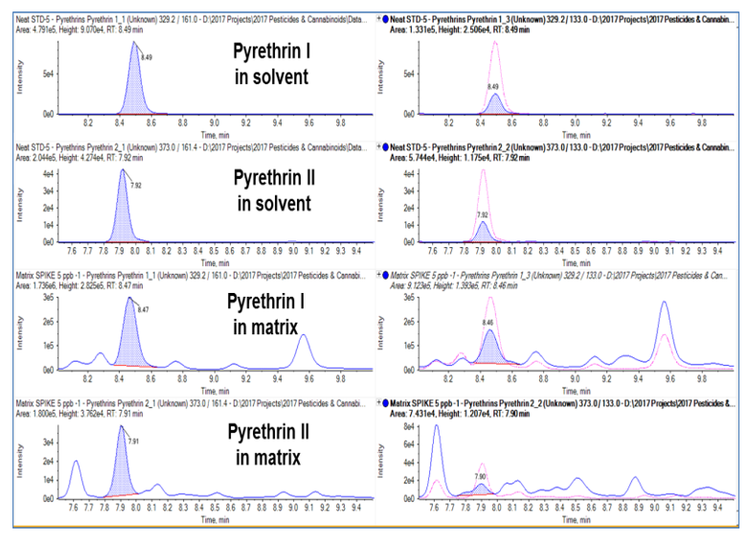
An example of the isobaric interferences surrounding Pyrethrin, Pyrethrin I and II are detailed in Figure 6 and 7 when comparing a solvent standard to standards spiked into flower extract. The ability to chromatographically separate isobaric interferences allows for both easier visual and quantitative analysis of the pyrethrins in an unknown sample.
Carryover analysis was done by analyzing the highest calibrator standard, followed a solvent blank. The absence of any analyte peaks ≥20% of the low calibrator areas demonstrated that the method is free from carryover.
Matrix recovery
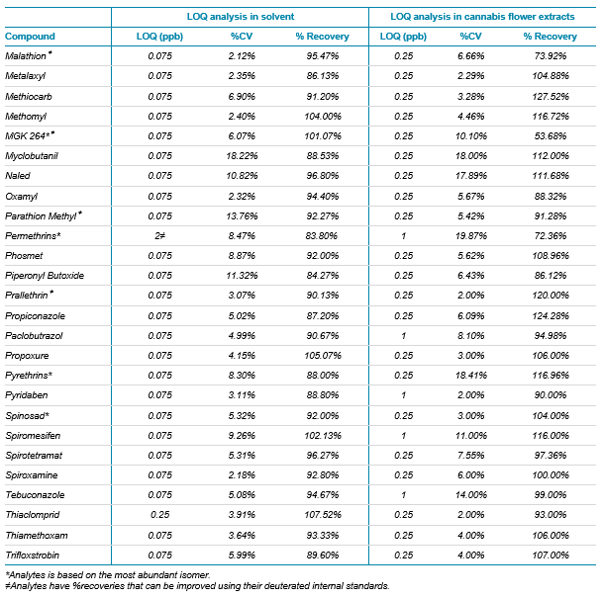
Matrix induced ion suppression was observed in cannabis flower more so than the three concentrates tested (shatter, kief/pollen and hash). To correct for ion suppression, deuterated internal standards were assigned to each pesticide based on a combination of retention time, chemical structure and back-calculated concentrations from solvent calibration curves. A table outlining the recoveries from solvent standards can be found in Appendix Table 1 for targeted pesticides. Several pesticides showed recoveries greater than ±20% deviation from the target concentration, potentially because the compound did not have its own deuterated internal standard to correct for suppression or ion enhancement.
Limit of quantitation analysis
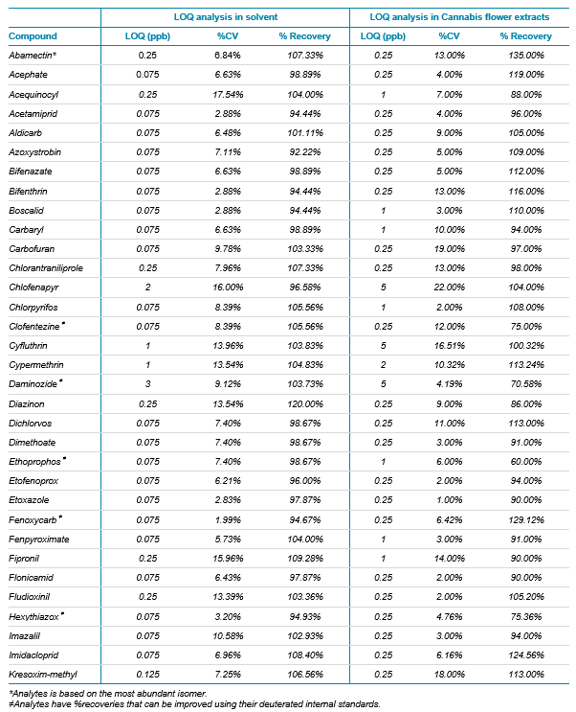
Solvent LOQs were determined by analyzing 5 solvent spiked replicates over the course of two days. The parameters for determining LOQ was %CV of ≤ 20% and a %Recovery of 80 to 120% of the target spike concentration.
The SCIEX vMethod for pesticide analysis outlines the concentrations of calibration standards to be used, with the lowest of these at a concentration of 0.075 ppb. The instrument LOQ for the majority of pesticides is lower than this concentration, both in solvent as well as spiked into cannabis flower matrix. A complete table of the LOQ analysis for solvent using the QTRAP 6500+ System can be found in Appendix Table 1. The LOQ tables for pesticides in cannabis flower matrix acquired on the QTRAP 6500+ Systems are found in the same table.
The cannabinoid analysis in the SCIEX vMethod has six calibration standards that range from 0.3-30% by plant weight. The %CV of the ten cannabinoids ranged from 6.24-19.09% at the first calibration level (0.3% by weight). The %Recovery of the LOQ standard ranged from 82-116%.
Linear dynamic range
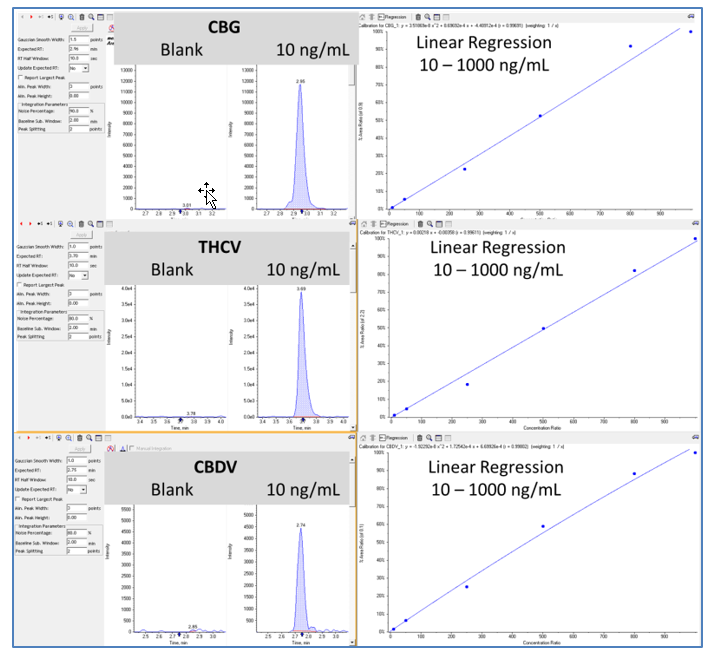
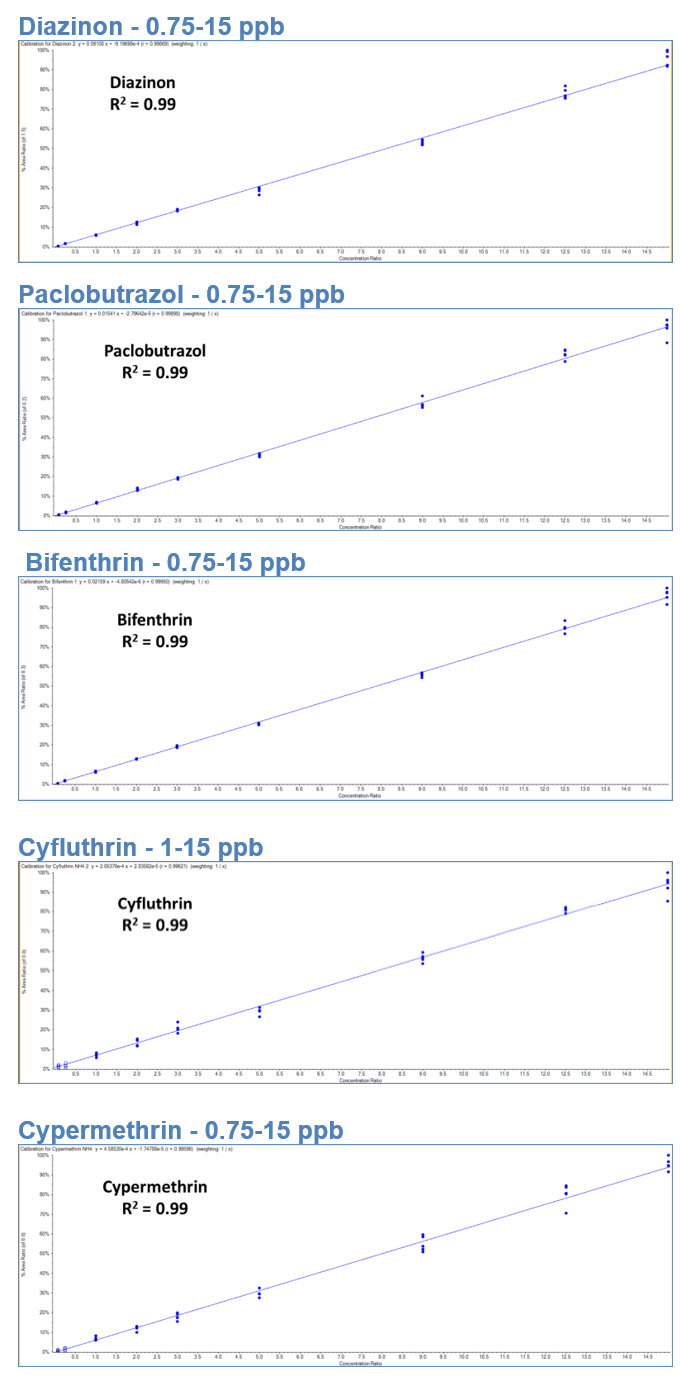
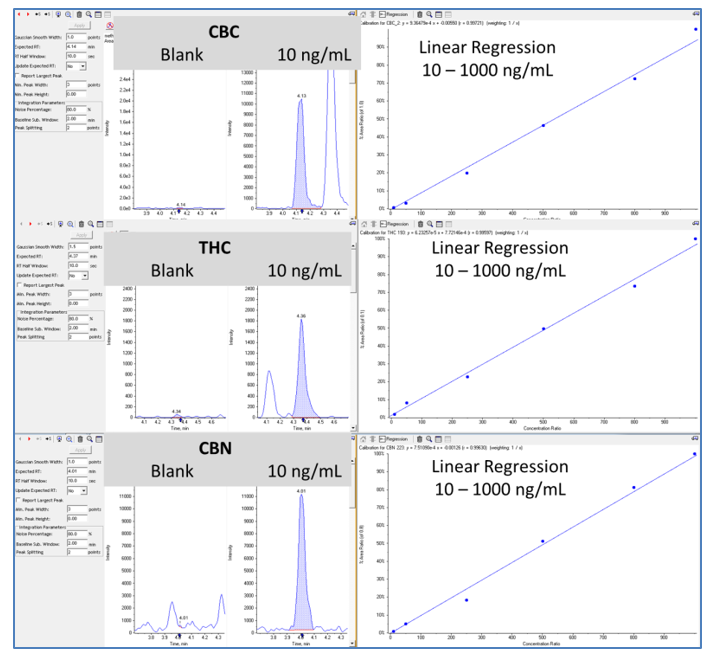
The dynamic range was established across five calibration curves acquired through method verification. All curve fittings used a linear regression with 1/x weighting. Calibration points below the LOQ of the method were excluded. Figures 8 show examples of dynamic range for some representative pesticide analytes. Refer to Figures 9-10 for representative calibration curves of cannabinoid analytes.
Conclusions
The SCIEX vMethod was optimized and verified on two different triple quadrupole models. The LOQ’s were established in both solvent as well as extracted cannabis flower which proved to give the most matrix effects when compared to the three concentrates tested for this method.
It was observed that there were many differences between cannabis flower strains that could potentially alter the ion ratios due to ion enhancement or ion suppression. However, during development, ten different matrix strains were analyzed and the quantifier ion was found to be chromatographically separated from endogenous interferences in 9 of the strains.
LOQ’s in cannabis flower were achieved with ±20 %CV for all pesticides on the Oregon list. The vMethod offers a simple sample preparation, optimized LC-MS conditions as well as verified linearity, precision, LOQ and matrix spike recoveries for pesticides and cannabinoid analysis. This is accompanied by a disc that contains a comprehensive SOP, a method that may be directly loaded on to the instrument, quantitation methods and reporting template for true plug and play operation for the purpose of getting a laboratory fully operational for pesticide and cannabinoid analysis in days.
Acknowledgements
SCIEX acknowledges Phenomenex (USA) for providing HPLC columns and expertise for this application note.