Abstract
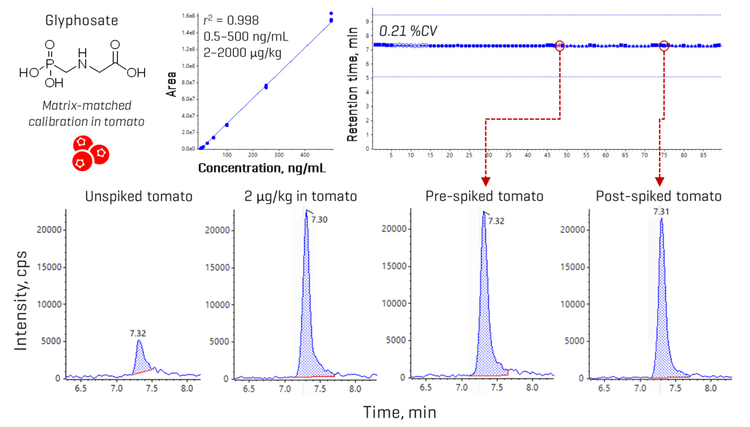
This technical note describes a combined sample preparation and LC-MS/MS method for the analysis of 10 polar pesticides in tomatoes, oranges and oats using the SCIEX 7500+ system. HILIC chromatography on the Phenomenex Luna Polar Pesticides column enabled good separation and retention (>4 min) of early eluters such as AMPA, glufosinate and glyphosate. Matrix spikes, extracted by a modified QuPPe method, exhibited recoveries within ±30% for most analyte/matrix combinations, with <20 %CV based on triplicate spikes. Figure 1 demonstrates the quantitative performance of glyphosate in tomatoes, with excellent retention time reproducibility (RT %CV <0.5%). QTRAP-based MRM3 facilitated the removal of matrix interferences, resulting in improved quantitation with higher signal-to-noise ratios (S/N) against cleaner baselines.
Key benefits of the SCIEX 7500+ system for the analysis of polar pesticides in food
- Excellent linear performance: Matrix-matched calibration exhibited r2 ≥0.99, accuracy ±30% and %CV <20% at the limits of quantitation (LOQ), without using internal standards.
- Sensitivity performance: The sub-to-low µg/kg LOQs for most polar pesticides were at least 10 times lower than the required EU MRLs in tomato, orange and oats.
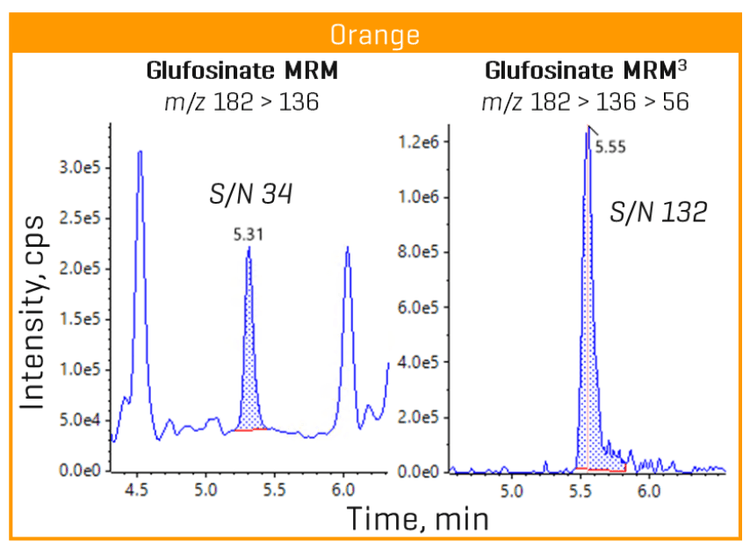
- Leveraging MRM3 for increased specificity: MRM3 scans were used to remove matrix interferences and reduce baseline for challenging analyte/matrix combinations.
Introduction
Polar pesticides, such as glyphosate, glufosinate, ethephon and phosphonic acids, are among the most widely used for agricultural crop protection due to their low cost and high effectiveness. Growing concerns about the safety of these chemicals have resulted in stringent regulations, such as established maximum residue levels (MRLs) in Europe.1-4
Due to their high polarity and hydrophilicity, polar pesticides pose significant analytical challenges with conventional GC and HPLC techniques, which typically require derivatization. The quick polar pesticides (QuPPe) method,5 developed by the European Reference Laboratory (EURL) in Germany, has facilitated direct LC-MS/MS analysis as a viable alternative; however, its minimal sample clean-up typically produces extracts containing many polar co-extractives. This can lead to significant matrix effects, especially when using reverse-phase chromatography in which polar pesticides typically suffer from poor retention and separation. Novel stationary phases, designed with more targeted selectivity for polar pesticides, have emerged as popular alternatives, which include mixed-mode and HILIC chemistries. Here, a HILIC-based LC-MS/MS method was developed to complement the QuPPe-PO extraction method for the analysis of 10 polar pesticides in tomato, orange and oats, using the Phenomenex Luna Polar Pesticides column and the SCIEX 7500+ system.
Methods
Standards: Neat standards were purchased from Evolution Life Sciences PVT Ltd. Solvent calibration standards were prepared at 33:66 (v/v) methanol/acetonitrile with 0.3% (v/v) formic acid, while matrix-matched standards were prepared in tomato, orange and oat extracts. No internal standards (IS) were used.
Matrix performance: Matrix spikes were prepared in triplicate at 2 µg/kg, 10 µg/kg and 20 µg/kg. Apparent recoveries were calculated from these pre-spikes, while absolute recoveries were calculated based on the quotient of the peak areas in the pre- and post-spiked extracts. Matrix effects were calculated by comparing the peak areas between the post-spikes and the solvent standard at equivalent concentrations.
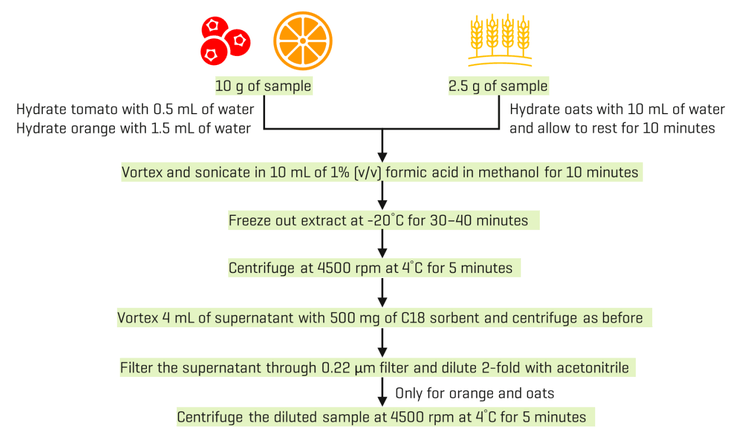
Sample preparation: Tomatoes, oranges and oats were locally purchased. After homogenization and subsampling, the samples were extracted following a modified version of the QuPPe-PO-method developed for food of plant origin (Figure 2).5
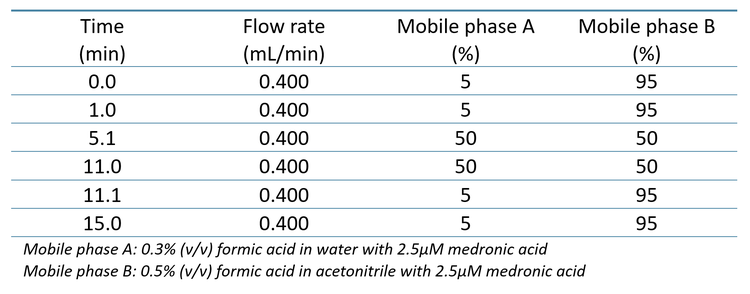
Chromatography: Chromatographic separation was performed on an Exion AD system using a Luna Polar Pesticides column (100 x 2.1 mm, 3µm, Phenomenex P/N: 00D-4798-AN) in HILIC mode. A flow rate of 0.4 mL/min, an injection volume of 5 µL, and a column temperature of 40°C were used. The LC gradient is presented in Table 1.
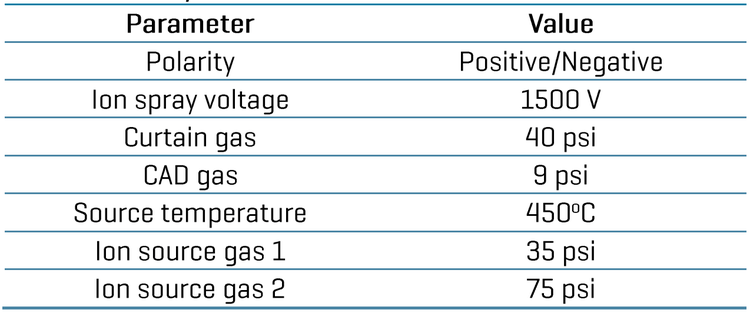
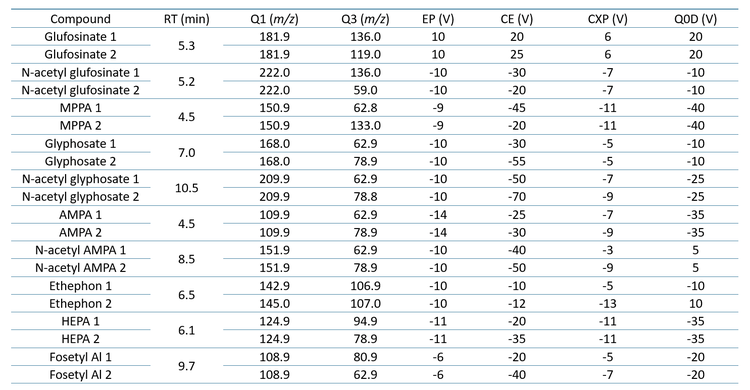
Data processing: Data acquisition and processing were performed using SCIEX OS software (version 3.4).
Chromatographic optimization
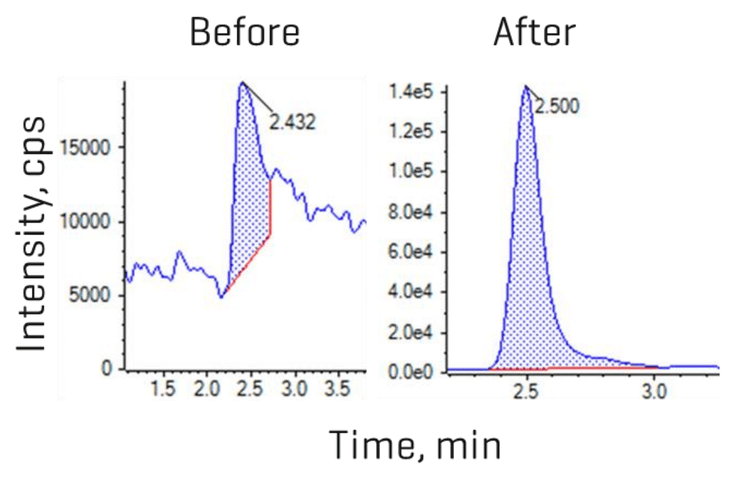
Extensive method development was performed to address several analytical challenges often associated with polar pesticides. The addition of medronic acid in the mobile phases helped deactivate metal sites within the stainless steel hardware of the LC system, minimizing the risk of chelation with organophosphate-based pesticides that often result in poor peak shape and reduced signal. Overnight passivation of the LC system using 90:10 (v/v) acetonitrile/water with 0.5% (v/v) phosphoric acid was also performed for the same reason (Figure 3). Column equilibration for >15 minutes coupled to initial stabilization with solvent injections is recommended.
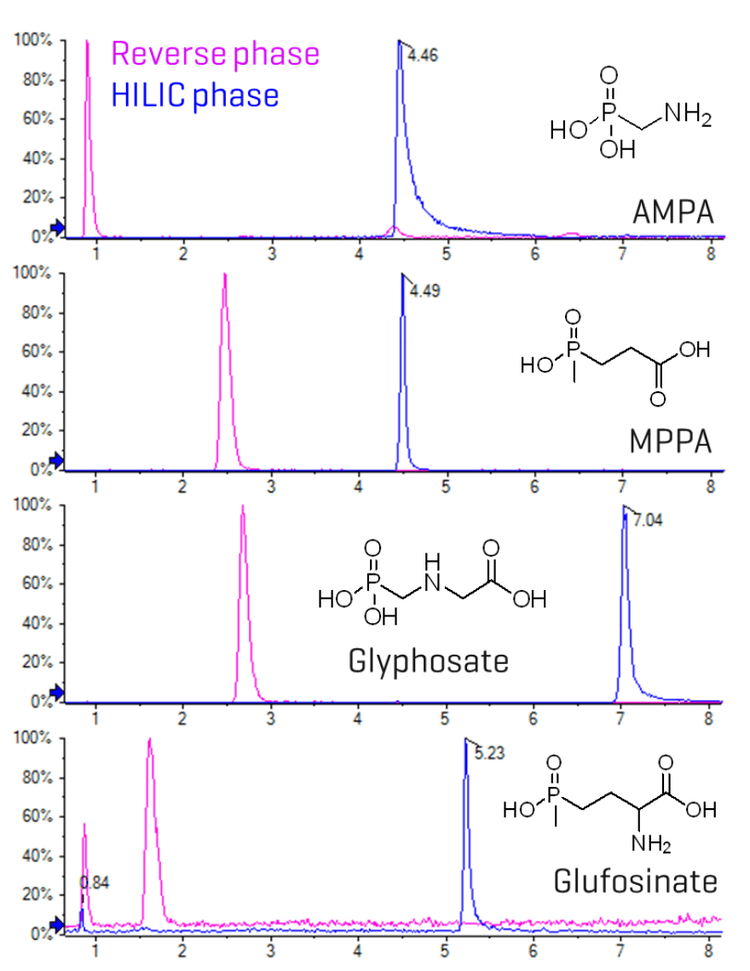
Polar pesticides, such as AMPA, MPPA, glyphosate and glufosinate, typically exhibit poor retention and separation in reverse-phase chromatography. This can lead to matrix effects from other early co-eluting interferences in complex samples such as food. The Phenomenex Luna Polar Pesticides column has demonstrated versatility for the separation of polar pesticides in both HILIC5 and reverse-phase6 chromatography. Here, HILIC-based separation was selected to increase the separation between the analytes and the interference-prone column void (Figure 4). Figure 1 demonstrates good retention of glyphosate at 7.3 min in unspiked and spiked tomato extracts and excellent RT reproducibility (0.21 %CV) over a long batch comprised of >85 injections of solvent and matrix-based samples.
Quantitative performance of solvent and matrix-matched calibration
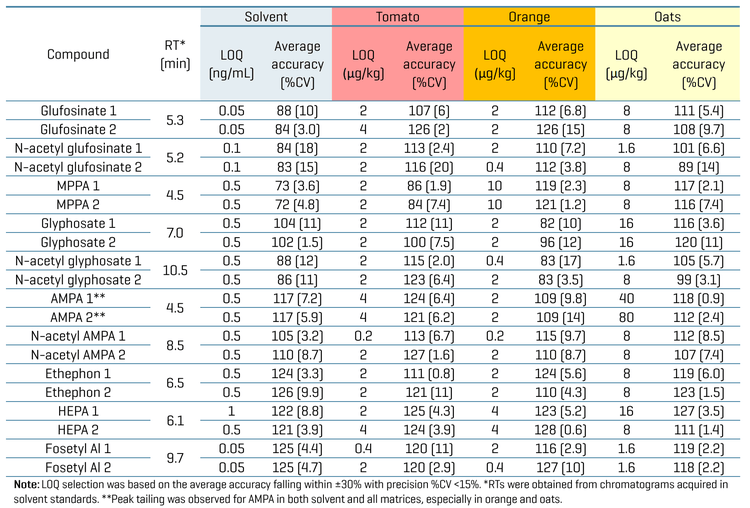
The linear dynamic range of the SCIEX 7500+ system for the analysis of polar pesticides was evaluated in both solvent and matrix-matched calibration standards. Table 3 lists the LOQs and their corresponding mean accuracy and precision (%CV) in solvent, tomato, orange and oat matrices. All calibration curves exhibited r2 ≥0.994 for all compound transitions. LOQs were selected based on the acceptance criteria of average accuracy (±30%), precision (%CV <20%), S/N ≥10 and ion ratio tolerance of ±30%.
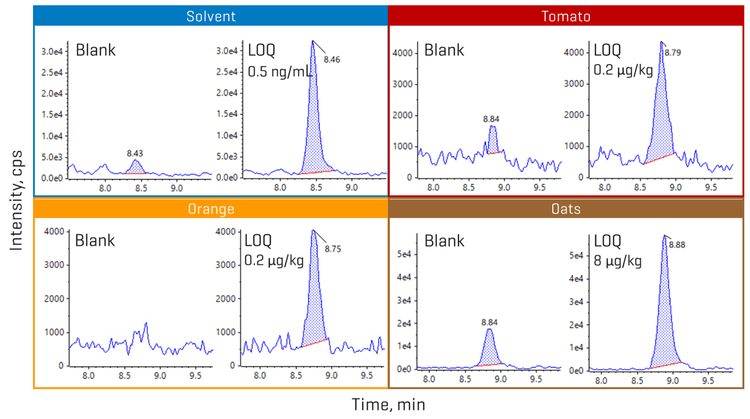
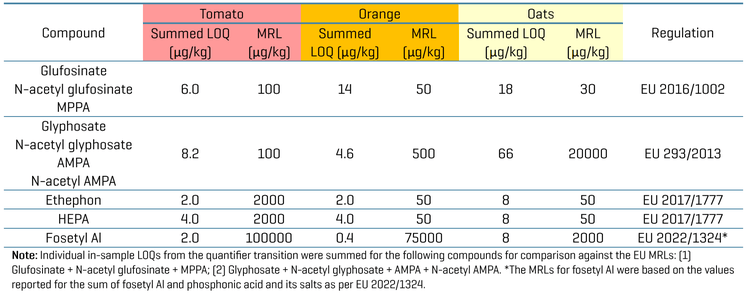
The solvent in-vial LOQs ranged from 0.05 ng/mL to 1 ng/mL, while the in-sample LOQs in matrix were in the range of 0.2-4 µg/kg for tomatoes, 0.2–20 µg/kg for oranges and 1.6–80 µg/kg for oats for both quantifier and qualifier transitions. Figure 5 shows example chromatograms of n-acetyl AMPA in the blanks and at the LOQ level in solvent, tomato, orange and oat matrices. Table 4 shows that most of the in-sample matrix LOQs were below the EU MRLs in the corresponding matrices.1-4 Some of these MRLs consider the polar pesticides and their metabolites collectively under a single limit, although this has yet to be decided for the MRL of glyphosate.7 Higher LOQs were selected for some analytes, such as MPPA in orange and AMPA and glyphosate in oats, due to their elevated incurred levels in these matrices.
Quantitative performance in matrix spikes
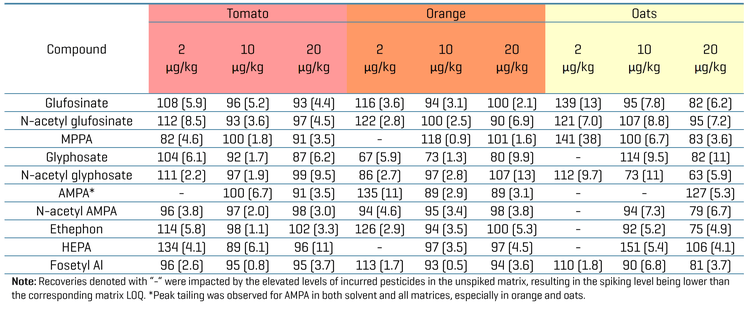
The performance of the method was evaluated by spiking the 3 food matrices at 2 µg/kg, 10 µg/kg and 20 µg/kg. These levels were selected based on guidance in the QuPPe-PO-Method5 and to ensure sufficient buffer between the method sensitivity and the regulated MRLs listed in Table 4. Tomato, orange and oats were used as the representative commodities for high water content, high water content/acidity and dry (cereals) categories, respectively. Overall, the apparent recoveries were predominantly in the range of 80–120%, with %CV of <15% based on triplicate spikes at each spiking level (Table 5). Recoveries for some analytes could not be calculated, because their incurred levels in the unspiked matrix were higher than the spiking level (typically at the lowest 2 µg/kg). This occurred frequently in oats, such that acceptable recoveries were only observed at 10 µg/kg and 20 µg/kg, with AMPA being the most impacted. Several analytes, such as glyphosate and AMPA in orange and glufosinate, MPPA and HEPA in oats, exhibited recoveries outside of the 80–120% range.
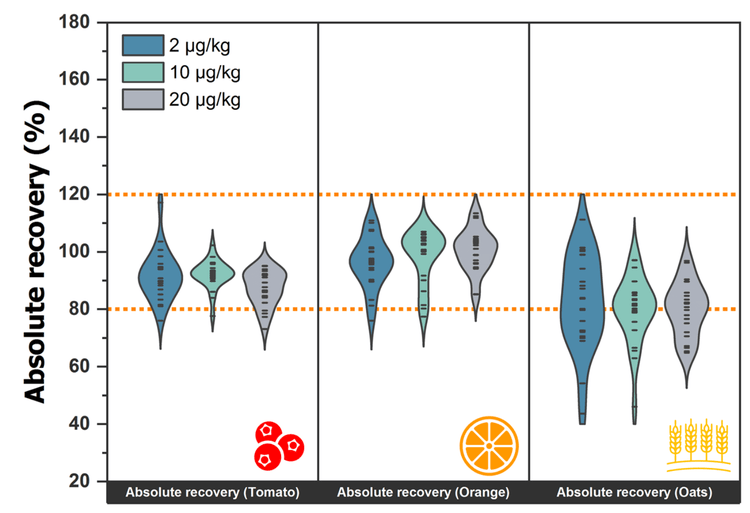
Absolute recoveries were calculated as the ratio of the pre- to post-extraction spike area and this parameter is used to assess extraction efficiency. Tomatoes and oranges exhibited good absolute recoveries at all 3 spiking levels, with most pesticides ranging from 80 to 120% (Figure 6). Oats exhibited slightly lower recoveries, with some in the 40–65% range.
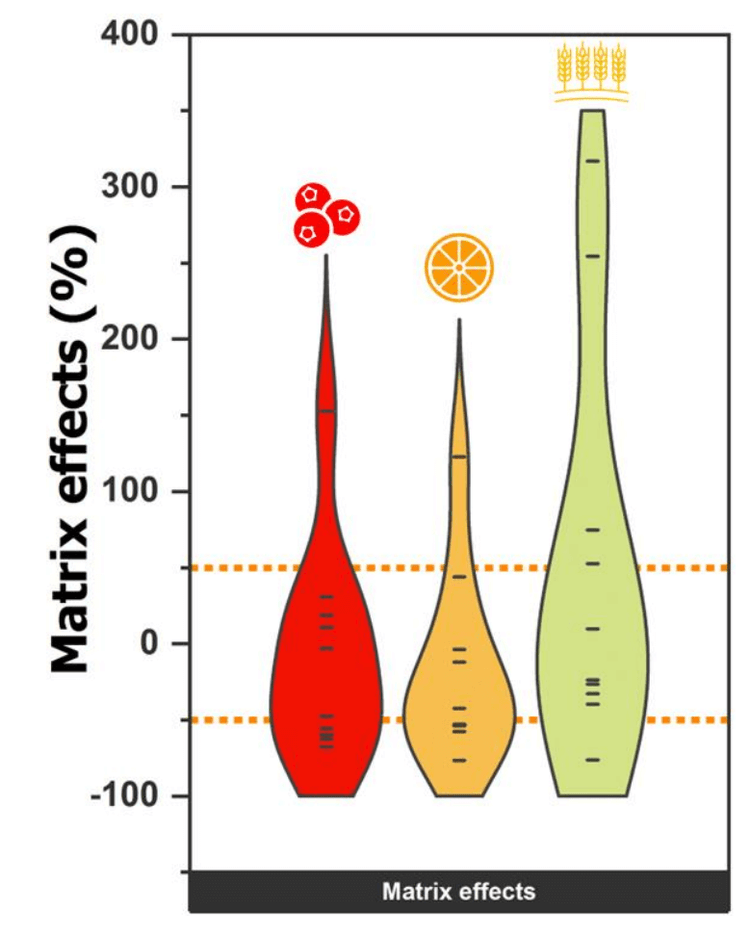
Matrix effects were also assessed in the 10 µg/kg samples. While the matrix effects were mostly within ±50% (Figure 7), several analytes exhibited significant matrix suppression and enhancement, such as MPPA and ethephon. This necessitated the use of matrix-matched calibration curves for quantitation.
While not used here, recoveries can be improved by the addition of mass-labeled internal standards to correct for extraction losses, matrix effects and chromatographic issues, such as AMPA, which exhibited significant peak tailing in orange and oats. The addition of EDTA to sample preparation and the final extract may also minimize chelation with metals present in the matrices, which can impact recoveries and peak shape.
Overall, these results demonstrate good quantitative performance using the modified QuPPe-PO-Method combined with the LC-MS/MS method developed on the Luna Polar Pesticides column and the SCIEX 7500+ system.
Leveraging MRM3 for interference removal
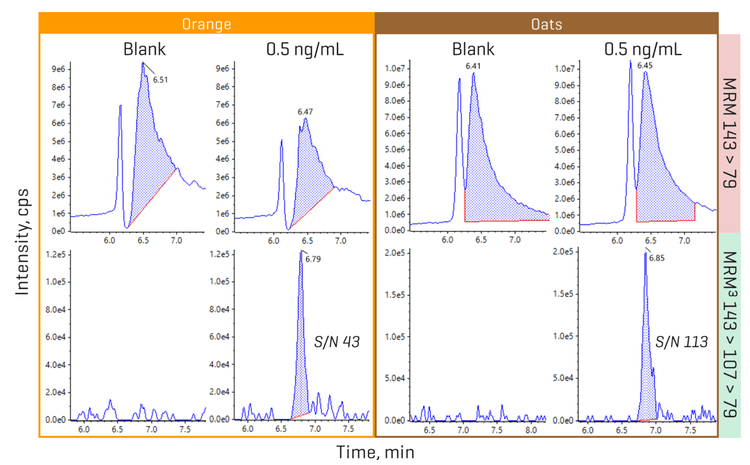
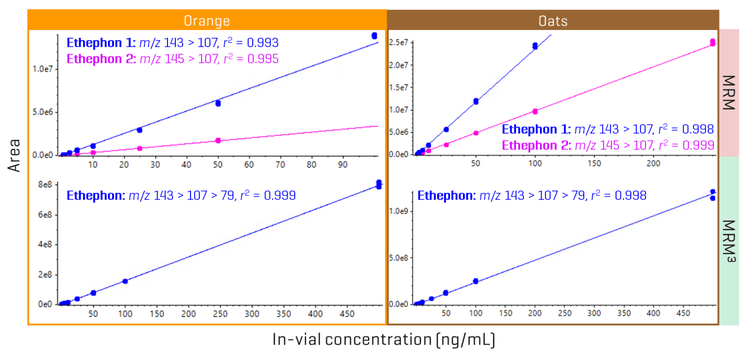
High baselines and coeluting interferences, often present in complex food matrices, can hinder quantitation or even mask the detection of target analytes. Ethephon is typically monitored by 3 MRM transitions (m/z 143 > 107, m/z 143 > 79 and m/z 145 > 107), but the second transition exhibited severe chromatographic issues in orange and oats (Figure 8). Quantitation was not possible using this transition due to the presence of coeluting interferences, completely obscuring the detection of ethephon. MRM3 scans provide greater specificity through a dual fragmentation process that yields unique and compound-specific transitions comprised of 2 generations of product ions, resulting in cleaner baselines and improved S/N.8 Figure 8 demonstrates how MRM3 removed the interferences coeluting with ethephon in orange and oats, resulting in detection at 2 µg/kg against a much cleaner baseline. This third MRM3 transition (m/z 143 > 107 > 79) yielded excellent linear performance in orange and oats (Figure 9) and can be used to complement quantitation with the existing MRM transitions in these challenging matrices.
Conclusions
- A combined QuPPe-PO-based sample preparation and LC-MS/MS method was developed to quantify 10 polar pesticides in different food matrices on the SCIEX 7500+ system.
- Leveraging the Phenomenex Luna Polar Pesticides column, HILIC chromatography demonstrated robust and good retention and separation in solvent and matrix.
- Matrix-matched calibration in tomato, orange and oats exhibited excellent linear performance, with good accuracy, precision and r2 ≥0.99, without using any internal standards.
- Sub-to-low µg/kg LOQs were achieved for most polar pesticides in matrix, all of which were below the corresponding EU MRLs, although higher LOQs were required for those impacted by the naturally incurred levels in the unspiked matrix.
- The QTRAP-enabled SCIEX 7500+ system allowed for the removal of low-level interferences using the MRM3 workflow as a complementary approach to MRM quantitation for challenging analyte/matrix combinations.
References
-
Commission Regulation (EU) No 293/2013 of 20 March 2013 amending Annexes II and III to Regulation (EC) No 396/2005 of the European Parliament and of the Council as regards maximum residue levels for emamectin benzoate, etofenprox, etoxazole, flutriafol, glyphosate, phosmet, pyraclostrobin, spinosad and spirotetramat in or on certain products (Text with EEA relevance). Official Journal of European Union, Document 32013R0293.
2. Commission Regulation (EU) No 2016/1002 of 17 June 2016 amending Annexes II, III and V to Regulation (EC) No 396/2005 of the European Parliament and of the Council as regards maximum residue levels for AMTT, diquat, dodine, glufosinate and tritosulfuron in or on certain products (Text with EEA relevance). Official Journal of European Union, Document 32016R1002.
3. Commission Regulation (EU) No 2017/1777 of 29 September 2017 amending Annexes II, III and IV to Regulation (EC) No 396/2005 of the European Parliament and of the Council as regards maximum residue levels for Bacillus amyloliquefaciens strain FZB24, Bacillus amyloliquefaciens strain MBI 600, clayed charcoal, dichlorprop-P, ethephon, etridiazole, flonicamid, fluazifop-P, hydrogen peroxide, metaldehyde, penconazole, spinetoram, tau-fluvalinate and Urtica spp. in or on certain products (Text with EEA relevance). Official Journal of European Union, Document 32017R1777.
4. Commission Regulation (EU) No 2022/1324 of 28 July 2022 amending Annexes II and III to Regulation (EC) No 396/2005 of the European Parliament and of the Council as regards maximum residue levels for benzovindiflupyr, boscalid, fenazaquin, fluazifop-P, flupyradifurone, fluxapyroxad, fosetyl-Al, isofetamid, metaflumizone, pyraclostrobin, spirotetramat, thiabendazole and tolclofos-methyl in or on certain products (Text with EEA relevance). Official Journal of European Union, Document 32022R1324.
5. Anastassiades, M. et al. Quick method for the analysis of highly polar pesticides in food involving extraction with acidified methanol and LC- or IC-MS/MS measurement. I. Food of plant origin (QuPPE-PO-Method). Version 12.3, published on July 23, 2021.
6. Margarucci, L. et al. Optimal separation of polar anionic pesticides from fruits and vegetables with unique HPLC column selectivity. Phenomenex technical note. TN-1315.
7. [EFSA] European Food Safety Authority. 2018. Reasoned Opinion on the review of the existing maximum residue levels for glyphosate according to Article 12 of Regulation (EC) No 396/2005. EFSA J. 16(5):230. doi:10.2903/j.efsa.2018.5263.
8. Hunter, C. MRM3 quantitation for highest selectivity in complex matrices. SCIEX technical note. RUO-MKT-02-2739-A.
Appendix