Abstract
This technical note demonstrates a software-assisted TPD metabolite identification workflow using the ZenoTOF 7600+ system and Molecule Profiler software (Figure 1). This approach enables users to achieve increased confidence in metabolite structure assignments by utilizing the more information-rich EAD spectra generated using the ZenoTOF 7600+ system.1
Drug metabolites contribute to efficacy, toxicity, and drug-drug interactions. Accurate identification and monitoring of drug metabolites is critical to ensure drug safety. LC-MS platforms are preferred in metabolite identification studies due to the selectivity and sensitivity they offer in the detection of unknown metabolites. An advanced and streamlined metabolite identification workflow with the ZenoTOF 7600+ system and Molecule Profiler software enables the generation of informative data in a fast and intuitive manner, accelerating the early drug discovery process.
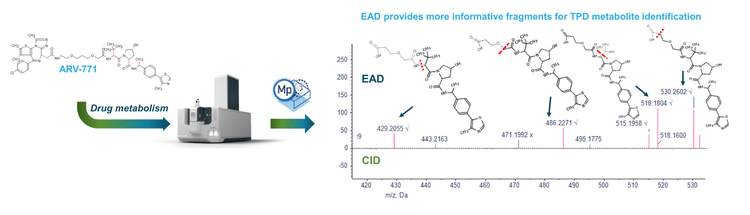
Key benefits for identification of TPD metabolites using the ZenoTOF 7600+ system and Molecule Profiler software
- Enhanced structure assignment: EAD provides information-rich MS/MS spectra that enable the identification of possible TPD metabolites when compared to CID
- Quick data processing: Perform quick and efficient software-aided identification of drug metabolites using the Molecule Profiler software with the ZenoTOF 7600+ system1,2
- Streamlined workflow: Develop confident structure-metabolic stability relationships for drugs utilizing an end-to-end workflow from data acquisition to analysis
Introduction
In the early stages of drug discovery, in vitro assays are utilized to estimate metabolic clearance rates and identify metabolic soft spots. LC-MS tools are frequently employed to conduct these studies because they can provide quantitative and qualitative data with ample sensitivity, especially when detecting unknown metabolites.
Drug metabolite analysis is commonly performed using CID. However, CID is unable to capture information from labile modifications, which can be critical. The ZenoTOF 7600+ system offers an alternative fragmentation method called EAD, which provides complementary sequence information to CID and preserves labile modifications that undergo neutral loss in a CID experiment.3-4
Molecule Profiler software was used to identify biotransformations in therapeutic compounds after in vitro incubation, demonstrating a streamlined workflow. The structure assignments for biotransformation are prioritized and scored based on EAD and CID data in the Molecule Profiler software. The single result file feature for EAD and CID in Molecule Profiler software makes it ideal for comparing MS/MS spectra and identifying exclusive fragments.
Methods
Sample preparation: ARV 771 at 5µM starting concentration was incubated in rat hepatocytes at 37°C for 30 minutes. Samples were removed from incubation and quenched with methanol at a ratio of 2:1 (v/v). Samples were vortexed for 30 seconds and centrifuged at 12000 rcf for 12 minutes at room temperature. The supernatant was transferred to a vial.
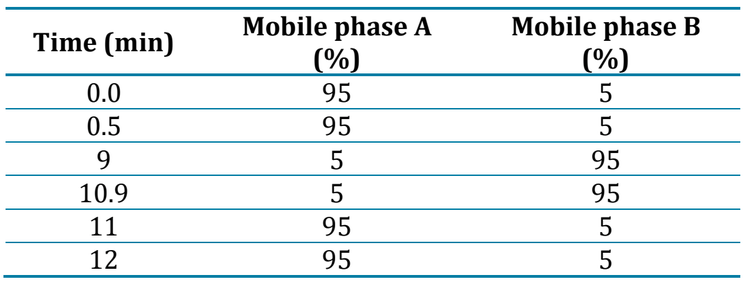
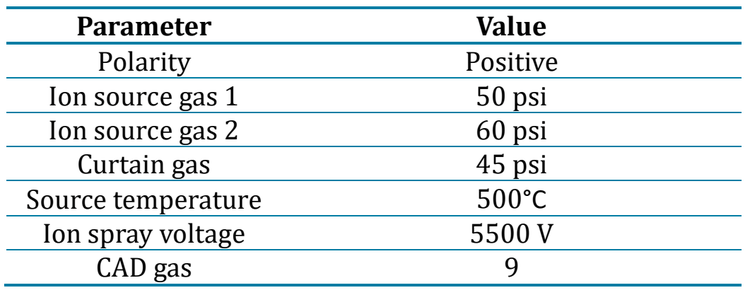
Chromatography: Analytes were separated using a Phenomenex Kinetex™ Polar C18 column (2.1 x 100 mm, 2.6 μm, 100 A ) column. The ExionLC AD system was operated at a 0.5 mL/min flow rate. Mobile phase A was 0.1% (v/v) formic acid in water and mobile phase B was 0.1% (v/v) formic acid in methanol. An injection of 5 μL was subjected to analysis. The chromatographic gradient conditions are summarized in Table 1.
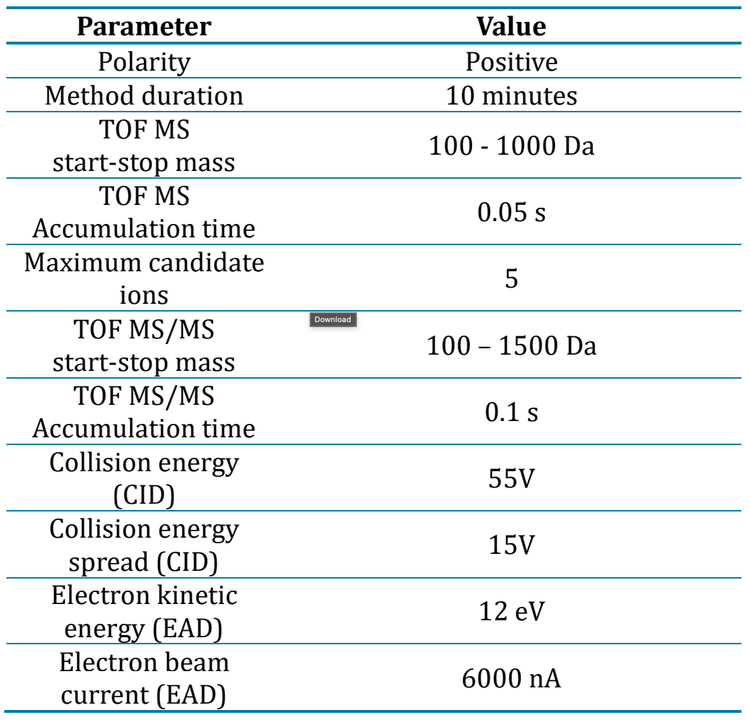
Streamlined metabolite identification workflow on ZenoTOF 7600+ system using Molecular Profiler software
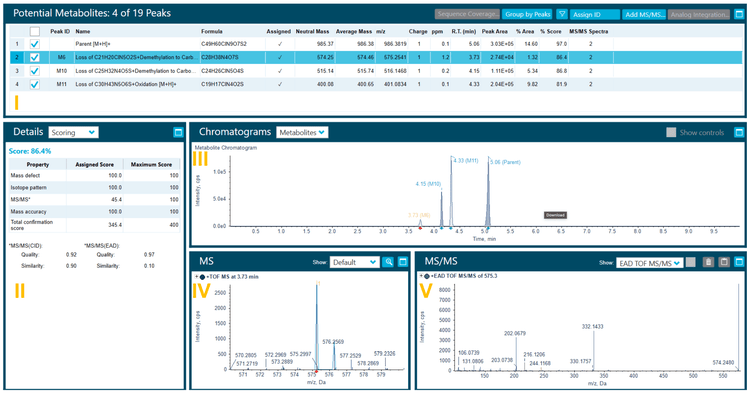
Zeno CID and Zeno EAD data were collected on the ZenoTOF 7600+ system. The Molecule Profiler software, integrated into SCIEX OS software, was used to process and analyze both data sets in a single result file. Figure 2 shows the overview of the results panel, where users can view the list of potential metabolites and an overview of assigned structures and scoring information. Data can be presented with TOF MS or MS/MS and XIC views. The software also displays the mass defect and isotope pattern of the metabolites (Figure 2AE).1,2
The software used an automated process to assign structures based on the weighting of Zeno EAD and Zeno CID MS/MS spectra on a scale of 0-100%. Additionally, the software provided the ability to assign structures in the interpretation pane and generate a total score for the assigned structures.
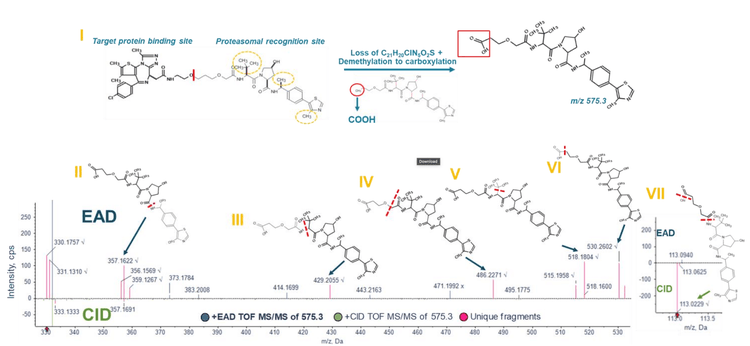
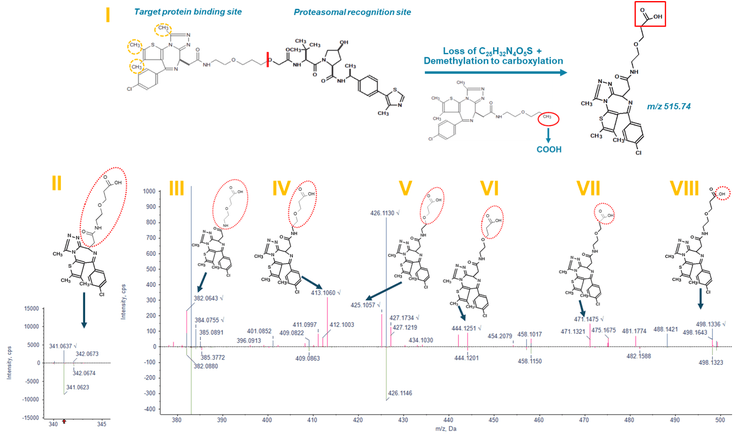
Several phase 1 metabolites were identified following a 30- minute incubation of ARV 771 in rat hepatocytes (Figure 2A). Figure 3 and Figure 4 illustrate the MS/MS spectra overlay from the interpretation pane for phase 1 metabolites from ARV 771, indicating carboxylation (following demethylation) where a loss of the target protein binding site (Figure 3) and proteasomal recognition site (Figure 4) are observed.
Figure 3 displays the identification of carboxylation (following demethylation) at the linker site of the ARV 771 where a loss of the target protein binding site is observed. Unique EAD fragments at m/z 530.2602, 518.1804, 486.2271, 429.2055 and 357.1622 were used to trace the possible carboxylation sites. Furthermore, a unique fragment at m/z 113.0229 in the CID spectrum supported the possible carboxylation on the proteasomal recognition moiety (Figure 3). In Figure 4, automated structure assignment using Molecule Profiler software detected carboxylation (following demethylation) where a loss of the proteasomal recognition site was observed. The unique EAD fragments at m/z 471.1475, 444.1251, 413.1060 and 382.0643 were used to identify possible localization of the carboxylation site on the aliphatic chain (Figure 4).
Conclusion
- Metabolite identification was performed on the ZenoTOF 7600+ system using unique fragments from EAD spectra, CID spectra, or a combination of both spectra. More distinctive and informative fragments were observed from EAD spectra aiding in the identification of TPD metabolites.
- Molecule Profiler software enables users to identify unique fragments from EAD and CID spectra in a single result file to achieve more accurate structure assignment of metabolites and to determine the possible location of the modifications
- The demonstrated workflow can be easily adapted for in vivo metabolism studies to detect low-level metabolites with the enhanced sensitivity provided by the Zeno trap
- Informative data was generated using a quick and easy-to-use workflow on a streamlined platform, accelerating the early drug discovery process
References
- Enhanced drug metabolite identification using collisioninduced dissociation (CID) and electron-activated dissociation (EAD). SCIEX technical note, MKT-29204-A.
- Automated workflow for metabolite identification and metabolic stability analysis using collision-induced dissociation (CID) and electron-activated dissociation (EAD). SCIEX technical note, MKT-27378-A.
- Tunable Electron-Assisted Dissociation (EAD) MS/MS to preserve particularly labile PTMs. SCIEX technical note, RUO-MKT-02-13006-B.
- Peptide fragmentation using electron activated dissociation (EAD). SCIEX community post, RUO-MKT-18- 13296-A>