Abstract
This technical note describes a direct injection LC-MS/MS method for the simultaneous analysis of 7 ultrashort-chain PFAS in drinking water. The inclusion of ultrashort-chain PFAS compounds in EPA Method 563 introduces new analytical challenges in Unregulated Contaminant Monitoring Rule 6 (UCMR 6) monitoring programs due to poor chromatographic retention, elevated background contamination and limited fragmentation of target compounds. Using the QTRAP 6500+ system, an optimized LC-MS/MS workflow delivered robust retention, selective detection, and reliable quantitation of 7 EPA Method 563 target analytes. Verified lowest concentration minimum reporting levels (LCMRLs) are mostly lower than the proposed UCMR 6 minimum reporting levels , ranging from 0.05 9 ng/L for TFSI to 74.6 ng/L for TFA, with low ng/L sensitivity achieved for PFPrS (3.68 ng/L), PFEtS (5.14 ng/L), and TFMS (6.44 ng/L). The method provides a practical solution for routine drinking water monitoring while addressing the contamination and chromatographic challenges commonly associated with ultrashort-chain PFAS analysis.
Key benefits of the QTRAP 6500+ system for the EPA 563 method:
- Verified LCMRLs meet the proposed UCMR 6 reporting requirements in six out of seven ultrashort-chain organofluorine compounds.
- Good retention and peak shape for highly polar analytes using Phenomenex Luna Omega PS C18 column with a 10-minute gradient, reducing run time from 28 minutes.
- Automated custom calculations and conditional formatting in SCIEX OS 5.0 Report Studio.
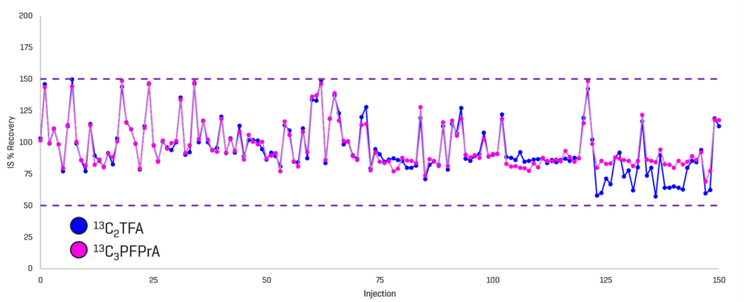
- Stable performance across extended analytical batches, with internal standard recoveries of 57-149% over approximately 150 injections.
- Effective management of background contamination challenges associated with compounds such as TFA and PFPrA.
Introduction
The inclusion of seven ultrashort-chain per-and polyfluoroalkyl substances (PFAS) in the U.S. EPA's Sixth Unregulated Contaminant Monitoring Rule (UCMR 6)1 has increased the need for analytical methods capable of reliably measuring these highly polar contaminants in drinking water. EPA Method 563 was developed specifically for the determination of trifluoroacetic acid (TFA), trifluoromethanesulfonic acid (TF MS), perfluoropropanoic acid (PFPrA), perfluoro-2-methoxyacetic acid (PFMOAA), perfluoroethanesulfonic acid (PFEtS), perfluoropropanesulfonic acid (PFPrS), and bistriflimide (TFSI) using LC-MS/MS.2 Ultrashort-chain PFAS compounds present unique analytical challenges compared with conventional PFAS. Their extremely low hydrophobicity results in poor retention on traditional reversed-phase LC columns, while their low molecular weights can lead to elevated instrumental background noise and limited fragmentation options for MS/MS detection. In addition, compounds,such as TFA and PFPrA, are common laboratory contaminants found in solvents, reagents and consumables increasing the risk of background interference. Matrix effects associated with early eluting inorganic ions and organic anions can further complicate quantitation and method robustness. To address these analytical challenges, a direct injection LC-MS/MS method was developed that meets the chromatographic, calibration, and quality control requirements outlined in EPA Method 563, enabling accurate and reliable quantitation of ultrashort-chain PFAS in drinking water.
This technical note describes and evaluates an LC-MS/MS method developed on the QTRAP 6500+ system for the analysis of seven ultrashort-chain organofluorine compounds in drinking water. Performance was assessed in terms of chromatographic retention, sensitivity, accuracy, precision, and robustness. The resulting workflow m eets the analytical acceptance criteria outlined in EPA Method 563 while providing a practical solution for routine drinking water monitoring.
Methods
Standards and samples: Analytical standards for native and isotopically labeled internal standards were provided by the US EPA as part of an interlaboratory study.
Sample preparation: Samples were prepared according to the procedure described in EPA Method 563.2 Briefly, a 10 mL aliquot of matrix sample is spiked with internal standards and ascorbic acid to a final concentration of 10 mg/L and acetic acid to a final concentration of 0.25%. The internal standards, 13C2-TFA and 13C3-PFPrA, are spiked at 100 ng/L. The sample is mixed and an aliquot is transferred to a Phenomenex Verex Polypropylene Vial (1.7 mL; Part: AR0-39P0-13).
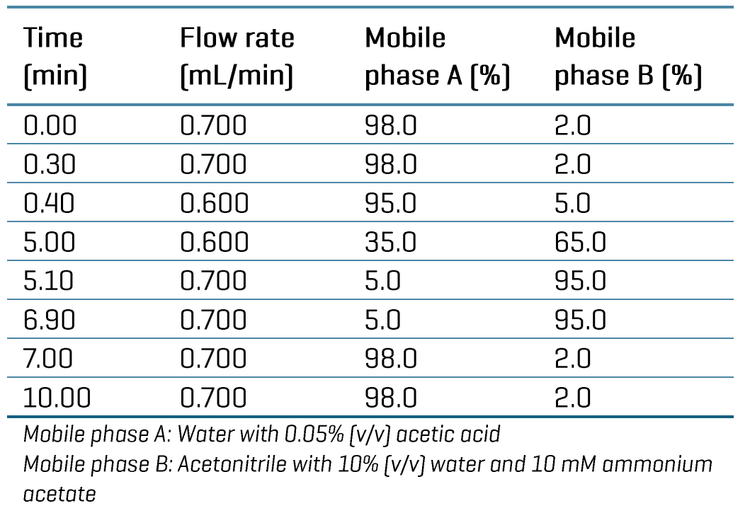
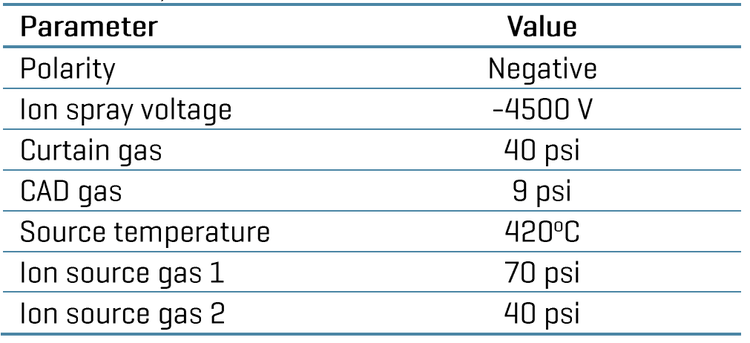
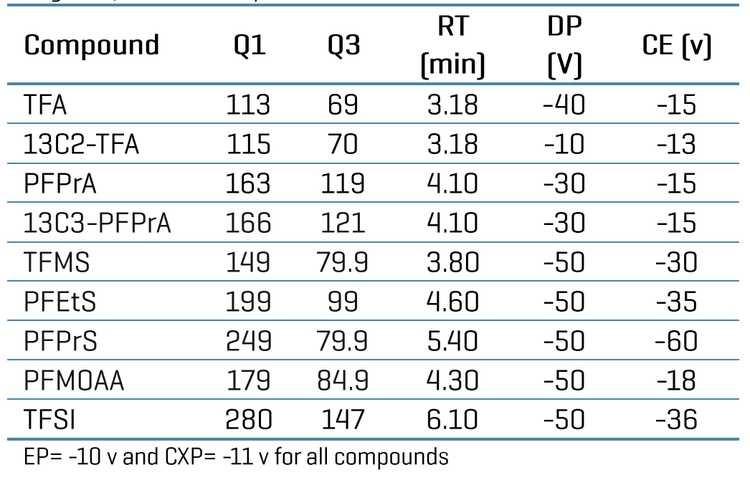
Chromatography: Chromatographic separation was performed on an Exion LC AE system using a Phenomenex Luna Omega PS C18 (3x 150 mm 3 μm; Part: 00F-4758-Y0) as the analytical column and a Waters C18 AX 50 x 2.1 mm 5 μm as the delay column (delay column was provided by the EPA). A flow rate varying between 0.6 and 0.7 mL/min was used with a 20 μL injection volu me. A column oven temperature of 45°C was held throughout the 10-minute gradient. The LC gradient is provided in Table 1. External rinsing procedures were performed between injections using mobile phase B as the rinse solution.
Analytical performance
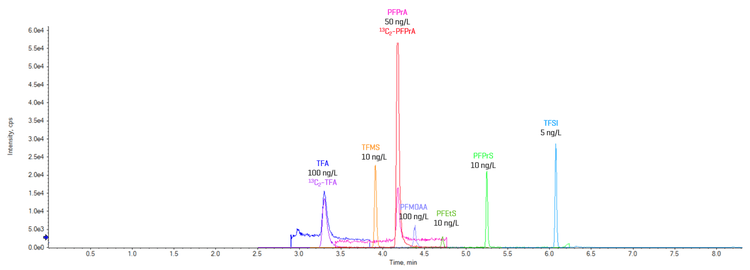
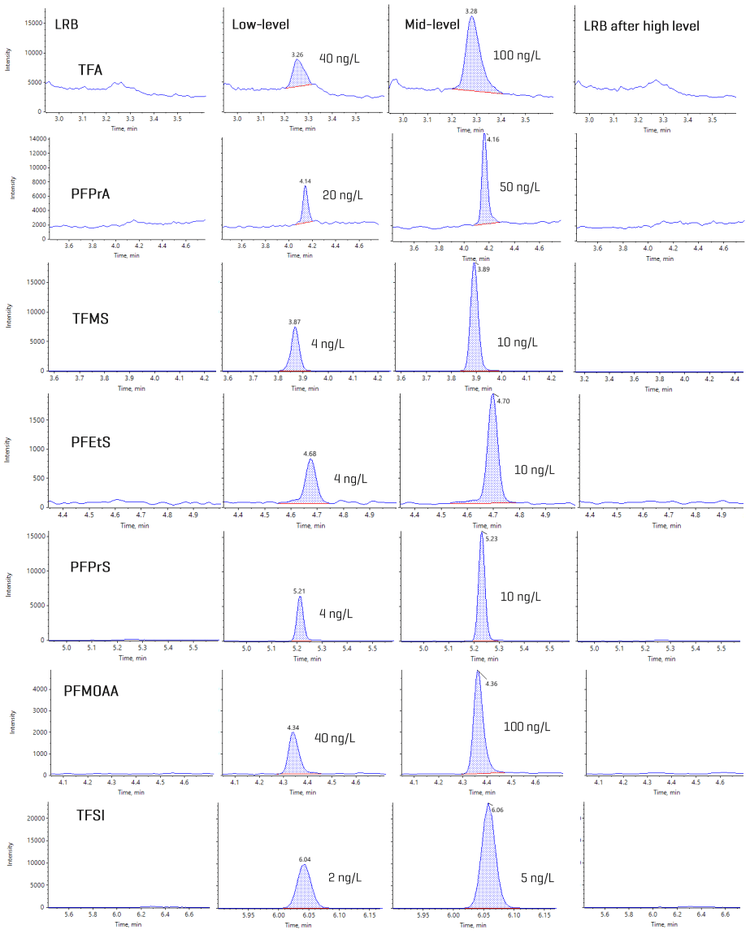
Chromatographic performance: Figure 1 shows the chromatographic separation of the 7 ultrashort-chain PFAS compounds at a mid-QC spike level (labeled within the figure) ranging from 5 ng/L for TFSI to 100 ng/L for TFA and PFMOAA. The chromatography was optimized to maintain appropriate peak shape, chromatographic separation and minimized total injection-to-injection time. The EPA 563 method allows for flexibility in the delay and analytical columns, mobile phase composition, the length and shape of the gradient and injection volume.2 Compared to the 28-minute gradient described in EPA Method 5632, the optimized SCIEX workflow reduces analysis time to 10 minutes while maintaining good chromatographic performance for all target analytes. This represents a 64% reduction in run time and substantially increases laboratory throughput.
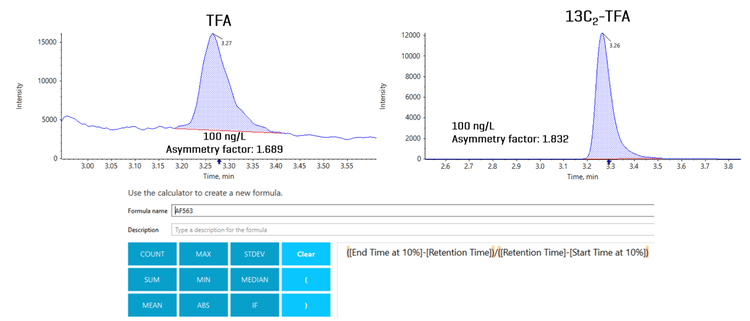
Peak a symmetry factor: The EPA 563 method states that no peaks can be split or have more than one apex and that the first eluting internal standard or analyte in a midlevel calibration standard must have a peak asymmetry factor between 0.5 and 2.2 Figure 2 shows the peak shape and asymmetry factor for the first eluting compound of TFA and its isotopically labeled internal standard at a mid-level calibration standard. Additionally, Figure 2 shows the SCIEX OS embedded calculated column used to determine the peak asymmetry factor. The calculated asymmetry factors for TFA and 13C2-TFA are, 1.689 and 1.832, respectively, and are within the acceptable range.
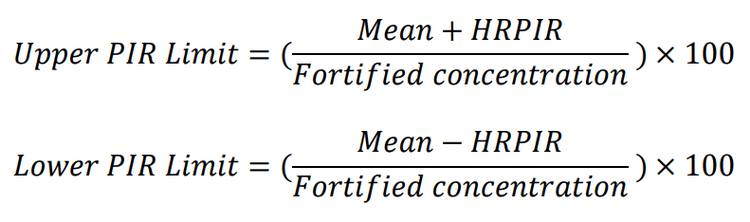
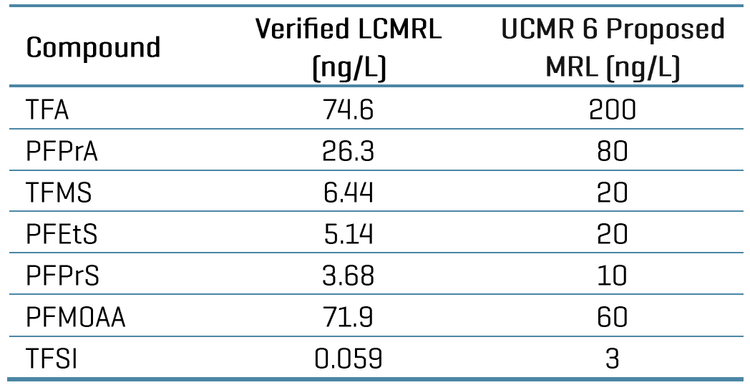
An MRL is considered verified when the Prediction Interval of Results (PIR) falls within 50% to 150% of the fortified concentration. Six of the seven verified MRLs me et the proposed UCMR6 multi-lab MRLs1 (Table 4). The verified PFMOAA LCMRL was 71.9 ng/L, compared with the proposed UCMR 6 MRL of 60 ng/L, potentially reflecting the elevated PFMOAA background observed in the multipurpose laboratory environment and atmospheric contamination. Elevated background levels of trifluoroacetic acid (TFA) were also observed, however, the calculated LCMRL is below the MRL proposed in UCMR 6.
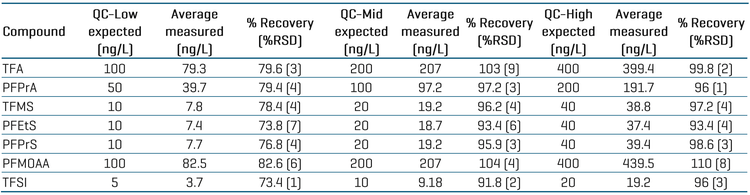
Initial calibration: Calibration curves were generated using linear weighted regressions . TFA used 1/x2 weighting, while all other analytes used 1/x weighting. Initial calibration met EPA Method 563 acceptance criteria2, including calibration levels within 70-130% of their true level and internal standard recoveries between 50% and 150%, supporting accurate quantitation across the analytical range.
Analysis of tap water samples
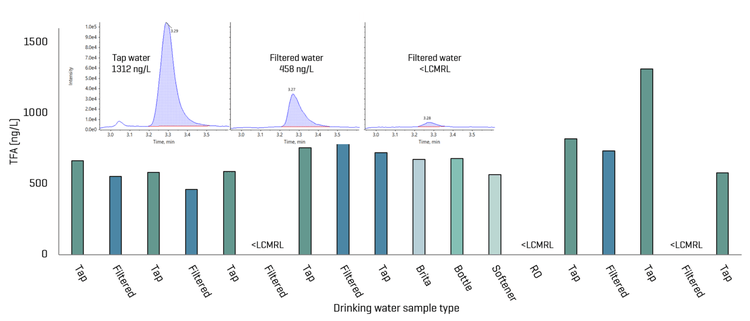
Several drinking water samples, including tap water, filtered water, bottled water, and reverse osmosis (RO) water were analyzed using the developed workflow designed to meet EPA Method 563 requirements. TFA was detected in many of the samples, with concentrations ranging from below the LCMRL to 1,312 ng/L. Consistent with previous reports, TFA was the most frequently detected ultrashort-chain PFAS across the drinking water samples evaluated.3 Figure 5 summarizes TFA concentrations measured across the different drinking water sample types and highlights the variability observed among sources and treatment approaches.
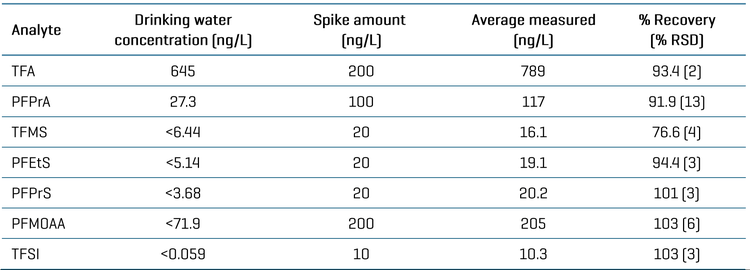
To further assess performance, a representative drinking water matrix was fortified and analyzed in replicate using the workflow. As shown in Table 6, recoveries ranged from 76.6% to 103% with %RSD values of 2% to 13%, demonstrating acceptable accuracy and precision across the target analyte panel. These results demonstrate the suitability of the SCIEX QTRAP 6500+ system and workflow for routine monito ring of ultrashort-chain PFAS in drinking water while meeting the analytical requirements of EPA Method 563.
Conclusions
- Development of LC-MS/MS method for 7 ultrashort-chain PFAS compounds using QTRAP 6500+ meeting the requirem ents of EPA Method 563 for the determination of seven ultrashort-chain organofluorine compounds in drinking water.
- Retention, separation, and acceptable peak shape for highly polar analytes using Phenomenex Luna Omega PS C18 column.
- Verified LCMRLs below the proposed UCMR 6 MRLs for six of seven target compounds.
- Automated custom calculations and conditional formatting in SCIEX OS 5.0 Report Studio enabled rapid assessment of key EPA Method 563 performance criteria while supporting consistent, audit-ready reporting.
- Internal standard recoveries remained within EPA acceptance limits (57-149%) across approximately 150 injections, demonstrating robust instrument and method performance.
- Accurate recovery of fortified drinking water samples (76.6-103%) with low variability demonstrated reliable quantitation across the analyte panel.
References
- United States Environmental Protection Agency. Revisions to establish the sixth Unregulated Contaminant Monitoring Rule (UCMR 6) for public water systems. July 2026.
https://www.epa.gov/dwucmr/proposed-sixth-unregulated-contaminant-monitoring-rule - Rosenblum, L ., K. Prather, and L. Villegas. Method 563: determination of selected ultrashort organofluorine compounds in drinking water by liquid chromatography/tandem mass spectrometry. United States Environmental Protection Agency, Washington, July 2026. https://www.regulations.gov/document/EPA-HQOW-2023-0469-0136
- Zheng, G., S. M. Eick, A. Salamova. Elevated Levels of Ultrashort- and Short-Chain Perfluoroalkyl Acids in US Homes and People. Environ. Sci. Technol. 24 October 2023; 57 (42). DOI: 10.1021/acs.est.2c06715