Abstract
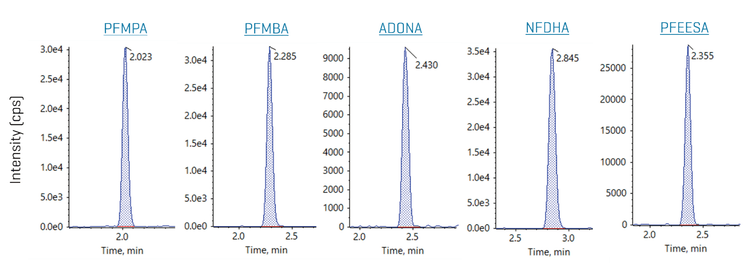
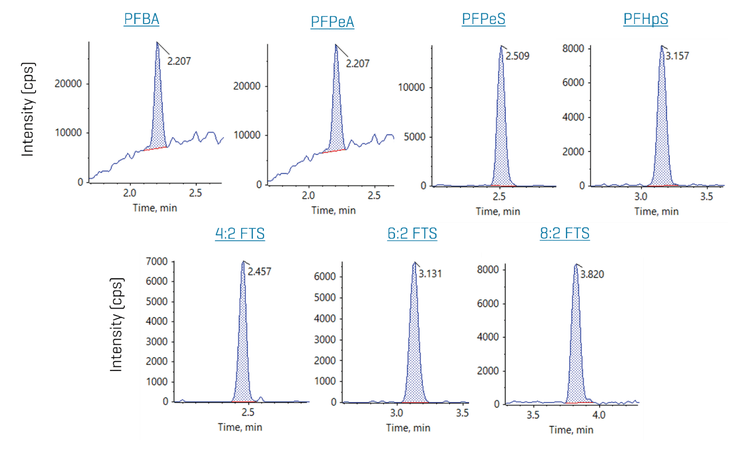
This technical note describes the analysis of PFAS in drinking water by EPA Method 533 using a combination of the SCIEX 5500+ system and Phenomenex Gemini HPLC column and Strata X-AW solid phase extraction (SPE) cartridges. The method achieved a minimum reporting level (MRL) of 2 ng/L for all analytes except PFHpA (4 ng/L), demonstrating the ability to generate accurate and precise data for EPA Method 533 (Figure 1). The method demonstrated excellent quantitative performance, with mean accuracies of 95-105% at the 0.50 ng/mL and 25 ng/mL levels, and precision <5%CV. Optimized chromatography using the Phenomenex Gemini C18 column provided good analyte retention and symmetrical peak shape for the early-eluting PFAS. The use of the custom-built calculations and flagging rules within the SCIEX OS software streamlined data review and report generation, increasing overall sample throughput.
Key benefits of EPA Method 533 analysis using the SCIEX 5500+ system and Phenomenex consumables
- Good chromatographic retention and peak shape. Using the Phenomenex Gemini C18 column, early eluting PFAS showed good separation from the void volume and symmetrical peak shape
- Accurate and reproducible data quality to achieve 2 ng/L MRLs. The MRL was confirmed at 2 ng/L for all analytes except for PFHpA (n=7) using the 5500+ system
- Excellent quantitative performance. Mean accuracy between 95% to 105% in the 0.50 ng/mL and 25 ng/mL standards with mean precision <5%CV using the Strata X-AW SPE cartridges
- Fast and powerful data processing using SCIEX OS. Use of custom calculations and flagging rules reduced data review and report generation, increasing throughput
Introduction
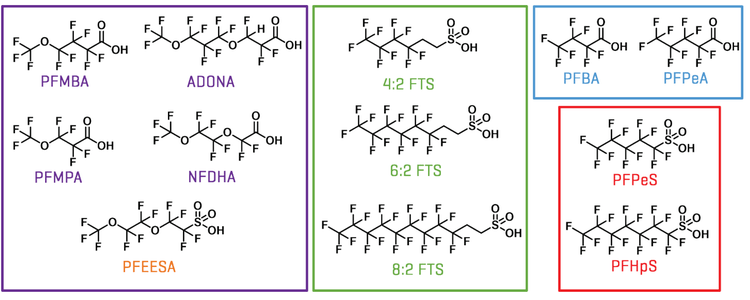
EPA Method 533 is a solid-phase extraction (SPE) LC-MS/MS method for the analysis of per- and polyfluorinated substances (PFAS) in drinking water.1 The method complements EPA Methods 537 and 537.1 by including short-chain PFCAs, odd-chain PFSAs, FTS compounds as well as perfluoroether carboxylates and sulfonates such as HFPO-DA (GenX) and ADONA (structures of the novel compounds are shown in Figure 2). Some of these additional compounds do not extract well using the SDBL media that was used in EPA 537/537.1 and therefore EPA 533 requires use of weak anion exchange chemistry for the SPE step. In addition, EPA Method 533 incorporates stable isotope dilution standards to minimize matrix effects and improve data quality.
Drinking water samples analyzed by EPA Method 533 typically contain low parts-per-trillion levels (ng/L) and require stringent control of background contamination to achieve the method reporting limits (MRLs). In this technical note, the Phenomenex Strata X-AW SPE cartridges selectively retained and concentrated PFAS while minimizing background interferences. Further, Phenomenex “Designed for PFAS” consumables are quality-controlled to ensure minimal PFAS background, supporting reliable low-level quantitation to meet the performance requirements of EPA Method 533. Finally, use of a Phenomenex Gemini C18 column provided adequate retention and symmetrical peak shape of the early eluting, short-chain PFAS like PFBA and PFBS, as well as good chromatographic resolution across the analyte range.
Methods
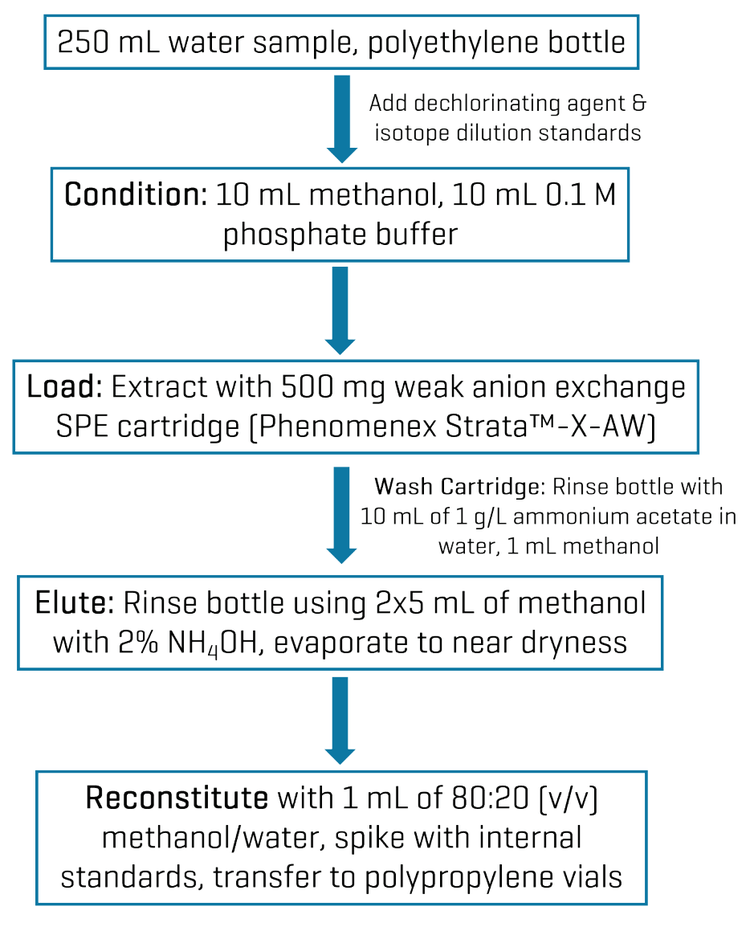
Sample preparation: Methods follow those outlined in EPA Method 533 (Figure 3).1 Briefly, the dechlorination agent and isotope dilution standards (EPA-533ES, Wellington Laboratories) were spiked into the 250 mL water samples and were extracted and concentrated using 500 mg/6ml Phenomenex Strata™-X-AW SPE cartridges. The final eluent was evaporated to near dryness, reconstituted in 1 mL of 80:20 (v/v) methanol/water and spiked with the instrument performance standards (EPA-533IS, Wellington Laboratories).
Chromatography: The SCIEX ExionLC system was used and chromatographic separation was achieved using gradient conditions with a Phenomenex Gemini C18 column (50 x 2 mm, 3 μm particle size). A delay column was used to separate the instrument PFAS contamination from the analyte peak. The mobile phases were water (A, modified with 20mM ammonium acetate) and methanol (B) with a flow rate of 0.6 mL/min. The column oven was 40oC and the injection volume was 2 μL.
Mass spectrometry: Analysis was performed on the SCIEX 5500+ system with the Turbo V Ion Source using an electrospray ionization (ESI) probe in negative ion mode. Data were collected using the Scheduled MRM Algorithm with compound-specific and source and gas optimized parameters.
Data processing: Samples were processed with SCIEX OS software (version 2.0) using the Analytics module. Analyte responses were normalized to their respective isotope dilution standards (IDS). IDS recovery was calculated after normalizing the IDS response to the instrument performance standard (IPS). As per the method requirements, calibration curves were forced through the origin. Five replicates of the calibration standards were performed. Minimum reporting levels (MRL) were confirmed following procedures described in Section 9.1.4 of the EPA Method 533 guidelines using 7 samples that were fortified at the target MRL concentration, extracted and analyzed over 3 days.
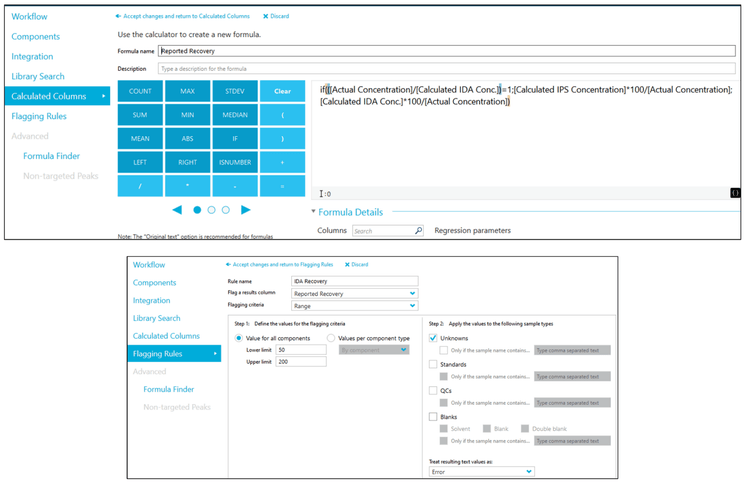
A series of custom “Calculated Columns” and flagging rules were were developed within the SCIEX OS processing method to evaluate the QC criteria within EPA Method 533. For example, EPA Method 533 requires that the IDS analyte recovery be between 50-200%, and the IPS be 50-150% of the average area measured during the initial calibration. Ultimately, the IDS and IPS recovery values were reported directly in the Results Table, and custom flags were created to alert the user to out of range values.
Chromatographic separation and peak symmetry
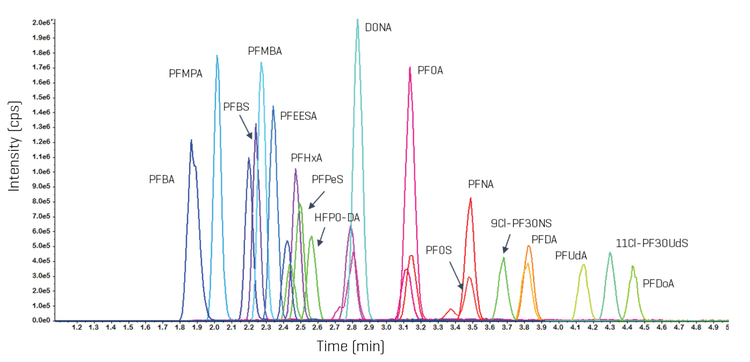
Use of the Phenomenex Gemini C18 column resulted in good peak shape for all analytes with retention times ranging from 1.8 to 4.5 min (Figure 4). In addition, the short 8.5 min run time resulted in high sample throughput while maintaining good peak resolution. Poor peak shape was frequently a concern in the previous EPA methods (i.e. 537 and 537.1). In addition to the Gemini C18 column, the peak symmetry was aided by the weaker vial composition of 80:20 (v/v) methanol/water allowed in EPA 533. Further, all of the novel PFAS compounds in EPA 533 were analyzed with a standard PFAS chromatography program, that is, no changes were required to column or mobile phase conditions to achieve satisfactory retention and peak shape.
Sensitivity and linear dynamic range
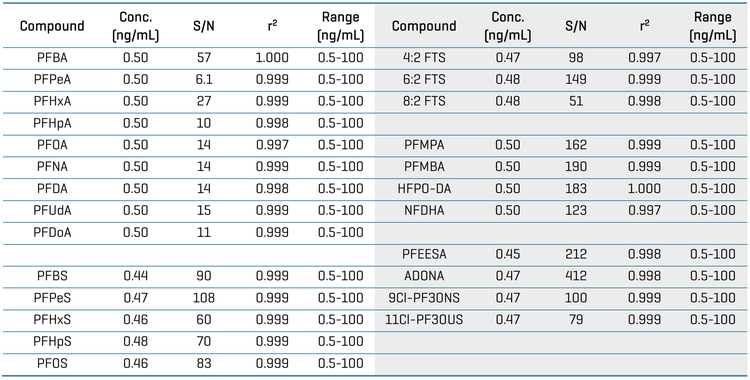
All PFAS compounds showed excellent sensitivity for the 0.50 ng/mL standard (1 pg on-column) which was the lowest calibration standard analyzed. MRM chromatograms for the 0.50 ng/mL standard of the novel EPA Method 533 analytes are presented in Figures 1 and 5, and signal-to-noise values are presented in Table 1. The 0.50 ng/mL calibration level represents an in-sample concentration of 2 ng/L due to the 250-fold SPE concentration. Mean signal-to-noise values for the 0.50 ng/mL standard, using the peak-to-peak algorithm, ranged from 6.1 for PFPeA to 412 for ADONA. These results demonstrate that the actual in-sample LOQ values exceeded 2 ng/L, significantly below the current EPA drinking water guidelines for PFOS and PFOA.
Calibration curve linearity was excellent with r2 values greater than 0.999 for most PFAS compounds over the 0.5-100 ng/mL standard range (Table 1). The HED detector of the SCIEX 5500+ system results in improved linear dynamic range as compared to older models. This is important for sample sets which contain wide variations in concentration, reducing the need for dilution and reinjection.
Accuracy and precision
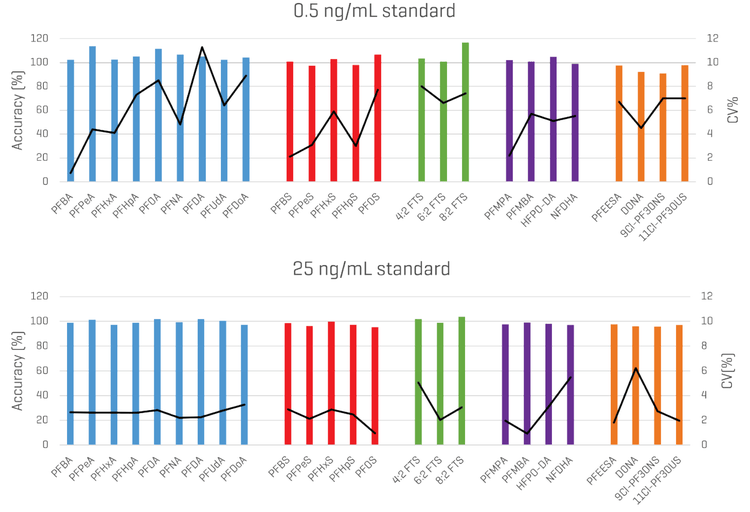
In addition to sensitivity, good accuracy and precision are crucial for confident data quality. Accuracy and precision were evaluated in the 0.50 ng/mL and 25 ng/mL standards (n=5). For both standard levels the accuracy was very good, generally 100% +/- 5% (Figure 6). Precision was also very good, the CV% was ~5% for the 0.5 ng/mL standard and ~2% for the 25 ng/mL standard. Carryover was also evaluated by injecting a blank immediately following the 100 ng/mL standard. No target analytes were detected in the blank injection, demonstrating that carryover was insignificant.
Minimum Reporting Level (MRL)
As outlined in the EPA Method 533 document, the MRL is calculated by analyzing a low-level spike 7 times during 3 consecutive days. Specifically, blank samples are spiked at the presumed MRL concentration and carried through the entire extraction process. The analyte recovery must be 50-150% at the 99% prediction level and thus considers both accuracy and precision. The in-sample MRL concentration was 2 ng/L for all analytes except for PFHpA, which was 4 ng/L.
Collectively, these results demonstrate that the combination of sample preparation using the Phenomenex Strata-X-AW SPE cartridges and SCIEX 5500+ LC-MS/MS system paired with a Gemini C18 HPLC column generates accurate, precise and reliable data for EPA Method 533. These results are consistent with previously published studies using both manual2 and automated3 SPE workflows, which similarly reported good analyte recovery and reproducibility with the Phenomenex Strata-X-AW SPE cartridges and Gemini C18 HPLC column.
Custom calculations and flagging
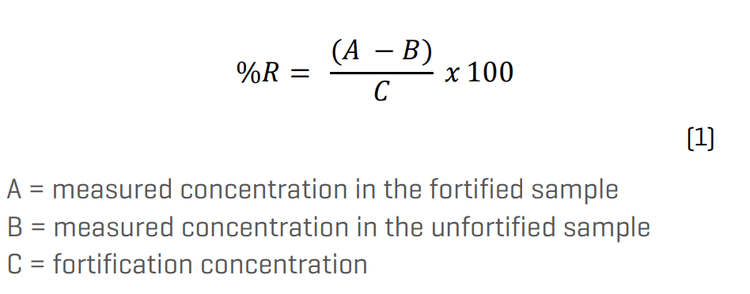
EPA Method 533 prescribes specific performance and quality control criteria that require the analyst to complete several calculations. These calculations can become tedious when repeated for the 25 analytes required by the method. However, calculated columns in the SCIEX OS software allow the analyst to automate these calculations. For example, EPA Method 533 requires the calculation of the concentration of each isotope dilution analogue recovery in both field and QC samples.
This concentration is calculated using the average area in the initial calibration and the internal standard technique (Figure 6). Typically, analysts would need to transfer data into additional data processing software (e.g. Microsoft Excel). However, using calculated columns, this recovery (%R) can be calculated directly in SCIEX OS Software:
Conclusions
This technical note demonstrated:
- An LC-MS/MS method for PFAS in drinking water on the SCIEX 5500+ system to meet EPA Method 533 requirements
- Good chromatographic retention and peak shape for early eluting PFAS, and good resolution across the analyte panel using the Phenomenex Gemini C18 column
- Accurate and precise quantitative data in the 0.50 ng/mL and 25 ng/mL standards
- A minimum reporting level of 2 ng/L with 3 orders of dynamic range for most compounds using a combination of the Phenomenex Strata-X-AW SPE cartridge and SCIEX 5500+ LC-MS/MS system
- Efficient data processing and review using SCIEX OS custom calculations and flagging rules
References
- Rosenblum, A. and S.C. Wendelken. Method 533: Determination of per- and polyfluoroalkyl substances in drinking water by isotope dilution anion exchange solid phase extraction and liquid chromatography/tandem mass spectrometry. United States Environmental Protection Agency, Washington, November 2019. https://www.epa.gov/sites/production/files/2019- 12/documents/method-533-815b19020.pdf
- Lodge, S. and A. Pierri. EPA Method 533: PFAS in drinking water. Phenomenex TN-0141, 2020.
- Wan, I. P. Bassignani, S. Lodge, B. Tackett. Analysis of PFAS in drinking water by EPA Method 533: A direct comparison of the accuracy and precision of manual and automated SPE sample preparation. Phenomenex TN-0151, 2022. https://www.phenomenex.com/documents/2022/06/14/20/31/analysis-of-pfas-in-drinking-water-by-epa-method533-a-direct-comparison-of-the-accuracy-and-precisi