Comprehensive quantitation of water-soluble vitamins in infant formula
Abstract
This technical note describes a combined sample preparation and LC-MS/MS method for the quantitation of 13 water-soluble vitamins (WSVs) in infant formula using the QTRAP 4500 system. Good separation was achieved for the target analytes using the Phenomenex Luna Omega Polar C18 column over a 14-min gradient. Excellent instrument sensitivity was demonstrated by the sub-to-low limits of quantitation (in-vial LOQs, 0.1–10 ng/mL) achieved for most analytes in solvent standards, with average accuracies of 70–118% and <15 %CV. Method performance was evaluated in real-world infant formula and an infant formula standard reference material (SRM 1869) from the National Institute of Standards and Technology (NIST). Average recoveries in over-spiked infant formula were 98–108% (%CVs of 1.3–20%), while absolute recoveries were 68.1–103% for most of the analytes. Comparison against the NIST SRM demonstrated good accuracy within ±30% of the reference levels.
Key benefits of the QTRAP 4500 system for water-soluble vitamins analysis in infant formula
- Excellent linear and sensitivity performance: Aqueous calibration exhibited r2 ≥0.99, accuracy ±30% and %CV <20% at the limits of quantitation (LOQ), without using internal standards.
- Good recovery performance in matrix: Average apparent recoveries of 98–108% and %CV <20% (n = 3) were achieved in infant formula over-spiked at 1x and 2x the endogenous levels measured in the blank. Absolute recoveries of 68.1–103% were also achieved from pre- and post-spiked extracts.
- Corroboration with NIST SRM 1869 reference: Analysis results of the NIST SRM 1869 infant formula were within ±30% accuracy of the reference values listed in the certificate of analysis .
Introduction
Water-soluble vitamins (WSVs) are essential nutrients that support healthy growth and development during infancy, which include vitamin C and the B-complex group comprised of thiamine (B₁), riboflavin (B₂), niacin (B₃), pantothenic acid (B₅), pyridoxine and related forms (B₆), biotin (B₇), folate/folic acid (B₉) and cobalamin (B₁₂). As they are highly water-soluble, WSVs are readily excreted from the body, necessitating recommended dietary allowances (RDAs) to ensure adequate dietary intake across age groups, especially for infants.1 As an alternative to human breastmilk, infant formula is fortified with water- and fat-soluble vitamins, minerals and other functional ingredients to ensure compliance with nutritional requirements. Infant formula manufacturers typically over-fortify vitamins to offset processing- and storage-related losses and degradation and to ensure nutritional adequacy during the labeled shelf life.2 As such, infant formula is highly regulated2,3 and requires accurate vitamin verification in the finished product.
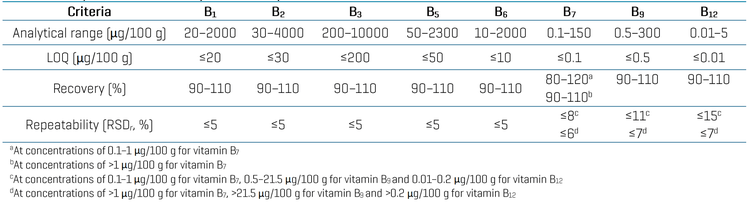
Quantitation of WSVs in infant formula is challenging due to their structural diversity, wide range of polarities, multiple vitamers and susceptibility to degradation. These challenges are exacerbated by the compositional complexity of infant formula, which includes proteins, carbohydrates, lipids, and minerals, often leading to significant matrix effects. Variability in sensitivities among WSVs across detection techniques often requires separate methods to meet the different quantitation criteria specified in the AOAC standard method performance requirements (SMPRs, Table 1).4-11 These are individually specified for each B-vitamin by the Stakeholder Program on Infant Formula and Adult Nutrition (SPIFAN). This technical note describes the simultaneous analysis of 13 WSVs in infant formula using a combined sample preparation and LC-MS/MS method developed on the QTRAP 4500 system.
Methods
Standards: Standards were purchased from Evolution Life Sciences PVT Ltd. Solvent calibration standards (0.1–500 ng/mL) were prepared in 10mM ammonium formate, buffered to pH 4.2. No internal standards (IS) were used during analysis.
Sample preparation: The extraction procedure was adapted from elsewhere.12 Briefly, 1 g of infant formula powder was weighed and reconstituted in 5 mL of 1% (v/v) formic acid in water. After vortexing for 5 min, 5 mL of chilled methanol was added, followed by another 5 min of vortexing. The mixture was then sonicated for 10 min and centrifuged for 5 min at 4500 rpm and 15°C. After adding 0.2 mL of methanol to 1 mL of the supernatant, the mixture was vortexed and centrifuged for 5 min at 13000 rpm and 15°C. The supernatant was passed through a pre-conditioned Phenomenex Strata C18-E cartridge (55 μm, 100 mg/1 mL , P/N: 8B-S001-EAK). After filtering the eluent with an 0.22 μm hydrophobic PVDF filter, the extract was diluted 100x and 2x with 10mM ammonium formate at pH 4.2 for the analysis of vitamins B1, B2, B3, B5 and B6 and vitamins B7, B9, pyridoxal 5’ phosphate and cyanocobalamin (B12), respectively.
Apparent recoveries in matrix: Due to high endogenous WSV levels from vitamin fortification, the unspiked matrix was overspiked at 1x and 2x above the blank level. Triplicate pre-spiked samples were prepared at each level. After extraction, the pre-spikes were quantified by standard addition, with the built-in feature in SCIEX OS software to calculate apparent recoveries and extrapolate the original WSV concentrations in the unspiked matrix.
Absolute recoveries in matrix: Coupled to the 1x and 2x pre-spikes, post-spiked samples were also prepared in triplicate (n = 3). Absolute recovery was calculated from the quotient of the peak areas in the pre- and post-spiked extracts.
Method accuracy against reference material: A NIST SRM 1869 sample was included in the analysis to evaluate the accuracy of the sample preparation and LC-MS/MS method. The SRM is a milk -based infant/adult nutritional powder formula with certified reference values for vitamins.13
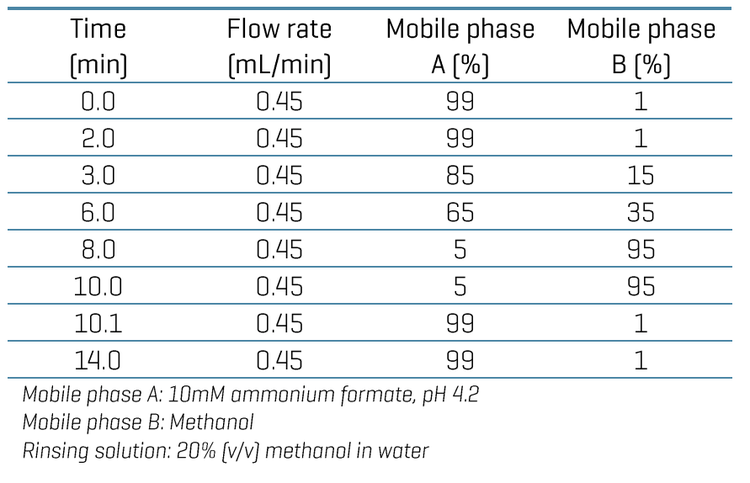
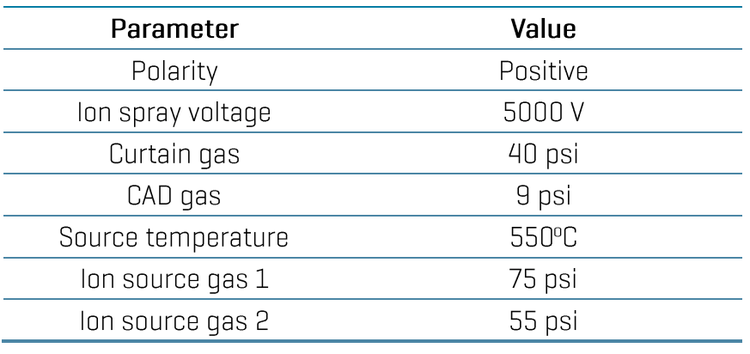
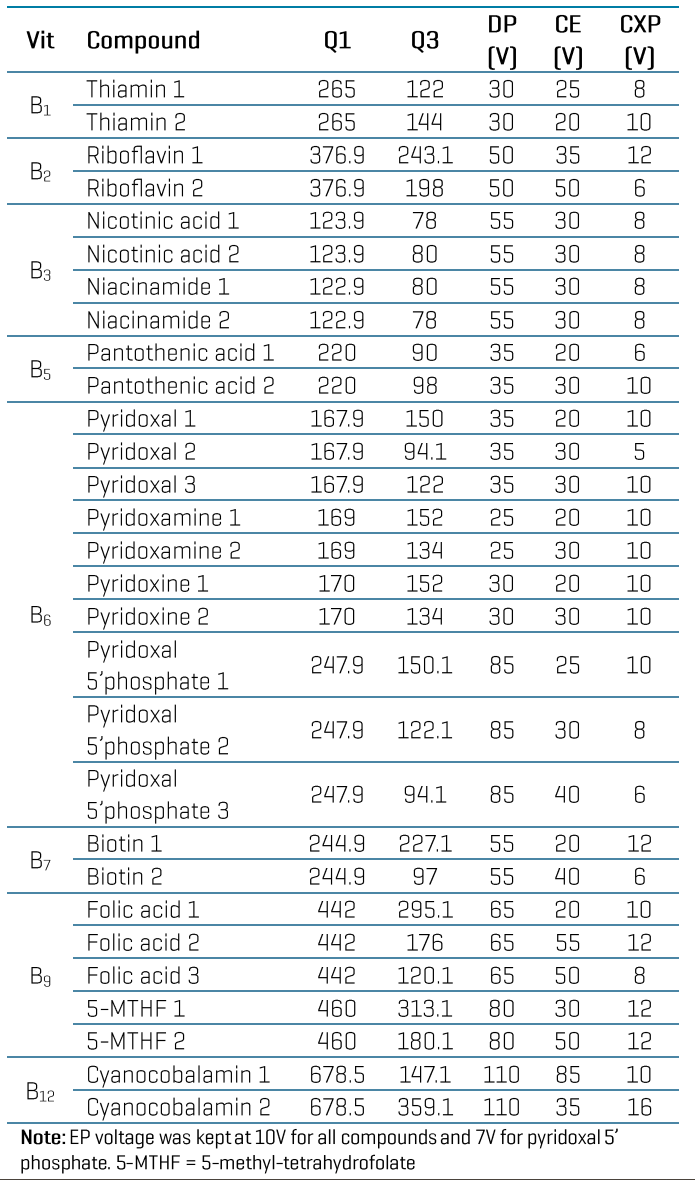
Chromatography: Chromatographic separation was performed on the Exion AD LC system with a Phenomenex Luna Omega Polar C18 column (150 x 3 mm, 3 μm, P/N: 00F-4760-Y0). A flow rate of 0.45 mL/min, a column oven temperature of 40°C and an injection volume of 5 μL were used. Table 2 outlines the gradient used.
Chromatographic optimization
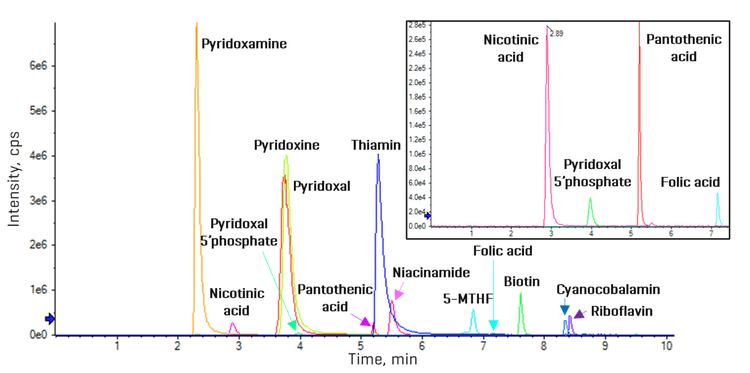
Good separation of the 13 WSVs was achieved using the Phenomenex Luna Omega Polar C18 column (Figure 2). Based on a calculated retention factor (k’) of 0.41 and a void time of 1.65 min, chromatographic conditions were optimized to extend analyte retention beyond the solvent/matrix front, a region prone to coelution of matrix interferences, with pyridoxamine eluting at the earliest retention time (RT) of 2.3 min.
Quantitative performance in solvent calibration standards
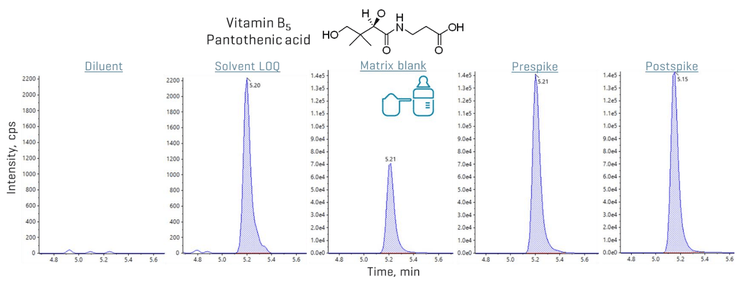
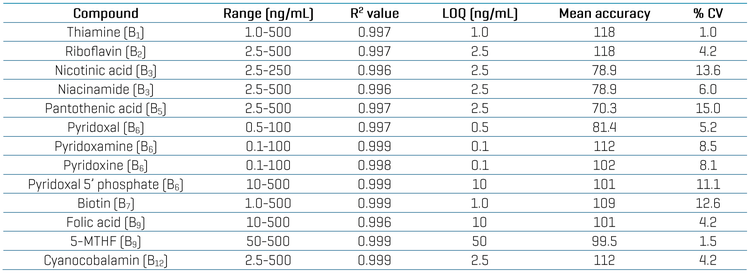
A solvent calibration curve (0.1–500 ng/mL) was injected in triplicate to evaluate the linearity of the QTRAP 4500 system (Table 5). Most of the analytes exhibited a dynamic range of 2–3 orders of magnitude, with r2≥0.996. In-vial LOQs were selected based on the average accuracy (±30%), precision (%CV <20%, n = 3), S/N (≥10) and ion ratio tolerance (±30%). In-vial LOQs ranged from 0.1 to 2.5 ng/mL for most of the vitamins, with higher LOQs of 10–50 ng/mL for pyridoxal 5’ phosphate, folic acid and 5 -MTHF. All analytes exhibited accuracies of 70–118% with %CV ≤15%. Figure 1 demonstrates an XIC of pantothenic acid showing good S/N and peak shape at the LOQ level.
Quantitative performance in infant formula matrix
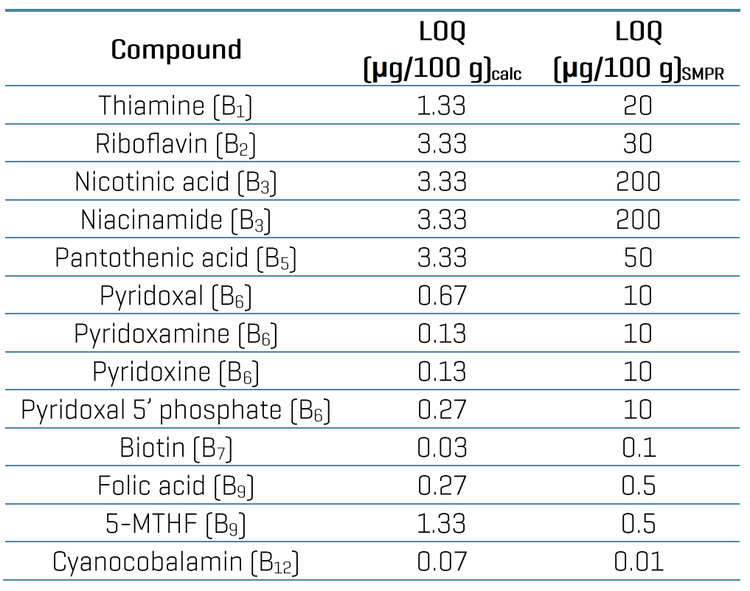
The presence of substantial endogenous WSV levels in the blank infant formula precluded LOQ determination in the matrix. As a result, solvent-based LOQs were back-calculated to estimate the corresponding in-sample LOQs by accounting for the entire sample preparation workflow, including sample mass, extraction volume and dilution factors. These values represent an approximation of the minimum quantifiable concentrations in the original sample, as they do not account for potential matrix effects. The AOAC SMPRs for the B-vitamins4-11 require the in-sample LOQ to be expressed on a reconstituted product basis (µg/100 g) based on the manufacturer’s preparation instruction for 25 g of infant formula in 200 g of water, using the following equation:

Apparent and absolute recoveries in infant formula matrix
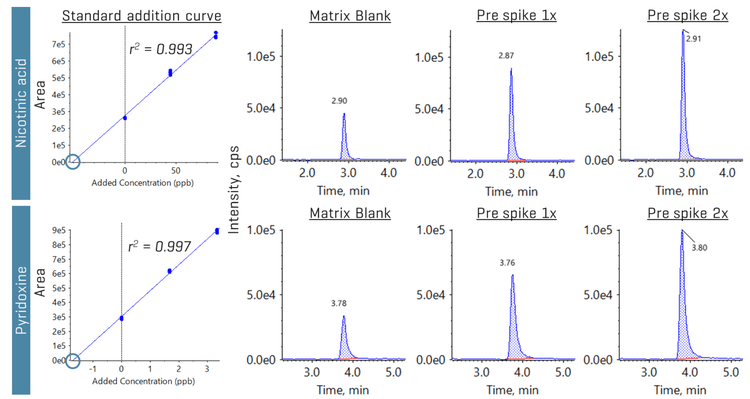
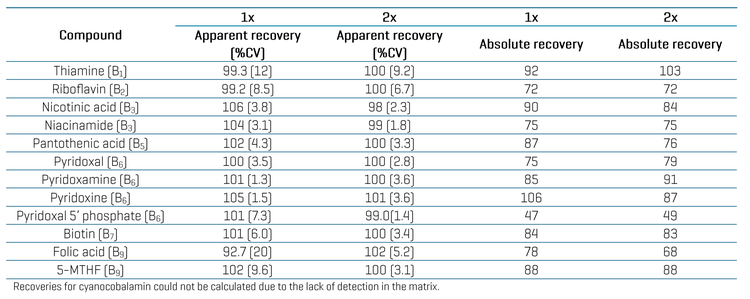
A commercial infant formula sample was pre-screened to measure the native WSV content. Over-spike recovery was used to assess apparent recovery by fortifying infant formula at 1x and 2x above the endogenous levels, enabling performance evaluations under high-background conditions. Quantitation was performed using standard addition to account for the high native vitamin concentrations and matrix effects inherent to infant formula. The built-in standard addition feature in SCIEX OS software enabled quantitation in the high-background matrix by plotting analyte response against the added concentration. The resulting standard addition curve could then be extrapolated to natively calculate the endogenous analyte concentration without external data manipulation (Figure 3). Excellent apparent recoveries in the range of 93–106%, with %CV ≤5% were achieved for most of the analytes (Table 7).
Absolute recovery was also calculated as the quotient of the peak areas in the pre- and post-spiked samples to evaluate extraction efficiency. The absolute recoveries ranged from 68% to 103% for all WSVs, except for pyridoxal 5’ phosphate with recoveries around 50% (Table 7). Good repeatability is demonstrated in the triplicate spikes, with %CV ≤5% for most of the analytes. While the absolute recoveries were lower for some WSVs, good apparent recoveries achieved through standard addition compensated for matrix effects and analyte losses, enabling accurate quantitation.
Method applicability to real-world infant formula and NIST SRM 1869b
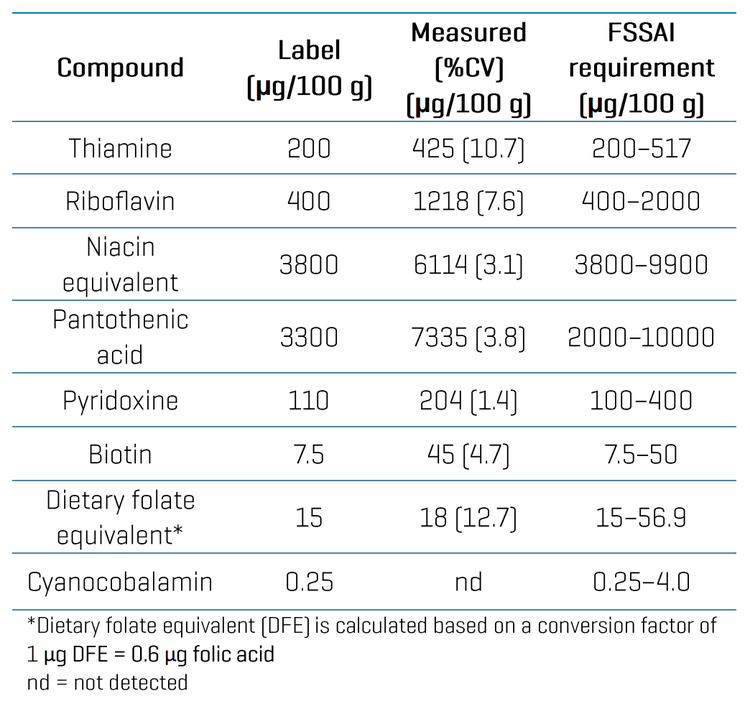
The method was evaluated on a commercial infant formula sample and NIST SRM 1869, a milk/whey/soy-based infant/adult nutritional formula. Table 8 compares the concentrations of specific WSVs measured in the commercial sample by standard addition against those listed on the product label.
While quantifiable in solvent at levels as low as 2.5 ng/mL, cyanocobalamin (B12) was not detected in the infant formula sample, precluding recovery determination in the matrix. Vitamin B12 is often analyzed separately from the other B-vitamins, because it occurs at much lower concentrations (1–2 orders of magnitude) in infant formula. Unique extraction requirements, such as the use of potassium cyanide to convert all forms of cobalamins to the stable cyanocobalamin, are also incompatible with the simpler acidic extraction and SPE cleanup used here.
The other B-vitamins were observed at higher concentrations than those listed on the product label claim. It has been reported that manufacturers often apply overages by intentionally adding vitamins at levels higher than the label claim to compensate for processing and storage losses.2,3 Systematic differences can also occur, since label claims are established based on regulatory tolerances2,3, while laboratory measurements depend on extraction efficiency, the specific vitamer form measured and the quantitation approach. Regardless, both concentration types fell within the allowed ranges specified by the Food Safety and Standards Authority of India (FSSAI) for nutritional compliance infant formula.3
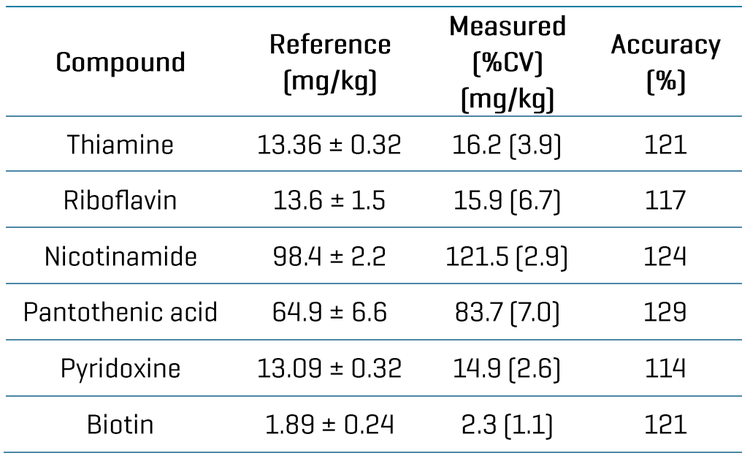
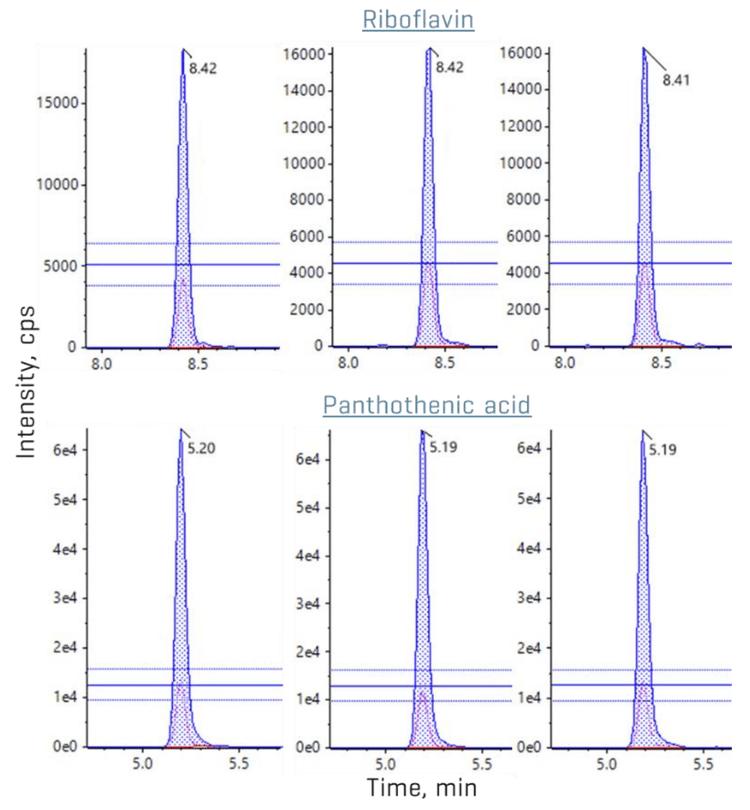
Method trueness was assessed using the NIST SRM 1869 sample, with measured concentrations of the WSVs falling within ±30% of the certified reference values listed in the Certificate of Analysis13 (Table 9). The positive bias (>100% accuracy) observed here may be attributed to differences in extraction efficiency, calibration strategy (standard addition vs. isotope dilution) and the specific vitamers quantified relative to those defined in the certificate. Such deviations are expected in complex matrices , although the measurements here remain within acceptable accuracy limits (±30%) with <10 %CV based on triplicate analysis. Figure 4 shows the XICs of representative WSVs in triplicate extracts of the SRM sample, with ion ratio tolerance lines.
Conclusion
A sample preparation and LC-MS/MS method was developed for the quantitation of B vitamins in infant formula on the QTRAP 4500 system. Beyond infant formula quality control, a B-vitamin method unlocks value across food contract testing labs, food manufacturers, regulatory bodies and the broader fortified food and supplement market. The method demonstrated:
- Good method accuracy based on corroboration between measured WSV levels and those listed in the Certificate of Analysis of the NIST SRM 1869b sample.
- Good linearity in solvent calibration, with most analytes exhibiting over 2-3 orders of magnitude in linear dynamic range and r2 ≥0.996.
- Solvent-based LOQs of 0.1–2.5 ng/mL for most WSVs, with all vitamins achieving average accuracies of 70–118% and %CV ≤15%. When expressed on a reconstituted product basis, the estimated in-sample LOQs ranged from 0.03 to 3.3 µg/100 g, most of which fell below the AOAC SMPR target LOQs.
- Good matrix performance based on apparent recoveries of 93–106% (%CV < 20%) and absolute recoveries of 68–106% for most of the analytes.
References
- National Research Council (US) Subcommittee on the Tenth Edition of the Recommended Dietary Allowances. Recommended Dietary Allowances: 10th Edition. Washington (DC): National Academies Press (US); 1989. 8, Water-Soluble Vitamins.
- Food and Agriculture Organization of the United Nations. World Health Organization. Standard for infant formula and formulas for special medical purposes intended for infants. Codex Alimentarius International Food Standards. CXS 72-1981.
- Food Safety and Standards (Foods for Infant Nutrition) Regulations, 2020. Version-II (04.01.2024).
- Standard method performance requirements (SMPRs) for total vitamin B1 (thiamin) in infant formula and adult/pediatric nutritional formula. AOAC SMPR 2015.002.
- Standard method performance requirements (SMPRs) for total vitamin B2 (riboflavin) in infant formula and adult/pediatric nutritional formula. AOAC SMPR 2015.003.
- Standard method performance requirements (SMPRs) for total vitamin B3 (niacin) in infant formula and adult/pediatric nutritional formula. AOAC SMPR 2015.004.
- Standard method performance requirements (SMPRs) for panthothenic acid in infant formula and adult/pediatric nutritional formula. AOAC SMPR 2012.009.
- Standard method performance requirements (SMPRs) for total vitamin B6 (pyridoxine) in infant formula and adult/pediatric nutritional formula. AOAC SMPR 2015.005.
- Standard method performance requirements (SMPRs) for biotin in infant formula and adult/pediatric nutritional formula. AOAC SMPR 2014.005.
- Standard method performance requirements (SMPRs) for folate in infant formula and adult/pediatric nutritional formula. AOAC SMPR 2011.006.
- Standard method performance requirements (SMPRs) for Vitamin B12 in infant formula and adult/pediatric nutritional formula. AOAC SMPR 2011.005.
- Huang, M.; Winters, D.; Crowley, R.; Sullivan, D. Measurement of Water-Soluble B Vitamins in Infant Formula by Liquid Chromatography/Tandem Mass Spectrometry. J. AOAC Int. 2009, 92, 1728–1738.
- National Institute of Standards and Technology (NIST). Standard Reference Material 1869 Infant/Adult Nutritional Formula II. Certificate of Analysis. October 10 2023.