Abstract
This technical note describes the identification of N-linked glycopeptides using nanoflow liquid chromatography (LC) separation with electron activated dissociation (EAD) fragmentation on the ZenoTOF 8600 system.
More than 1,500 N-glycosylated peptides were identified in glycopeptide-enriched depleted samples, equivalent to 1 μL human plasma, with an EAD-based data-dependent acquisition (DDA) approach. EAD on the ZenoTOF 8600 system is a tunable electron capture-based fragmentation technique that produces unique peptide fragment ions, allowing for the unambiguous assignment of the types and sites of post-translational modifications like glycosylation. Using EAciD fragmentation (EAD followed by Collision Induced Dissociation (CID)) demonstrates further advantages for the identification of additional glycopeptides. PEAKS GlycanFinder software enables robust analysis of the rich spectra generated by the ZenoTOF 8600 system.
Key features N-glycopeptide identification using the ZenoTOF 8600 system with EAD fragmentation
- EAD MS/MS on the ZenoTOF 8600 system is fast, user-tunable, and generates unique fragment ions compared
with CID, preserving side chain information for the identification and localization of labile glycan PTMs - The superior sensitivity of the ZenoTOF 8600 allows for the efficient identification of low-abundant glycopeptides.
- Compared to EAD alone, EAciD increases the number of identified glycopeptides by applying additional collision induced fragmentation following EAD
- PEAKS GlycanFinder software leverages complete EAD spectral data to accurately identify glycopeptides and confirm glycan structures for greater confidence in results
Introduction
Protein glycosylation is a critical post-translational modification (PTM) that affects protein folding and stability. It is also essential for cell-cell adhesion and, as such, plays a role in immune response, cancer, and numerous other diseases. Mass spectrometry (MS) instrument sensitivity is one of the significant limitations when analyzing glycopeptides due to the heterogeneity of glycan structures, resulting in multiple peptide isoforms with much lower abundances than their non-glycosylated forms. The challenges associated with low glycopeptide abundances can be overcome with strategies like enrichment of glycopeptides, a lower flow rate LC separation regime (i.e., nanoflow LC separation), and high-performance MS systems for glycopeptide detection and characterization.
Another challenge for glycopeptide characterization comes from the labile nature of the glycosylation PTM. CID fragmentation of glycosylated peptides often provides limited peptide backbone information and typically results in fragments lacking the labile side chain modifications. Alternative fragmentation methods, such as EAD-based MS/MS, have been shown to yield more complete peptide backbone information. Additionally, EAD fragmentation provides site-specific PTM localization due to the retention of these modifications on the resulting fragment ions.1
In this technical note, nanoflow LC separation and EAD fragmentation were used to identify N-glycopeptides enriched
from depleted, digested human plasma.
Methods
Samples and reagents: Human pooled plasma K2EDTA was acquired from BioIVT. Top 14 Abundant Protein Depletion Midi spin columns from Thermo Fisher were used for plasma depletion. Trypsin/Lys-C protease mix was purchased from Promega. BioSPE GlycaClean SPE Mini Spin columns (H.25) from Affinisep were used for glycopeptide enrichment.
Sample preparation: After depletion of the top 14 most abundant proteins using the depletion spin columns (using the manufacturer’s protocol), human plasma was digested following a filter-aided sample preparation (FASP) protocol described in the literature.2 After digestion and solid phase extraction clean-up, the sample was enriched for glycopeptides using the Affinisep Glycaclean spin columns, following the manufacturer's instructions. The resulting extract was diluted with 0.1% trifluoro acetic acid for analysis by LC-MS. Based on an estimated human plasma protein concentration of 80 mg/mL, and the manufacturer’s estimate of removal of 95% of the top 14 abundant proteins, the depleted extract had an assumed peptide concentration equivalent to 1 μg protein/μL before digestion and enrichment.
Chromatography: The samples were analyzed using a Waters ACQUITY M-Class system in trap and elute nanoflow LC mode. A Waters nanoEase M/Z Symmetry C18 100 Å, 5 μm, 180 μm x 20 mm trap column was used in combination with a Phenomenex Biozen Peptide XB-C18 100 Å, 2.6 μm, 75 μm x 25 cm nanoLC column. Injection volumes of 1-10 μL sample were loaded on the trap from a 20 μL loop using 2 minutes of loading at 10 μL/min of 0.1% formic acid in water. A 50-minute gradient at 300 nL/min from 1-27% mobile phase B was run for the separation, using 0.1% formic acid in water as mobile phase A and 0.1% formic acid in acetonitrile as mobile phase B. The column and trap were washed at 80% mobile phase B for 5 minutes and re-equilibrated at 1% mobile phase B for 25 minutes. The column temperature was maintained at 40°C.
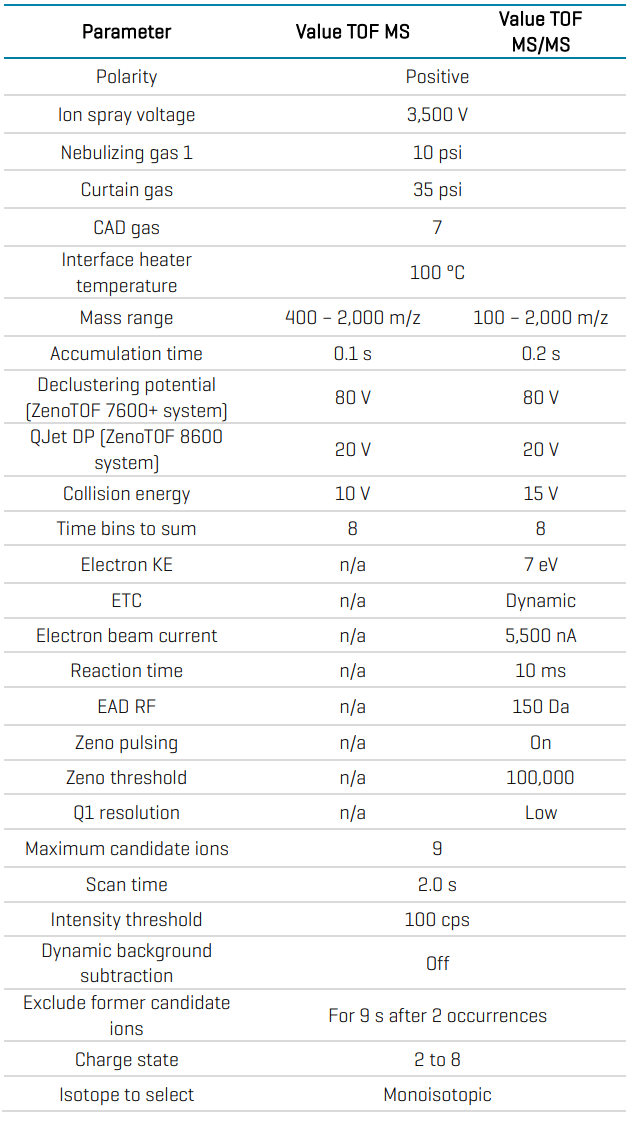
Mass spectrometry: Data was acquired using a ZenoTOF 7600+ system with an OptiFlow Turbo V ion source, and a ZenoTOF 8600 system with OptiFlow Pro ion source, both in nanoflow mode. MS parameters used, unless specified otherwise, are listed in Table 1. 3 replicate injections were performed for each sample as indicated.
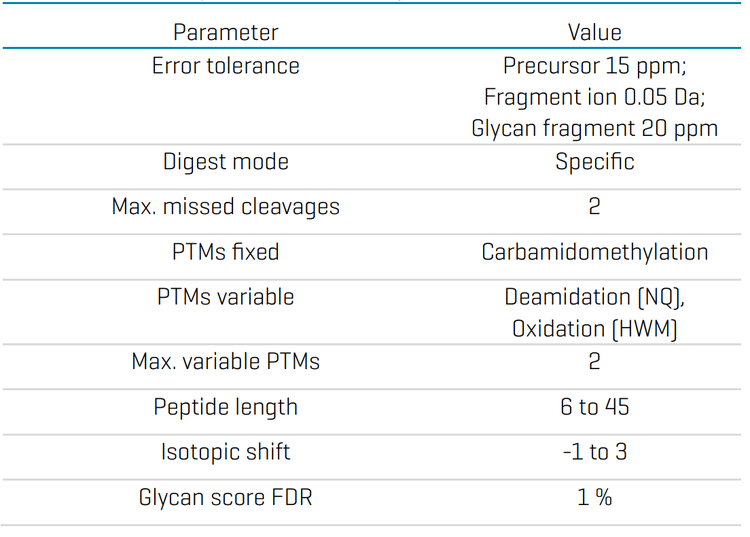
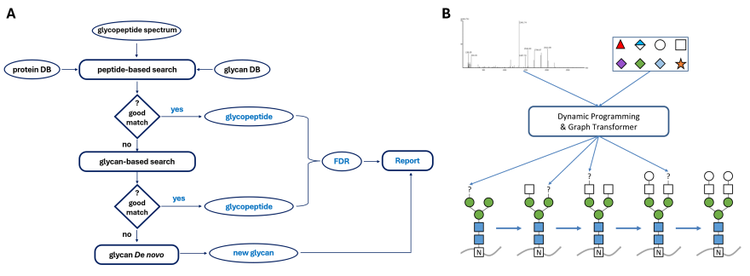
Data processing: Glycopeptide identification was performed using PEAKS GlycanFinder 2.0 software (Bioinformatics Solutions Inc).3 This software identifies peptides and glycopeptides as described in Figure 2. A UniProt reviewed human plasma protein database downloaded on April 2, 2024 was used, in combination with the structural glycan database included in PEAKS GlycanFinder software consisting of 1,867 Nlinked glycan structures. Search parameters used, unless otherwise specified, are listed in Table 2.
N-glycopeptide enrichment
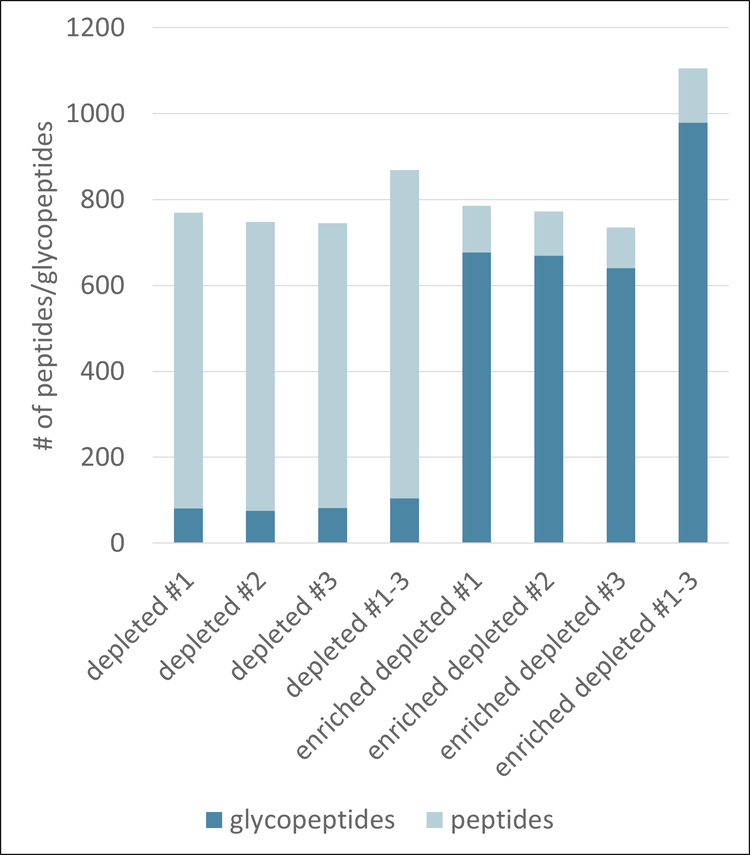
As N-glycopeptides are present in low abundance, enrichment strategies are typically employed to increase the ability to identify such glycopeptides. Previously, we have used in-house made spin columns using pipette tips and a combination of cotton (cellulose) and HILIC beads to enrich plasma digest samples.4,5 For this technical note, we used commercially available spin columns. Figure 3 shows the number of peptides and glycopeptides identified, using the ZenoTOF 8600 system,before and after enrichment. The amounts of sample loaded
were adapted so that the TOF total ion chromatograms had similar intensities, indicating similar total loads of peptides. The fraction of glycopeptides increases from 12% to 88% in the enriched sample, illustrating that the commercially available spin columns work similarly well as the lab constructed spin columns.5
Comparison of ZenoTOF 7600+ and 8600 systems’ sensitivities for glycopeptide identification
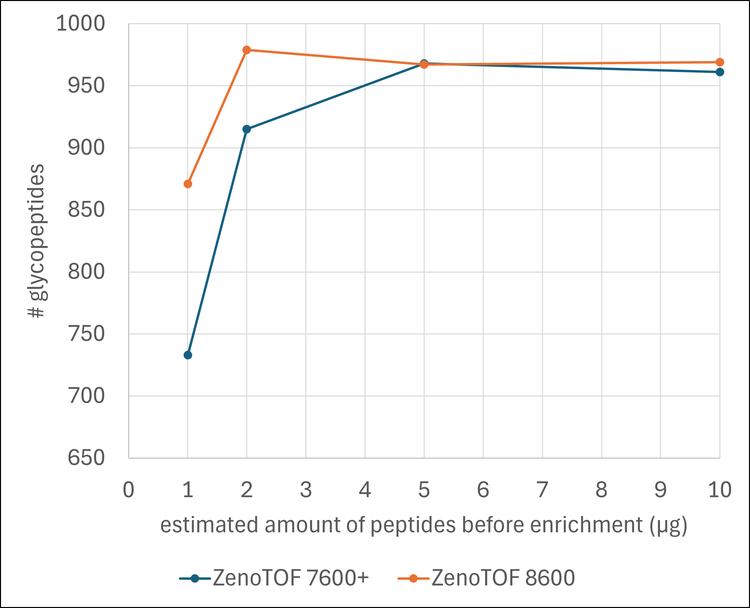
Using different on-column loads of enriched sample, the numbers of identified glycopeptides were compared between the ZenoTOF 7600+ and 8600 systems. The results are shown in Figure 4. The numbers of identified glycopeptides represent the total number identified in three replicate injections. The increased sensitivity of the ZenoTOF 8600 system allows for 20% more identified glycopeptides at 1 μg load, and a similar number of glycopeptides identified at 2.5x lower load compared to the ZenoTOF 7600+ system when loading the optimal amount
of sample.
Optimization of sample load and DDA MS method
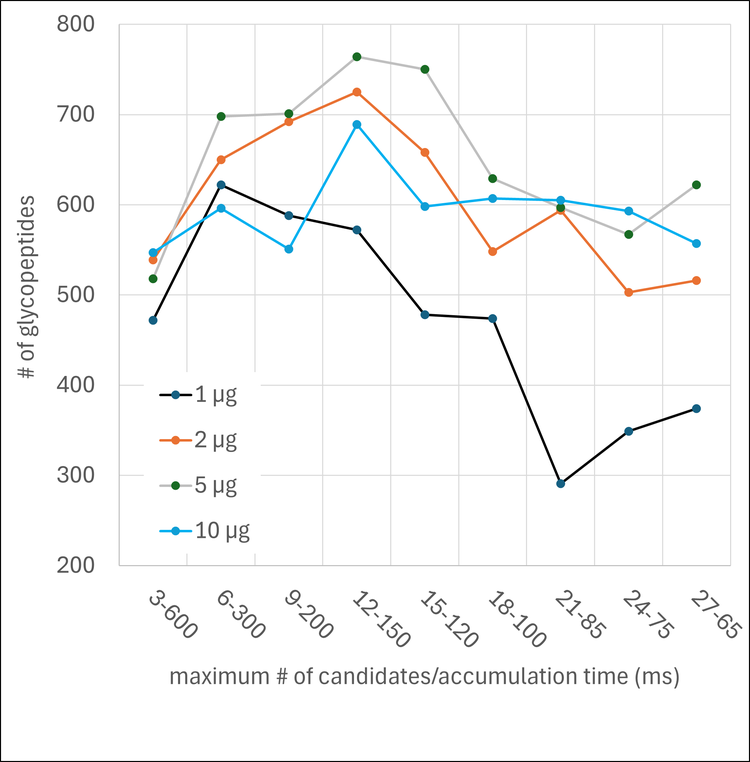
Previously, it was found that with the ZenoTOF 7600+ system, the optimal maximum number of candidates and MS/MS accumulation time were 9 and 200 ms, respectively.5 Using one injection per setting, the number of candidates and MS/MS accumulation time were optimized for the ZenoTOF 8600 system for various amounts of enriched sample. Figure 5 shows the number of glycopeptides identified for each condition. The cycle time was kept constant at 2 seconds for all experiments. For a low load (1 µg), optimal results were achieved with a similar maximum # of candidates and MS/MS accumulation time as what was found previously with the ZenoTOF 7600+ system. At loads 2 to 5 times higher, the optimal number of candidates shifts to 12-15, while at even higher loads, the number of identified glycopeptides drops again, likely indicating
saturation of the nanoLC column and/or the ZenoTOF 8600 system.
Effect of gradient length on glycopeptide identification
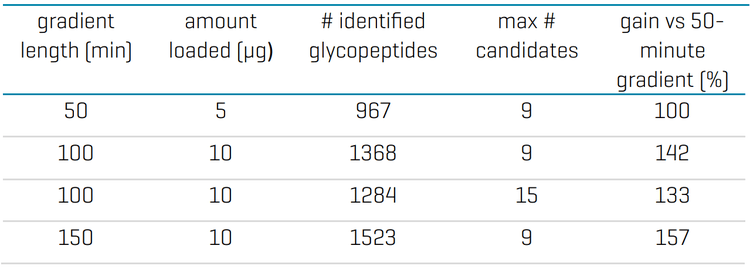
A longer gradient can improve the separation between glycopeptides that may possibly co-elute with a shorter gradient, which can improve the number of identified glycopeptides. We tested 100- and 150-minute gradients from 1 to 27% B. As a longer gradient will increase peak widths, and therefore reduce peak intensities, we increased the amount loaded from the (optimal) 5 μg (before enrichment) for the 50-
minute gradient to 10 μg for the longer gradients. We also tried the 100-minute gradient with 15 maximum candidates instead of 9. Table 3 summarizes the results. The number of identified glycopeptides reported are the total number of glycopeptides identified in three replicate injections. The longer gradients enabled the identification of a significantly larger number of glycopeptides, while increasing the number of candidates in the DDA method did not improve the results with the 100-minute gradient.
EAciD further enhances glycopeptide identification
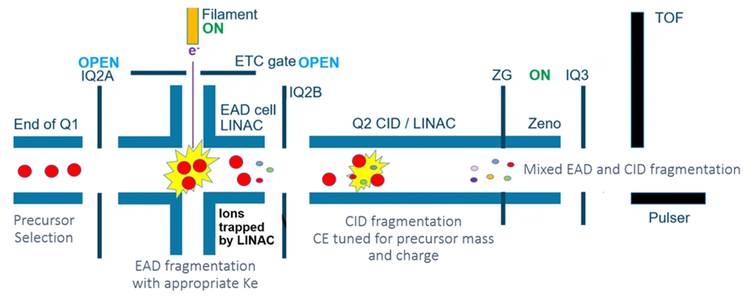
The design of the ZenoTOF 8600 system allows for collision-induced dissociation (CID) after EAD fragmentation, as seen in Figure 6. It has been reported in the literature that the combination of EAD and CID, EAciD, can improve the number of glycopeptides identified significantly compared to EAD only.6 CID fragmentation yields more glycan fragments, which can help to identify additional glycopeptides. While the mostly c and z ions generated by the EAD fragmentation are reduced in abundance when CID is applied after EAD, their intensity can still be sufficient for sequencing the peptide backbone, especially as some b and y ions may be also formed from the additional CID fragmentation.
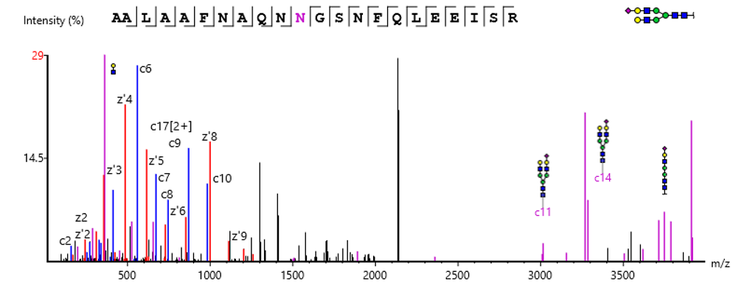
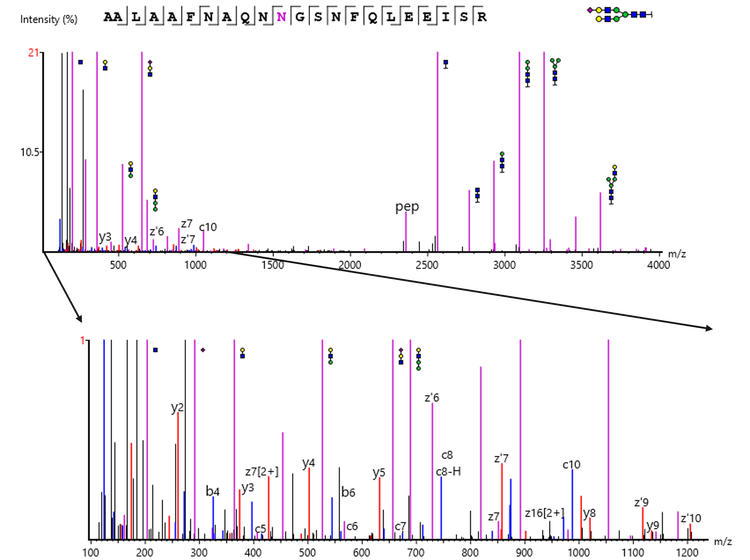
Using the 100-minute gradient and a column load of 10 μg, the number of identified glycopeptides increased from 1,284 with EAD only to 1,972 with EAciD (a 54% increase). The collision energy used for the EAciD experiment was calculated dynamically using a modified version of the standard Dynamic Collision Energy equation settings used in SCIEX OS software . The offset was reduced by 10V for all charge states. Figure 1 shows the EAD spectrum of a glycopeptide from Alpha-2-HS glycoprotein, which is a known glycosylation site.7 Both peptide-glycan and c and z peptide backbone fragments facilitate identification of this glycopeptide and its sequence confirmation. Figure 7 shows the EAciD spectrum from the same glycopeptide. More glycan fragments are seen, and while the c and z fragments are significantly lower in abundance
versus EAD alone (Figure 1), they are still present in the spectrum, and in combination with the b and y ions formed in the EAciD mode, the peptide backbone was still confirmed.
Fibronectin glycoforms identified in human plasma
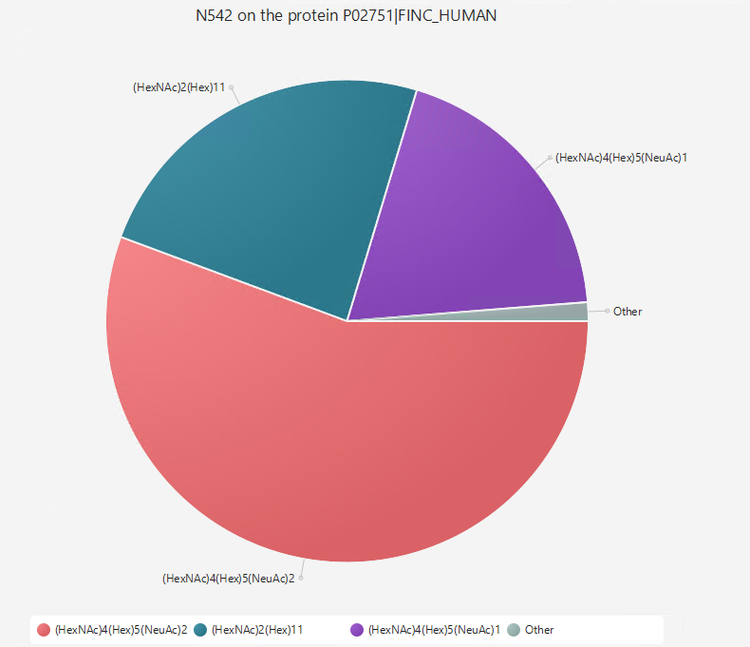
The type of glycans attached to a specific glycosite of a glycosylated protein affects its function and stability and can be indicative of a disease state. Based on the TOF MS intensities of the different glycopeptides identified for a specific glycosite, PEAKS GlycanFinder software calculates the relative abundances of the different glycoforms and displays this information in the form of a pie chart. Figure 8 shows the relative abundances of the different glycoforms found at the N542 position of fibronectin using the 150 min gradient analysis. Glycosylation of this protein is studied for its role in cell adhesion and cell migration.8
Conclusion
- 1,523 N-glycopeptides were identified in a depleted and enriched human plasma sample using EAD fragmentation.
- EAciD fragmentation can further increase the number of identifications by 54% relative to EAD alone.
- The improved sensitivity of the ZenoTOF 8600 system reduces the amount of sample required for analysis by at least 2.5x
- PEAKS GlycanFinder software allows for fast identification of glycopeptides from EAD or EAciD MS/MS data, and can calculate relative abundances of the different glycans found at a specific glycosylation site.
References
-
Analysis of post-translational modifications using fast electron-activated dissociation (EAD). SCIEX Technical Note RUO-MKT-02-14795-A.
-
Chen, Z., et al. (2021). In-depth site-specific analysis of Nglycoproteome in human cerebrospinal fluid and glycosylation landscape changes in Alzheimer's disease. Mol & Cell. Proteomics, 20:100081.
-
Shan, B., et al. (2023). Glycopeptide database search and de novo sequencing with PEAKS GlycanFinder enable highly sensitive glycoproteomics. Nat. Comm. 14:4046.
-
Wang, D., et al. (2022). Boost-DiLeu: enhanced isobaric N,Ndimethyl leucine tagging strategy for comprehensive quantitative glycoproteomic analysis. Anal. Chem. 94:11773-11782
-
Glycopeptide identification using the ZenoTOF 7600+ system with EAD fragmentation and PEAKS GlycanFinder software.
SCIEX Technical Note RUO-MKT-02-31819 -
Benjamin Schulz, et al. (2024). Electron-Activated Dissociation and Collision-Induced Dissociation Glycopeptide Fragmentation for Improved Glycoproteomics. Anal.Chem. 96, 10986−10994
-
Albert Heck, et al. (2018). Similar Albeit Not the Same: InDepth Analysis of Proteoforms of Human Serum, Bovine Serum, and Recombinant Human Fetuin. J. Proteome Res. 17, 2861−2869
-
Jean-Cheng Kuo , et al. (2017) Fibronectin in cell adhesion and migration via N-glycosylation. Oncotarget. 2017 Aug 7;8(41):70653–70668.