A streamlined CGE-UV workflow for high-resolution analysis of single-stranded oligonucleotides up to 200 nt
Abstract
A streamlined CGE-UV workflow for high-resolution analysis of single-stranded oligonucleotides up to 200+ nt
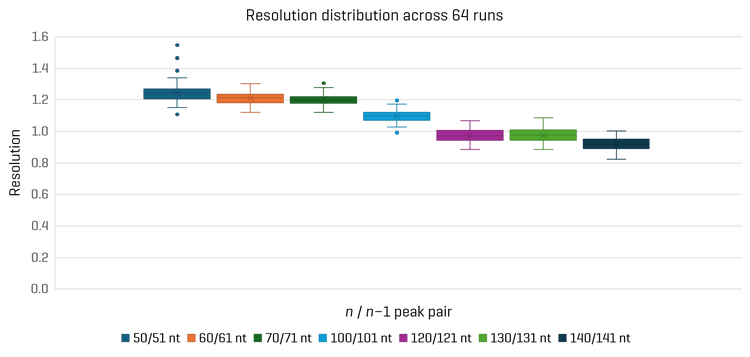
The analytical complexity of single-stranded oligonucleotides continues to increase, from guide RNA (gRNA) purity assessment for gene editing to characterization of poly(A) tails in mRNA-based therapeutics. These workflows require confident purity, integrity and sizing results across a broad application space, including separation of full-length product from closely related species, consistent performance across different oligonucleotide lengths and efficient implementation with minimal method optimization. The Oligo 200 nt Purity and Integrity kit is designed to deliver resolution, reproducibility and workflow simplicity for oligonucleotide analysis using a capillary gel electrophoresis with UV detection (CGE-UV) workflow. The kit covers a broad size range of 10 nt to 200+ nt and provides single-nucleotide resolution from 50/51 nt through 140/141 nt, with resolution (R) > 0.7.
Beyond analytical performance, the kit is designed for workflow simplicity, using a ready-to-use separation gel and pre-assembled bare-fused silica (BFS) capillary cartridges to streamline setup, reduce preparation time and support operation on both the PA 800 Plus system and the BioPhase 8800 system.
Key features of the Oligo 200 nt Purity and Integrity kit
- Broad size range with single-nucleotide resolution: Separates single-stranded oligonucleotides from 10 nt to 200+ nt and resolves seven n/n−1 peak pairs from 50/51 nt through 140/141 nt, with all measured R values > 0.7.
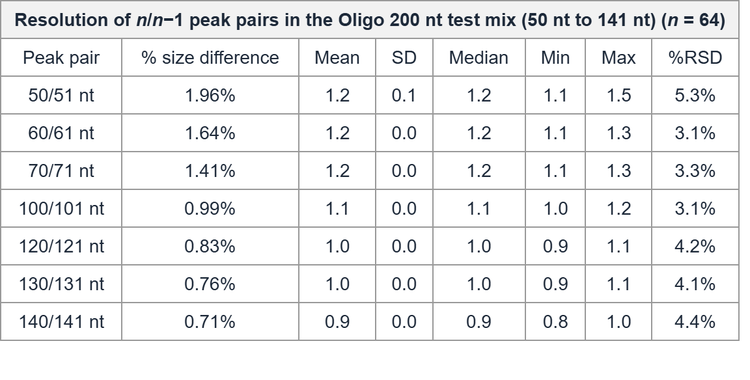
- Reproducible performance: Maintains consistent separation across 64 injections, 2 testing sites, 2 systems, 2 kit lots, 2 cartridges, and 2 days, with resolution %RSD < 6%.
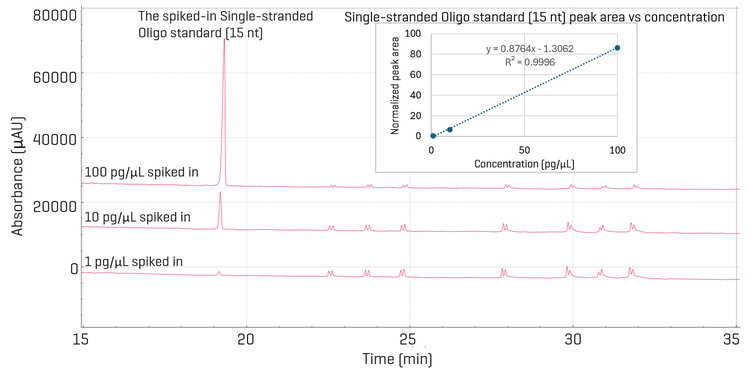
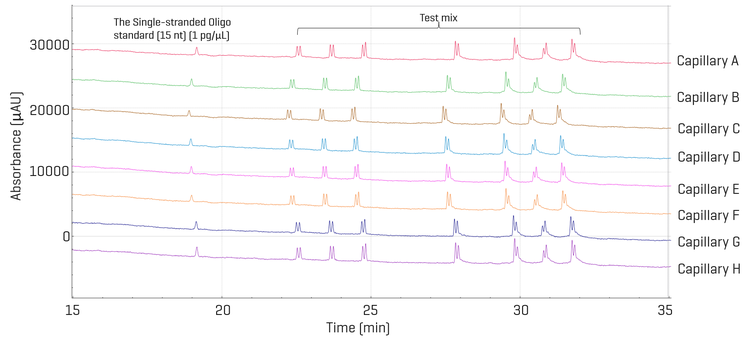
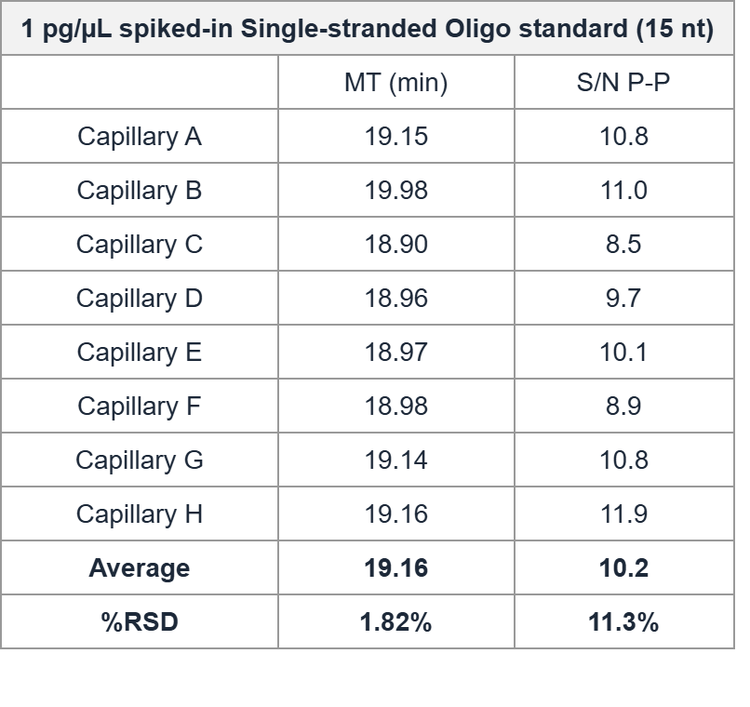
- High sensitivity: Detects the 15 nt standard at an LOQ of 1 pg/µL across 8 capillaries, with a mean S/N of 10.2.
- Streamlined workflow: Uses a ready-to-use gel and pre-assembled BFS cartridges to simplify setup, reduce hands-on preparation, and support consistent implementation.
- Platform flexibility: Supports method transfer between the BioPhase 8800 system and PA 800 Plus system, with comparable calibrated migration time and resolution performance.
Introduction
Oligonucleotide therapeutics and related nucleic acid products, including single-guide RNA (sgRNA), guide RNA (gRNA) and poly(A)-tail constructs, require analytical methods that provide confident purity, integrity and sizing information across increasingly complex sequence designs and product profiles.1-3
Current methods often rely on LC-based separation, which can present challenges in achieving sufficient resolution, robustness, and standardized performance across a broad oligonucleotide size range of 10 nt to 200 nt, particularly for longer oligonucleotides.4 These limitations can make it difficult to distinguish closely related analytes and impurities, generate reproducible results, and transfer methods efficiently from development to QC.
The Oligo 200 nt Purity and Integrity kit addresses these challenges with a streamlined CGE-UV workflow designed for high-resolution analysis of single-stranded oligonucleotides up to 200 nt.5, 6 The workflow delivers single-nucleotide resolution across an extended size range, with resolution of n/n−1 peak pairs from 50/51 nt through 140/141 nt and reliable detection up to 200 nt, supporting confident characterization of sgRNA, gRNA, and poly(A) tail length distributions.7 The proprietary separation gel is supplied ready to use, with no reconstitution or dilution required, and pre-assembled BFS capillary cartridges streamline setup, reduce assay variability, and minimize method development. Designed for use on both the BioPhase 8800 system and the PA 800 Plus system, the workflow supports method continuity as teams scale from analytical development toward QC, providing reliable and reproducible data for mRNA therapeutic and gene editing programs.
Methods
Materials: The Oligo 200 nt Purity and Integrity kit (P/N: 5321745), containing Oligo 200 nt Purity and Integrity gel, Oligo 200 nt test mix (50 nt to 141 nt), Single-stranded Oligo standard (15 nt), Oligo 200 nt Purity and Integrity sample buffer (20×), CE Grade Water and Acid Wash/Regenerating Solution (0.1 N HCl), was obtained from SCIEX (Marlborough, MA). The Oligo 200 nt ladder (10 nt to 200 nt; P/N: 5322662) was also obtained from SCIEX. BioPhase sample and reagent plates (4, 4, 8; P/N: 5080311) and BioPhase BFS capillary cartridges, 8 × 30 cm (P/N: 5080121), from SCIEX, were used for analysis on the BioPhase 8800 system. Universal vials (pack of 100, P/N: A62251), universal vial caps (blue, pack of 100, P/N: A62250), PCR micro vials (200 µL, pack of 100, P/N: 144709), and pre-assembled capillary cartridges (P/N: A55625) were also from SCIEX and used for analysis on the PA 800 Plus system. Rainin LTS filter tips were obtained from Mettler Toledo (Oakland, CA).
Storage and reagent preparation: The Single-stranded Oligo standard (15 nt), Oligo 200 nt ladder (10 nt to 200 nt) and Oligo 200 nt test mix (50 nt to 141 nt) were stored at −20°C. The Oligo 200 nt Purity and Integrity gel was stored at 2°C to 8°C, and the remaining kit components were stored at ambient temperature.5, 6 Before sample preparation, the Oligo 200 nt Purity and Integrity sample buffer (20×) was diluted with CE Grade Water to prepare 1× sample dilution buffer. The gel was equilibrated to ambient temperature before use.
Preparation of the Single-stranded Oligo standard (15 nt) solution: The Single-stranded Oligo standard (15 nt) was equilibrated to ambient temperature. A 1 µL aliquot of the standard was added to 799 µL of 1× sample dilution buffer and mixed by vortexing, followed by a quick spin.
Preparation of the Oligo 200 nt ladder (10 nt to 200 nt) solution: The Oligo 200 nt ladder (10 nt to 200 nt) was equilibrated to ambient temperature. A 40 µL aliquot of the ladder was added to 760 µL of 1× sample dilution buffer and mixed by vortexing, followed by a quick spin.
Preparation of the Oligo 200 nt test mix (50 nt to 141 nt) solution: The Oligo 200 nt test mix (50 nt to 141 nt) was equilibrated to ambient temperature. A 1 µL aliquot of the test mix was added to 799 µL of 1× sample dilution buffer and mixed by vortexing, followed by a quick spin.
Preparation of the Oligo 200 nt test mix spiked with Single-stranded Oligo standard (15 nt) as the internal standard (IS) for the reproducibility study: The Oligo 200 nt test mix (50 nt to 141 nt) and Single-stranded Oligo standard (15 nt) were equilibrated to ambient temperature. A 2 µL aliquot of the test mix and a 1 µL aliquot of the IS were added to 797 µL of 1× sample dilution buffer and mixed by vortexing, followed by a quick spin.
Preparation of the Oligo 200 nt test mix spiked with Single-stranded Oligo standard (15 nt) as the IS for the sensitivity study: The Oligo 200 nt test mix (50 nt to 141 nt) and Single-stranded Oligo standard (15 nt) were equilibrated to ambient temperature. A 1,000 pg/µL IS stock solution was prepared by adding 167 µL of the Single-stranded Oligo standard (15 nt) to 833 µL of 1× sample dilution buffer. The 100 pg/µL and 10 pg/µL IS solutions were prepared by 10-fold and 100-fold dilution of the 1,000 pg/µL IS stock solution, respectively, with 1× sample dilution buffer. The 1 pg/µL IS solution was prepared by 10-fold dilution of the 10 pg/µL IS solution with 1× sample dilution buffer. A 2 µL aliquot of the Oligo 200 nt test mix was added to 400 µL of each IS solution at 100, 10 and 1 pg/µL. Each solution was mixed by vortexing, followed by a quick spin.For each injection, 50 µL of the prepared solution was transferred to a sample plate well for analysis on the BioPhase 8800 system or to a PCR micro vial for analysis on the PA 800 Plus system.
CE instrument and software: The BioPhase 8800 system with UV/LIF (P/N: 5089278), equipped with a 254 nm filter (P/N: 144438), was from SCIEX and used for CGE-UV analyses. Automated data acquisition and analysis were performed using BioPhase software version 1.5 from SCIEX. Platform comparison experiments were performed on a PA 800 Plus system (P/N: A66528) equipped with a UV detector and 254 nm filter. Data were acquired and exported using 32 Karat software from SCIEX and analyzed using BioPhase software version 1.5.
CGE-UV separation conditions: The Oligo 200 nt Purity and Integrity kit application guides were followed for the BioPhase 8800 system5 and PA 800 Plus system,6 respectively. The Oligo 200 nt Conditioning and Separation method was used for capillary conditioning, gel loading and oligonucleotide separation. The method rinses the capillaries with Acid Wash/Regenerating Solution and CE Grade Water, loads the Oligo 200 nt Purity and Integrity gel and separates oligonucleotides using optimized CGE conditions. After each sequence run, the shutdown method was used to rinse and store the cartridge according to the application guides.5, 6
Results and discussion
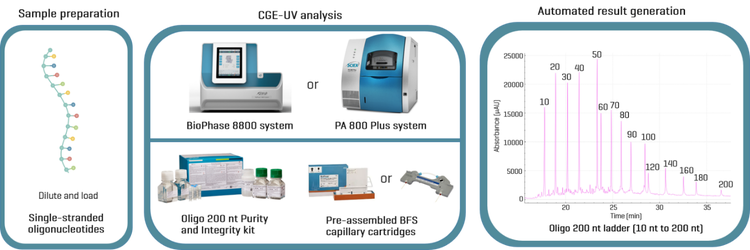
Workflow for oligonucleotide purity and integrity analysis: As shown in Figure 1, the Oligo 200 nt Purity and Integrity kit provides a standardized CGE-UV workflow for single-stranded oligonucleotide purity, integrity and sizing analysis on either the BioPhase 8800 system or the PA 800 Plus system. Oligonucleotide samples are prepared using a simple dilute-and-load approach and analyzed using the ready-to-use separation gel supplied in the kit together with pre-assembled BFS capillary cartridges, eliminating the need for gel reconstitution or cartridge assembly. This streamlined workflow reduces manual preparation, simplifies setup, and supports consistent implementation, with automated data acquisition and processing.
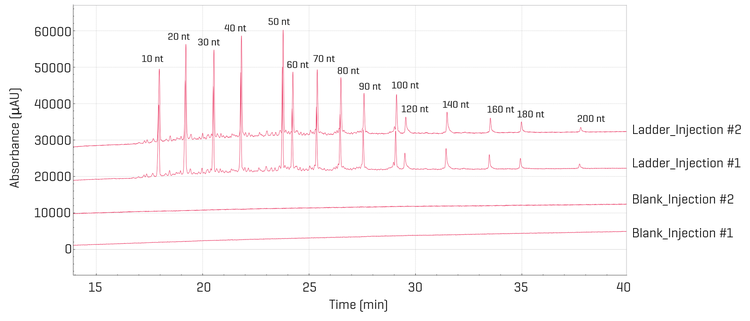
Broad analytical range and high resolution: The Oligo 200 nt Purity and Integrity kit demonstrated broad analytical coverage and high-resolution separation for single-stranded oligonucleotides. Representative electropherograms of the Oligo 200 nt ladder showed detection and identification of the expected ladder peaks from 10 nt to 200 nt on the BioPhase 8800 system (Figure 2a). SCIEX CE Grade Water blanks injected before and after the ladder showed flat baselines without nonspecific peaks, supporting method specificity and indicating no observable carryover under the tested conditions.
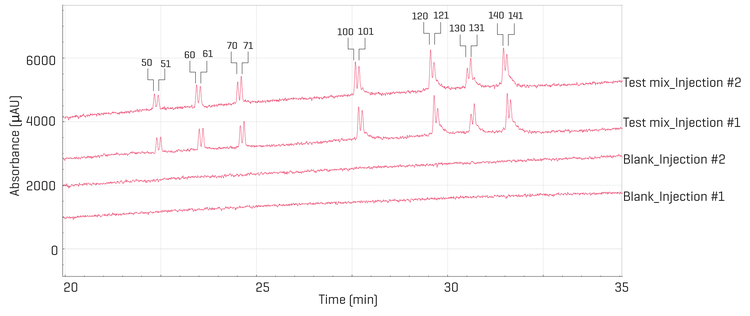
High-resolution performance was further assessed using the Oligo 200 nt test mix, which contains seven n/n−1 peak pairs from 50/51 nt through 140/141 nt (Figure 2b). Duplicate injections showed clear separation of each peak pair on the BioPhase 8800 system, without nonspecific peaks in the bracketing blank injections. Taken together, the ladder and test mix results demonstrate that the workflow supports the analysis of oligonucleotides across the 10 nt to 200 nt size range while providing single-nucleotide resolution for closely related oligonucleotide species up to 141 nt.
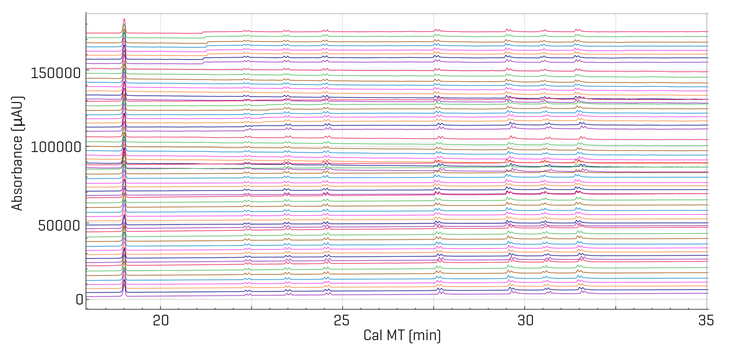
Reproducible single-oligonucleotide resolution separation: Reproducibility of single-oligonucleotide resolution separation was evaluated using the Oligo 200 nt test mix spiked with the Single-stranded Oligo standard (15 nt) as an IS. The intermediate precision study included 64 injections acquired across 2 testing sites, 2 analysts, 2 BioPhase 8800 systems, 2 kit lots, 2 cartridges, and 2 days to assess robustness across common sources of variability. Representative overlaid electropherograms from injections #1, #2, #11, and #12 showed close alignment of the peak profiles after calibration to the migration time (MT) of IS (Figure 3), demonstrating reproducible separation of the test mix across sites, systems, kit lots, and cartridges.
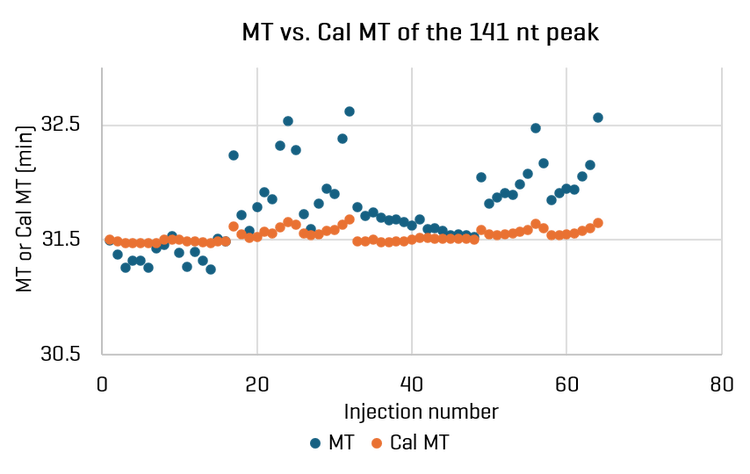
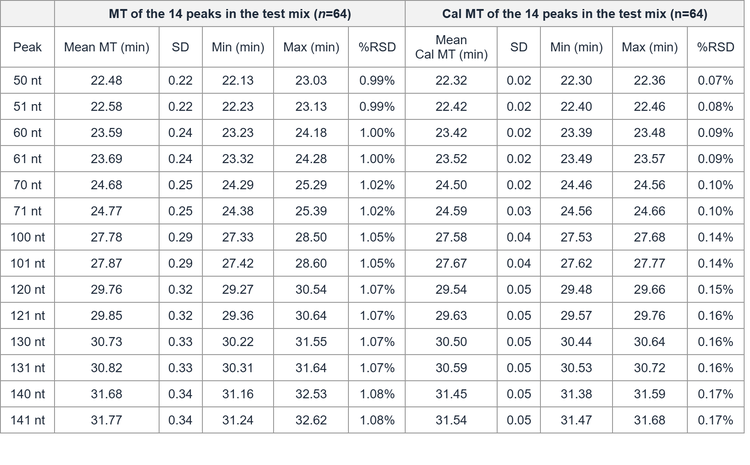
Use of the Single-stranded Oligo standard (15 nt) as the internal standard (IS) for normalizing the migration time improved migration time reproducibility of each test mix peaks. As exemplified for the 141 nt peak in Figure 4, migration times varied across the 64 injections, whereas IS-calibrated migration times (Cal MT) showed tighter clustering. This improvement was consistent across all 14 peaks in the Oligo 200 nt test mix (50 nt to 141 nt), as summarized in Table 1. Before calibration, migration time (MT) %RSD values ranged from 0.99% to 1.08%; after IS calibration, Cal MT %RSD values decreased to 0.07% - 0.17%. These results demonstrate that IS calibration minimizes run-to-run migration time variability and supports reliable peak identification across different sites, systems, kit lots and cartridges.
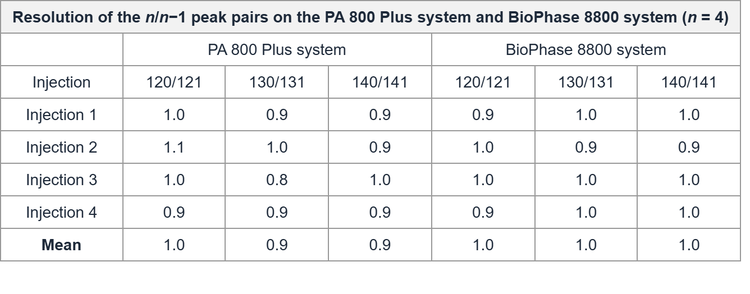
Compatible with the BioPhase 8800 system and the 800 Plus systems: Platform compatibility was evaluated using the Oligo 200 nt test mix on both the BioPhase 8800 system and the PA 800 Plus system. The same method settings, capillary chemistry and capillary length were used on both systems, supporting a consistent separation mechanism across platforms. Migration times were compared across the 14 peaks from 50 nt to 141 nt in the test mix, and resolution was assessed for the three most challenging longer n/n−1 pairs: 120/121 nt, 130/131 nt and 140/141 nt.
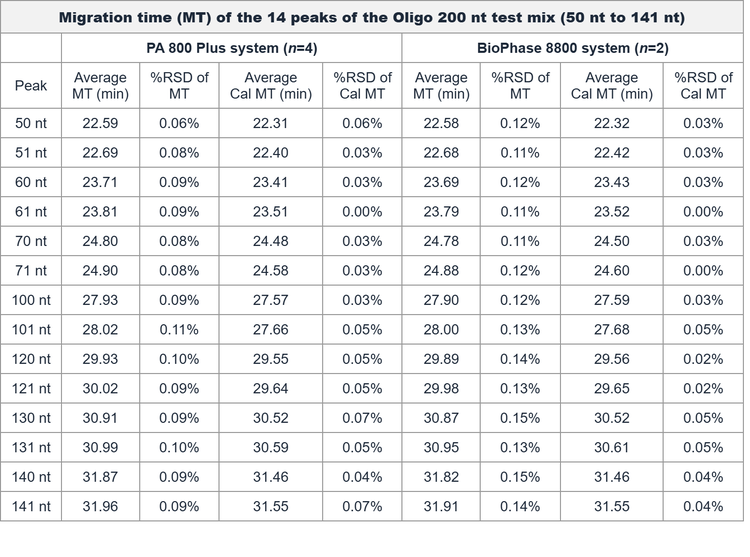
As summarized in Table 4, migration times were closely aligned between the PA 800 Plus system and the BioPhase 8800 system. Migration time variability was low on both platforms, with %RSD values ≤0.11% on the PA 800 Plus system and ≤0.15% on the BioPhase 8800 system. After calibration to the
IS, the calibrated migration time was further improved with %RSD values ≤0.07% on the PA 800 Plus system and ≤0.05% on the BioPhase 8800 system, demonstrating that internal standard-based calibration supports reliable automated peak assignment and method transfer between platforms. Resolution performance was comparable between the two systems (Table 5). All tested peak pairs met the acceptance criterion of R > 0.7 across all injections, confirming single-nucleotide resolution for the longer oligonucleotide peak pairs. The average resolution values for the PA 800 Plus system were 1.0, 0.9 and 0.9 for the 120/121 nt, 130/131 nt and 140/141 nt pairs, respectively, while the BioPhase 8800 system produced corresponding average values of 1.0, 1.0 and 1.0. These results demonstrate that the Oligo 200 nt Purity and Integrity kit delivers comparable separation performance on both platforms and supports flexible implementation and method transfer between the BioPhase 8800 system and the PA 800 Plus system while maintaining resolution performance for closely related longer oligonucleotide species. This transferability is important because the BioPhase 8800 system can support earlier-stage development, method development and medium-sized sample sets where higher sample throughput is beneficial, while the PA 800 Plus system can support transfer into QC environments where lower sample throughput is typically required.
Conclusions
- The Oligo 200 nt Purity and Integrity kit provides a standardized CGE-UV workflow for single-stranded oligonucleotide purity, integrity analysis across a broad 10 nt to 200 nt range.
- The workflow demonstrated single-nucleotide resolution for seven n/n−1 peak pairs in the Oligo 200 nt test mix from 50/51 nt through 140/141 nt, with R values > 0.7.
- The intermediate precision study demonstrated the separation performance was reproducible across 64 injections acquired at 2 sites using 2 BioPhase 8800 systems, 2 kit lots, 2 cartridges and 2 days, supporting method robustness across common sources of variability.
- The use of the Single-stranded Oligo standard (15 nt) as an internal reference standard for migration time, reduced migration time variability, decreasing calibrated migration time %RSD values to 0.07% - 0.17% for all tested peaks and supporting reliable peak assignment.
- The method maintained consistent resolving power across the reproducibility study, with resolution %RSD values ranging from 3.1% to 5.3% and a minimum resolution of 0.8 for the most challenging 140/141 nt peak pair.
- Sensitivity results further support workflow utility, with the 15 nt internal standard detected at 1 pg/µL across 8 capillaries.
- Comparable migration time and resolution performance on the PA 800 Plus and BioPhase 8800 systems supported method transfer between platforms.
- The ready-to-use gel, simple dilute-and-load sample preparation and pre-assembled BFS cartridges streamline implementation while supporting consistent performance across sites and platforms.
References
- Jora, M., et al. The complexities of oligonucleotide therapeutics: analytical challenges and opportunities within early drug discovery. Bioanalysis, 2025; 17(22): 1415–1419.
- Development of purity analysis methods for synthetic prime editing guide RNAs (pegRNAs) with high-level secondary structures for prime editing research applications. SCIEX technical note, RUO-MKT-02-15310-A.
- Analysis of mRNA poly(A) tails with single-nucleotide resolution by capillary gel electrophoresis with UV detection (CGE-UV). SCIEX technical note, MKT-30825-A.
- NM, E., et al. Chromatographic approaches for the characterization and quality control of therapeutic oligonucleotide impurities. Biomedical Chromatography. 2018; 32:e4088.
- Oligo 200 nt Purity and Integrity kit for the BioPhase 8800 system, application guide, TPUB-CUST-16092-A.
- Oligo 200 nt Purity and Integrity kit for the PA 800 Plus system, application guide, TPUB-CUST-16093-A.
- A platform method for poly(A) tail analysis with single-nucleotide resolution by capillary gel electrophoresis with UV detection, SCIEX technical note, MKT-39574-A.