Discover the global issue of food fraud and the need for rigorous testing to ensure the authenticity and safety of our food. SCIEX offers advanced LC-MS/MS technology to detect and quantify adulterants, providing reliable solutions for monitoring and combating food fraud.
Food fraud analysis

Advancing food fraud analysis
with adulterants and dyes testing
The globalization of food production has provided us with a diverse range of cuisines, but it has also introduced challenges in monitoring and regulating the authenticity of food ingredients and supply chains. Food fraud, which involves intentionally tampering with food products for commercial gain, is a criminal act in most countries and comes with severe repercussions. To effectively combat food fraud, we need to address the following challenges:
- Existing methods for detecting food fraud may lack the precision needed, making it difficult to identify adulterated ingredients accurately. Find out how the combination of method robustness and sensitivity enables the achievement of these goals.
- A vast range of food and drinking products (including meat, fish, and spices, which are the most susceptible to fraudulent production practices) need constant monitoring and analysis to ensure they remain free from adulteration. Discover the applications offered on this page to tackle these challenges.
By adopting LC-MS/MS technology, we can proactively combat food fraud, promote consumer confidence, and protect the integrity of our food supply chain.
Food adulterant testing is crucial for ensuring the safety and authenticity of various food products, from commonly consumed items like meat and vegetables to specialized products such as infant formula. Our comprehensive analysis covers every step of the supply chain, enabling regulatory compliance and protecting consumers.
Food additives like coloring and dyes are often used to enhance the visual appeal and may alter the umami taste profiles of food. However, their impact on health is a concern. Our analytical testing methods play a vital role in ensuring the safety of the general public by accurately detecting and quantifying these additives.
Food adulteration
Testing and analysis
Mass spectrometry combined with optimized sample prep and LC conditions delivers the fast and sensitive applications you need to analyze and test for food adulteration. Maintaining fast turnaround times with ever-expanding menus and complicated matrices can be challenging. Routine food testing labs require flexibility and agile expertise to handle throughput and maintain maximum uptime. This is where mass spectrometry is vital.
- Minimize sample preparation and LC run time
- Screen and identify more contaminants per each LC method, increasing data output without compromising data integrity
- The robustness issue: tackle challenging matrices with trace-level sensitivity and qualitative specificity for detection of low concentration analytes in your food samples
- Perform simultaneous quantitation with multiple reaction monitoring [MRM) applications with SCIEX OS software while collecting high-speed full-scan data
- Gain flexibility for your food fraud analysis portfolio via these identification methodologies while obtaining accurate quantitation to suit your needs
Featured food adulteration resources
-
Technical note
Rapid determination of Aconitum alkaloids in adulterated spice powders
This technical note describes a fast extraction coupled with an LC-MS/MS method for simultaneously determining 6 Aconitum alkaloids in adulterated spice powders.
-
Technical note
Sensitive quantitation of 2-acetylfuran-3-glucopyranoside as a marker for rice syrup adulteration in honey
This technical note describes a simple dilute-and-shoot method for the quantitation of 2-acetylfuran-3-glucopyranoside (AFGP) as a chemical marker for detecting honey adulterated with rice syrup.
Food fraud analysis
Solutions
Options:
- SCIEX 7500+ system
- X500R QTOF system
- SCIEX OS software

ExionLC AE system
Reproducibility, reliability and carryover performance to match your quantitative workflows. Dependability you can count on, from injection to injection and batch after batch.
Learn more
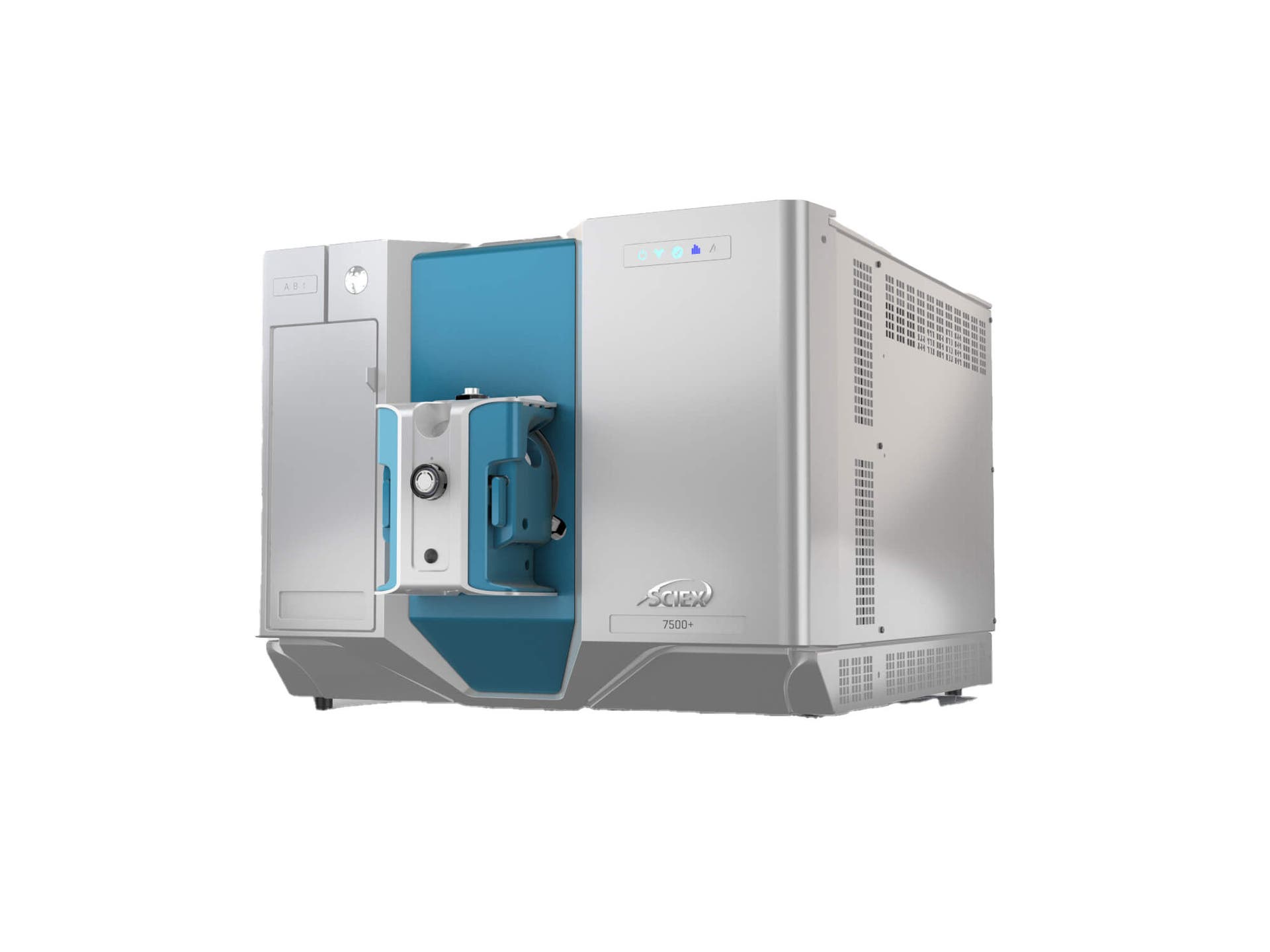
SCIEX 7500+ system
Setting a new standard for instrument resilience and robustness, the SCIEX 7500+ system gives you the confidence to face evolving analytical challenges. Tackle tight timelines with exceptional sensitivity and with the power to control your instrument downtime.
Learn more

SCIEX OS software
Unleash the analytical power of the next-generation software platform for data acquisition and processing.
Learn more
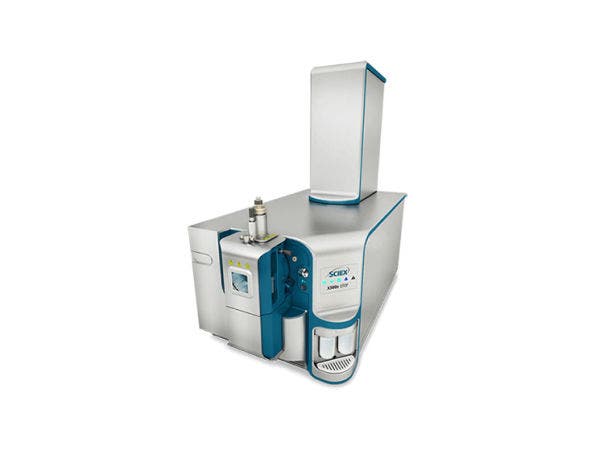
X500R QTOF system
A uniquely engineered and versatile QTOF build to handle the demands of any high throughput laboratory.
Learn more
Food dyes (additives)
analysis and testing
Food dyes are widely used to enhance product appearance and consumer appeal but increasing regulatory scrutiny and consumer concerns around synthetic colorants are driving the need for robust analytical testing. Food colourants analysed with LC-MS/MS are mainly:
- Synthetic dyes (e.g., azo dyes such as Tartrazine, Allura Red, Sunset Yellow)
- Natural dyes (e.g., anthocyanins, carotenoids, curcumin)
In the United States, regulatory focus on synthetic dyes is increasing, with actions including the revocation of FD&C Red No. 3 in certain uses and continued safety evaluation of other artificial colorants.
Labs have an increased need to routinely screen and quantify dyes in complex food samples. New challenges also include identifying and quantifying non-declared or unknown analytes within foodstuffs. Due to the inherently complex nature of food matrices (e.g., fats, sugars, proteins, and emulsifiers), analysis of dyes remains a challenge. Here are a few reasons why LC-MS/MS is the ideal setup to tackle these issues:
- Good sample preparation combined with mass spectrometry enables removal of matrix interferences and detection of dye compounds
- SCIEX OS workflows allow large panels of synthetic and natural dyes to be screened and quantified in a single run from a single injection
- High sensitivity and selectivity of triple quadrupole LC-MS/MS support accurate quantitation of regulated dyes and detection of emerging or non-target compounds
- Robust low-level quantitation supports evolving regulatory thresholds and risk assessments
Advances in LC-MS/MS also allow laboratories to extend beyond targeted methods, enabling suspect screening and confirmation of undeclared dyes, which is increasingly important as regulatory pressure on synthetic additives continues to grow.
Food dyes featured resources
-
Technical note
Targeted analysis of artificial dyes in spices and jaggery sugar using LC-MS/MS
This technical note describes a method for the trace analysis of 7 artificial dyes in turmeric and jaggery sugar. Using the QTRAP 6500+ system and a simple extraction procedure, good quantitative performance was shown for matrix spikes at 100 ng/g, 500 ng/g and 5000 ng/g. Absolute recoveries ranged from 80.2% to 104% in the turmeric spikes, and from 89.4% to 107% in the jaggery spikes, demonstrating good extraction yield.
-
Technical note
Analysis of food colors and illegal dyes in spices using LC-QTOF with SWATH data independent acquisition (DIA)
This technical note demonstrates a screening method for the analysis of 98 food colors and illegal dyes in spices using the X500R QTOF system. The SWATH acquisition method collected MS/MS spectra for all precursor compounds, and detection confidence was increased through MS/MS spectral matching against an in-house library database in the SCIEX OS software.
Food dye analysis
Solutions
Accurately detect chemical dyes and additives by:
- High sensitivity, selectivity, and specificity
- Fast, multi-analyte methodology
ExionLC AE system
Reproducibility, reliability and carryover performance to match your quantitative workflows. Dependability you can count on, from injection to injection and batch after batch.
Learn more
SCIEX 7500+ system
Setting a new standard for instrument resilience and robustness, the SCIEX 7500+ system gives you the confidence to face evolving analytical challenges. Tackle tight timelines with exceptional sensitivity and with the power to control your instrument downtime.
Learn more
SCIEX OS software
Unleash the analytical power of the next-generation software platform for data acquisition and processing.
Learn more