Spotlight on: Oligonucleotides

What are oligonucleotides?

Oligonucleotides (also referred to as oligos) have become one of the most important tools in modern-day biology. They are single or double-stranded fragments of DNA or RNA molecules, with varying lengths of nucleotides per strand. Using phosphoramidite chemistry, they are synthesized by adding one of the five nucleic acids  (A, T, C, G and U) until the desired sequence is achieved.

The first method of synthesis was introduced in the late 1950s by Dr. Har Gobind Khorana and colleagues. Solid phase synthesis of oligos began in 1965, with additional efforts to create longer strands in the 1970s and 1980s. Today, many companies synthesize oligos for academic, research, or commercial use, including another company under the Danaher umbrella, IDT.

The synthesis of oligonucleotides provides a versatile and powerful tool for modern science. From advancing research capabilities to improving diagnostic accuracy and expanding therapeutic options, synthetic oligonucleotides have become indispensable in numerous scientific and medical endeavors. 
Why are oligonucleotides both challenging and interesting? 

Due to their inherent negative charge and structural complexity, a high level of expertise is needed to understand their physiochemical behavior. Specialized optimization of sample preparation is vital, especially for PK/PD and bioanalysis studies in different matrices.

Frequently, the backbone and bases are modified so they are more stable, but this adds to their polarity and makes them difficult to retain on conventional reversed-phase (RP) columns – the most typical columns used in LC-MS analysis. Oligonucleotides display multiple charges and love to take up adducts, limiting sensitivity and creating complex MS spectra. They also like to stick to components of the LC system, leading to sensitivity losses and ultimately affecting the accuracy of analyses negatively. Because of this, it’s common practice to use ion-pairing agents to combat their hydrophilic nature during LC separation, which often leads to dedicated instrumentation.

How are oligonucleotides impacting the world?

Oligos are incredibly versatile biological tools thanks to their ability to hybridize specifically with complementary nucleic acid sequences–leading to utility in gene manipulation, detection, and analysis.

While the first approvals of oligonucleotide therapeutics started in the late 1990s, it took another twenty years before the first small interfering RNA (siRNA) drug was approved (used in the treatment of genetic disorders, cancers, and other diseases). Oligonucleotide therapeutics mark a revolution of mechanism of action (MoA)  by targeting the messenger RNA (mRNA). Today, more than a dozen antisense oligonucleotides (ASOs) and siRNA drugs are on the market, most designated orphan drugs for treating rare genetic diseases with many more in different stages of drug development. [1] 

1 Collotta, D. et al. Antisense oligonucleotides: a novel frontier in pharmacological strategy. Front Pharmacol. 2023 Nov 17;14:1304342. doi: 10.3389/fphar.2023.1304342. PMID: 38044945; PMCID: PMC10690781.

How does SCIEX help overcome key challenges?

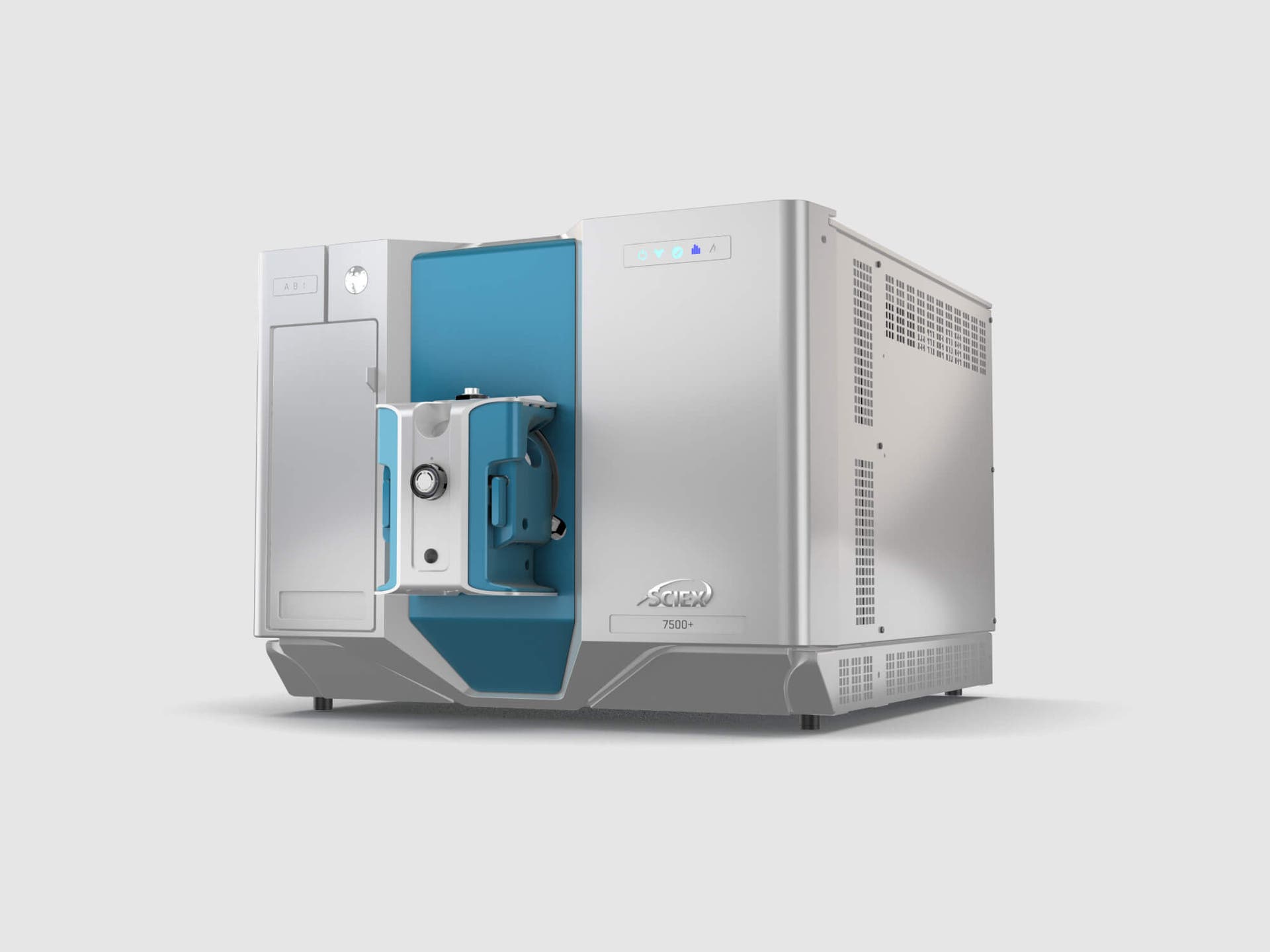
SCIEX offers several solutions that uniquely assist scientists in analyzing oligos. Launched just last year, the high sensitivity and resilience of the new SCIEX 7500+ system permits pharmacokinetic or impurity studies with limited sample availability that require quantitation at trace, negative levels. Furthermore, matrices for bioanalytical studies can be extremely challenging. The SCIEX 7500+ system excels in negative ionization mode with enhanced robustness, exceling in the quantitation of oligonucleotides, its impurities, or metabolites.

As we mentioned above, oligos can be quite “sticky” so to limit undesired binding, it is key to consider the surfaces with which oligonucleotide samples come in contact, especially metal surfaces. Thus, inert LC systems can be tremendously helpful in oligonucleotide analytics. We have partnered with Shimadzu Corp to offer a new inert LC option: the Shimadzu Nexera XS Inert LC.

Key benefits of oligonucleotides

  • Oligos have became a great interest in drug development due to binding specificity of complementary sequences
  • Oligo-based therapies can be used to inhibit gene expression, or slow protein function or are the basis for novel cancer-fighting drugs
  • Previously undruggable conditions can be addressed with oligo therapeutics

Explore more below:

Webinar

The capabilities of KCAS Bio: PK, biomarkers and immunogenicity testing all under one roof

Explore more

Dos and Don'ts Flyer

Dos and don'ts of oligonucleotide analysis

Learn more

Webinar

Mass spectrometry approaches for the analysis of oligonucleotide therapies to support drug development strategies

Explore more

Q&A blog

A 2-fold revolution: MS approaches for the bioanalysis of oligonucleotide therapeutics

Read more

Technical note

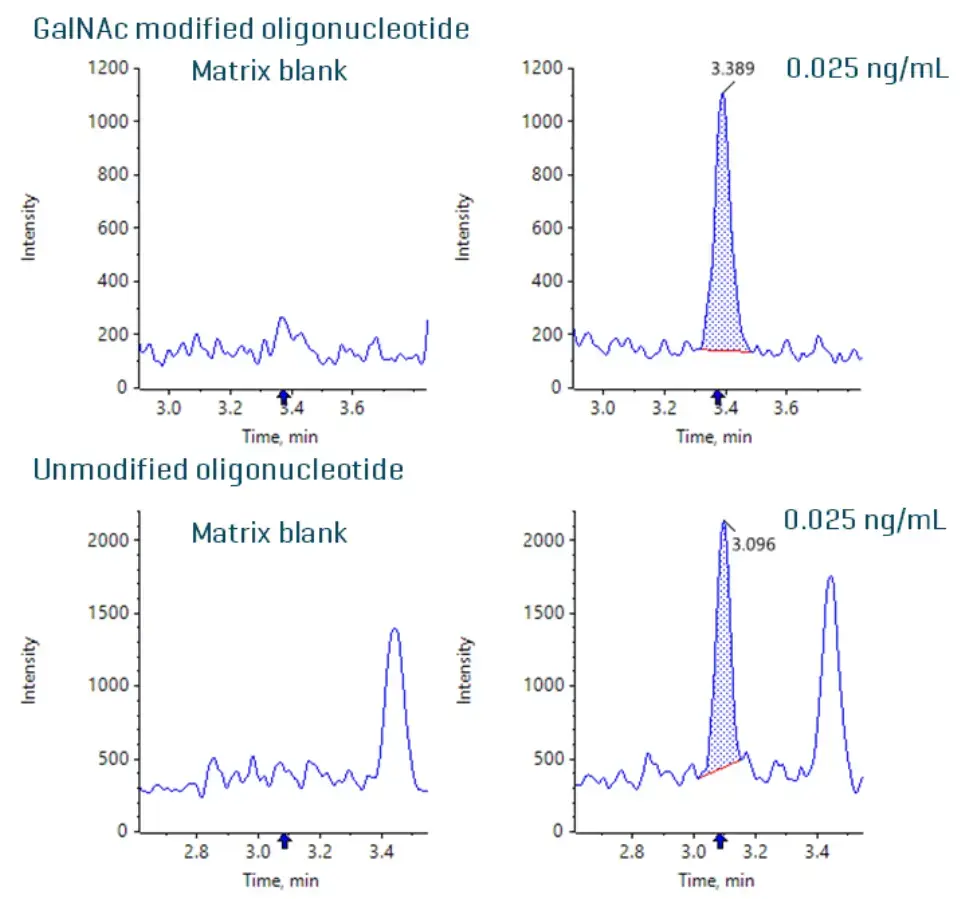
Quantitation of GalNAc modified and unmodified oligonucleotides in rat plasma

Explore here

Technical note

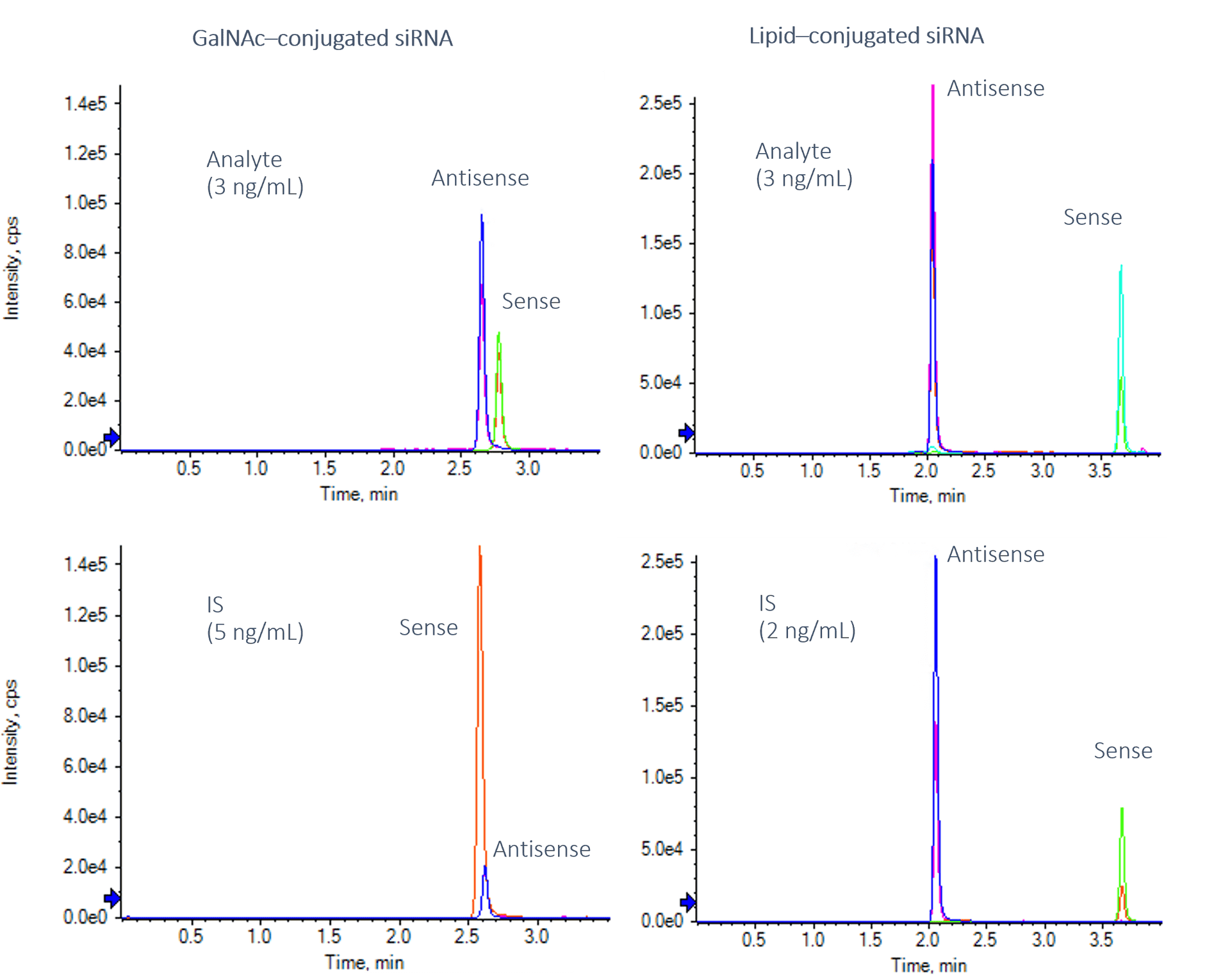
Ultra-sensitive quantification of GalNAc- and lipid-conjugated siRNA using trap-and-elute microflow LC

Explore more

Solution

Ultimate quantitation

Benefits:

  • Reliably quantify at low limits
  • Future-proof your methods
ExionLC AE system

Reproducibility, reliability and carryover performance to match your quantitative workflows. Dependability you can count on, from injection to injection and batch after batch.

Learn more
SCIEX 7500+ system

A new standard for instrument resilience and robustness. Engineered to maintain our highest sensitivity for up to twice as long in complex matrices.

Learn more
SCIEX OS software

Unleash the analytical power of the next-generation software platform for data acquisition and processing.

Learn more
Service

Keep your instruments performing at their peak, with multiple options for response time, repair coverage and maintenance.

Learn more

In case you missed it…

Catch up on past months topics

            Each month, the Spotlight on series will highlight a different challenging molecule or class of compounds as well as related LC-MS solutions, unmatched in terms of sensitivity and accuracy, that will help customers meet today’s and future needs.

Cyclic Peptides

Cyclic peptides are stable, bioactive molecules that resist enzymatic breakdown and can target protein–protein interactions, making them valuable for treating conditions such as autoimmune disease, transplant rejection, and inflammation. While these complex molecules are challenging to analyze, advanced LC MS platforms like the SCIEX 7500+ and 7600+ systems deliver the sensitivity and resolution needed to advance their therapeutic potential.

Learn more
SCIEX OS software

SCIEX OS software streamlines instrument control and automates data processing to simplify lab workflows and support fast, informed decisions. It serves both new and experienced users by maintaining compliance through audit trails and role-based access, while automating routine tasks so scientists can focus on discovery. Designed for all the latest SCIEX mass spectrometry systems and now enhanced with Windows 11 support to meet IT security policies and reduce cybersecurity risks.

Learn more
GLP-1

GLP-1 is a multifaceted hormone that regulates blood glucose, influences appetite and weight, and provides cardiovascular benefits. Continued research and development of GLP-1-based therapies promise to advance and expand potential uses. The sensitivity, specificity, and versatility of LC-MS plays a major role in advancing GLP-1 research with new insights.

Learn more
Bile acids

Bile acid biochemistry was once poorly understood, but growing interest in the gut-brain axis and microbiome has sparked new research. LC-MS technology is advancing knowledge of bile acids' roles and potential as therapeutic targets and biomarkers.

Learn more
Fentanyl

Fentanyl has garnered significant attention in recent years due to its critical role in both medical and illicit contexts. As a compound, it offers unparalleled pain relief, but also contributes to an alarming rate of opioid-related overdoses. Studying fentanyl is essential to developing effective therapeutic applications, understanding its pharmacokinetics, and addressing the public health crisis it poses. LC-MS/MS has emerged as a transformative technology in advancing fentanyl research, providing precise and comprehensive analytical capabilities.

Learn more
Oligonucleotides

Oligonucleotides are pivotal in genetic research, diagnostics, and therapeutics. Explore the intricacies of these molecules and how LC-MS technologies are propelling their research to new heights, enabling scientists to achieve exceptional levels of accuracy in oligonucleotide characterization and quantitation.

Learn more
Lipid mediators

The third topic in the Spotlight on series explores lipid mediators, a highly potent family of signaling molecules, perhaps best known for their role in inflammation. Due to their potent biological activities and often transient existence, precise and sensitive analytical techniques are essential for their study.

Learn more
Nitrosamines

Get a deeper understanding of what makes nitrosamines a concern, what is being done to understand and test for nitrosamines, and how SCIEX LC-MS solutions can help give you confidence in your quantitation needs: for today and tomorrow.

Learn more
PFAS

PFAS are an extensive, complex group of manufactured chemicals that are ubiquitous throughout the environment, accumulate from many different sources and whose consumption is currently unavoidable. With accumulating toxicity a rising concern, sensitive and resilient analysis is key to understanding exposure risks. LC-MS is considered the gold standard for detecting and quantifying PFAS molecules and has become the “defacto” methodology for analysis.

Learn more
Targeted protein degraders

The second topic in the Spotlight on series covers targeted protein degraders (TPDs), a cutting-edge approach in the field of drug development. By leveraging an event-driven mechanism that degrades unwanted or harmful proteins, rather than the traditional occupancy-driven approach, TPDs offer several significant therapeutic benefits that make them particularly promising for treating challenging conditions.

Learn more