Delivering robustness and resilience

The problem​:

Analytical labs chasing low limits of quantitation across complex matrices and high‑throughput workflows face a stubborn reality: as ion transmission rises, so does the possibility for contamination— potentially compromising signal fidelity, driving increased maintenance, and disrupting productivity just when instrument uptime matters most. Sensitivity is essential, but it’s only valuable when the system stays online.

Complex or “dirty” matrices send a broad population of ions through the front end of the mass spectrometer. Many of these high‑mass, non‑informative ions don’t contribute to analytical results, and yet they deposit charged debris on IQ1 or Q1 (orsometimes even further down the rail), causing sensitivity loss, mass shifts, unplanned cleaning, and downtime. This kind of unplanned downtime can be costly, both in terms of time and money. ​
The solution:

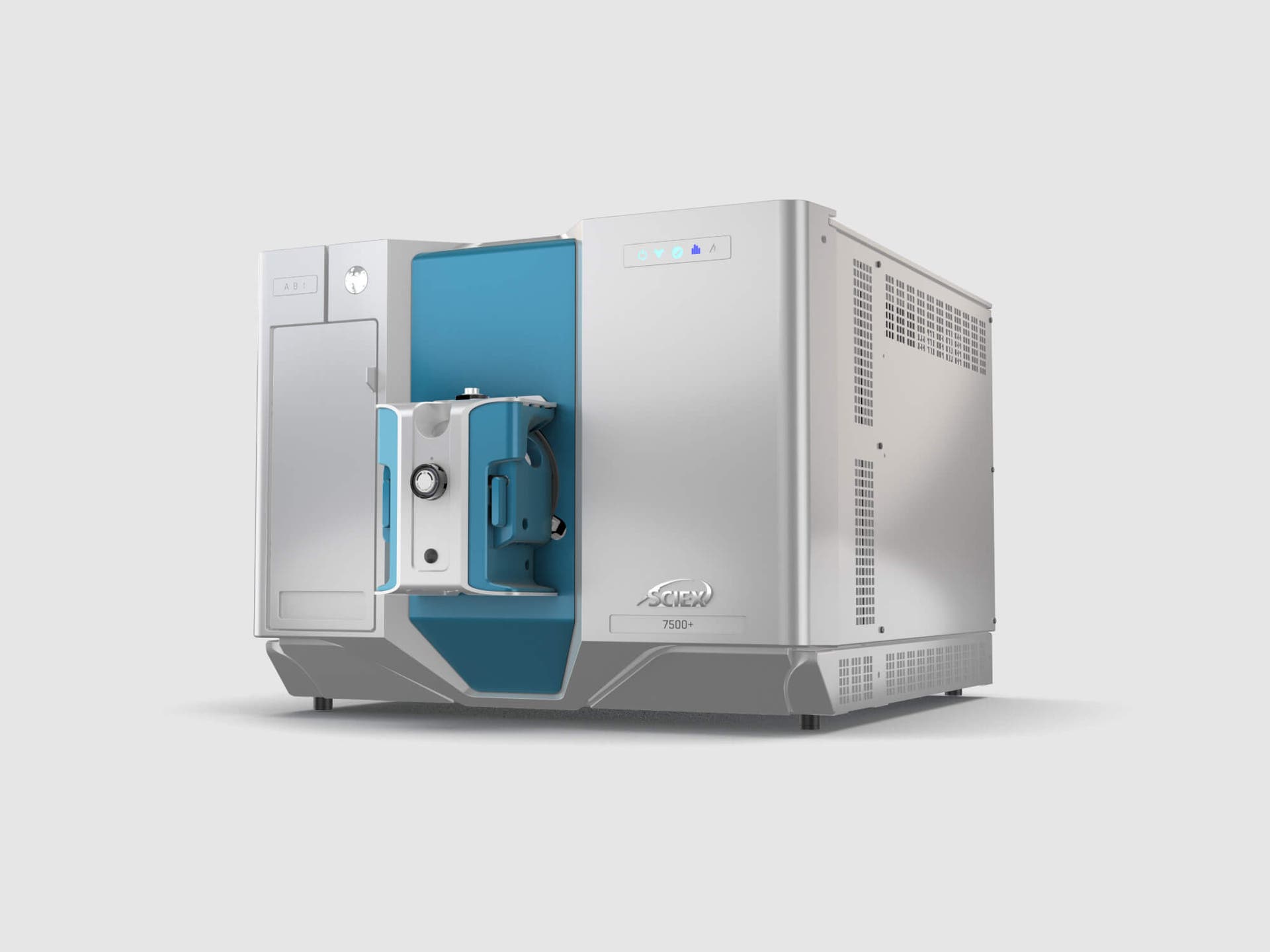
Mass Guard technology resolves this tension with innovative ion filtering technology that preserves both sensitivity and stability, helping labs maximize utilization even under heavy matrix load. First available on the SCIEX 7500+ system and now also on the SCIEX ZenoTOF 8600 system, this technology delivers low limits of quantitation and increased resilience- so customers gain longer, continuous run times, have more control over their instrument downtime, and see improved analytical consistency without sacrificing sensitivity or system performance.​​

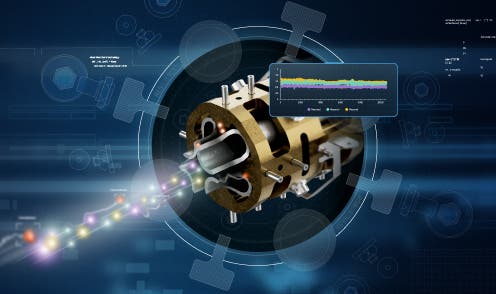
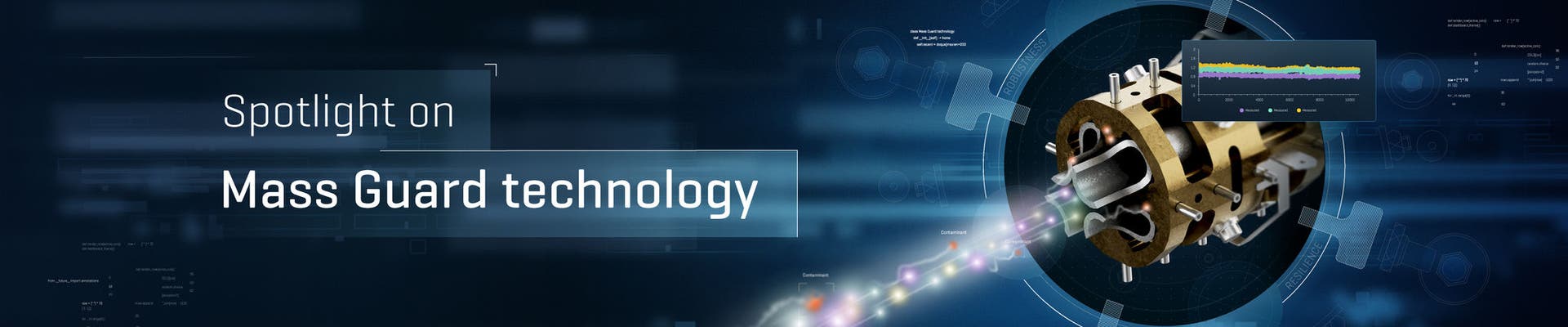
​Mass Guard technology prevents contamination-prone, non-informative ions from ever reaching IQ1/Q1, maintaining our highest sensitivity for up to twice as long and reducing the risk and frequency of instrument contamination. It is incorporated in Q0 and works by creating a high m/z cut-off above the target mass range, removing unwanted high m/z species, and narrowing the m/z range of ions transmitted past Q0.​

How Mass Guard technology works:

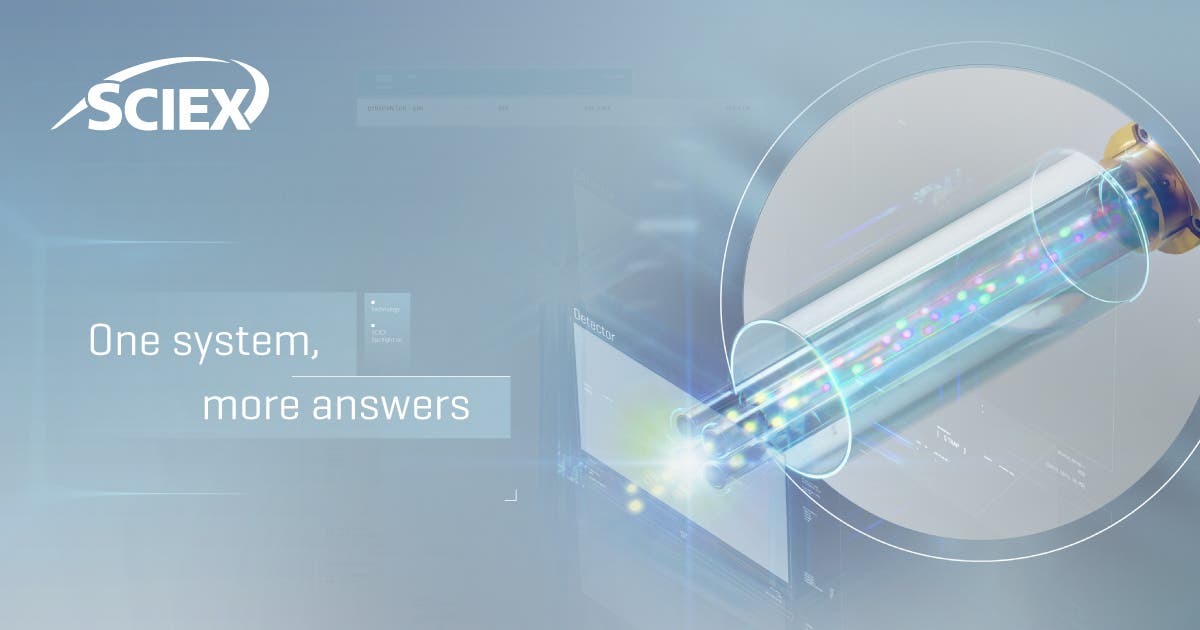
Mass Guard technology is a proprietary innovation that filters out high m/z contaminants before they reach IQ1/Q1, using auxiliary electrodes with novel software control. Ions are transmitted within user-defined mass-to-charge (m/z) range while higher-mass ions that contribute to optical fouling and signalinstability are filtered out. ​

• Using auxiliary electrodes on the ion guide. These enable fast refilling for rapid switching, during which the instrument filters ions above the precursor mass of interest.​

• Applying an asymmetrical DC potential difference between the two auxiliary electrodes. This reduces radial confinement of ions traveling through Q0, where the auxiliary electrodes are active and destabilize ion trajectories. ​

• Operating at a higher-pressure regime. This allows the region to be more resilient to debris accumulation than, for example, the Q1 region.​

This unique dual-field configuration allows higher mass ions to be selectively filtered from the ion beam and directed to the auxiliary electrode surfaces, effectively removing them from the beam and preventing contamination of rail components beyond Q0. In this way, Mass Guard technology functions similarly to a guard column in liquid chromatography, protecting the Q1 region, where key selectivity occurs, from contamination.​

In summary​:

SCIEX triple quadrupoles have long been trusted for day‑to‑day robustness. Building on that heritage, we’re advancing instrument resilience to help scientists protect data quality, maximize uptime, and run more efficiently. Mass Guard technology elevates protection into performance— filtering out non‑essential ions so your instruments stay cleaner, longer.

And since it’s available on both the SCIEX 7500+ and ZenoTOF 8600 systems, that same resilience extends across both demanding quantitative studies and exploratory qualitative work. Now you can scale from the most rigorous quantitative methods to qualitative discoveries with more uptime and greater efficiency.

Key benefits of Mass Guard technology

  • Built into your go‑to systems: Available on the SCIEX 7500+ system and ZenoTOF 8600 system, so resilience is standard whether you’re running targeted quant or exploratory analyses
  • More uptime, fewer cleanings: In accelerated contamination studies across multiple matrices Mass Guard technology was shown to extend cleaning intervals by up to 2 times compared to current SCIEX technology, with debris redirected to the auxiliary electrodes instead of IQ1/Q1
  • Resilience at scale: Mass Guard technology enables stable protection under prolonged, dirty and complex matrix exposure so you can commit to bigger batches with confidence
  • Throughput preserved: The transmission window is automatically tuned per precursor (e.g., +100, +200, +400 Da above target) and with auxiliary electrodes that support rapid refill for fast transition switching, MassGuard technology runs on the MRM timescale you need to use
  • Practical, repeatable, and service‑friendly: The assembly is user-serviceable and uses easy-to-use alignment pins for repeatable placement, while a small corrective DC offset helps compensate for any minor misalignments to preserve transmission​

Explore more below:

Transforming small molecule quantitative sensitivity with a novel quadrupole time-of-flight mass spectrometer

This technical note demonstrates a sensitive method for the quantitation of small-molecule drugs in extracted rat plasma using the ZenoTOF 8600 system.

Explore more

Quantitative performance of a next-generation, highly robust triple quadrupole mass spectrometer

In order to effectively meet the required drug discovery and development timelines, bioanalytical workflows need robust mass spectrometers to minimize instrument downtime.

Learn more

Direct injection analysis of pesticides in fruit juices on a next-generation, highly robust triple quadrupole mass spectrometer

Food and beverage samples are complex and often cause matrix effects and instrument contamination. The SCIEX 7500+ system with Mass Guard technology improves instrument robustness without compromising sensitivity.

Explore more

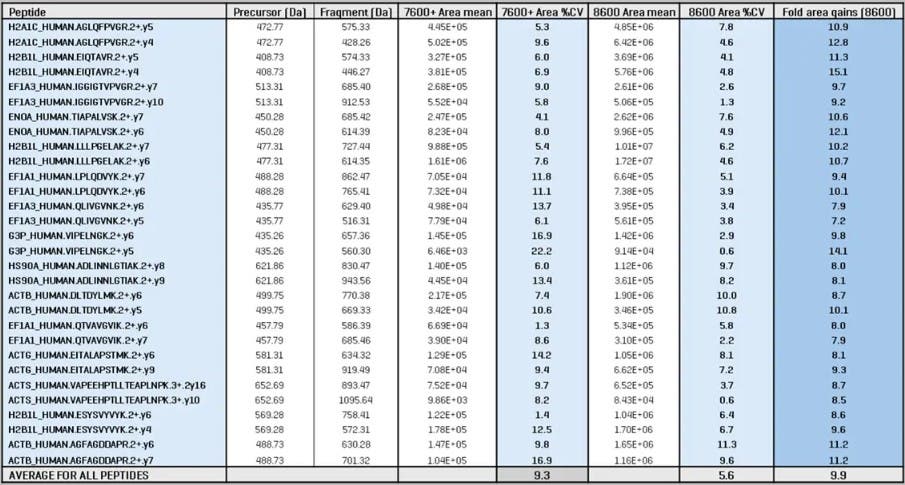
Advances in high-throughput quantitative proteomics powered by high-sensitivity data-independent acquisition on the ZenoTOF 8600 system

This technical note describes high-throughput quantitative proteomics using the SCIEX ZenoTOF 8600 system. 

Read more

MassGuard Technology Flyer

Explore all the key benefits of Mass Guard technology.

Learn more

Solution

Ultimate quantitation

Benefits:

  • Reliably quantify at low limits
  • Future-proof your methods
ExionLC AE system

Reproducibility, reliability and carryover performance to match your quantitative workflows. Dependability you can count on, from injection to injection and batch after batch.

Learn more
SCIEX 7500+ system

A new standard for instrument resilience and robustness. Engineered to maintain our highest sensitivity for up to twice as long in complex matrices.

Learn more
SCIEX OS software

Unleash the analytical power of the next-generation software platform for data acquisition and processing.

Learn more
Service

Keep your instruments performing at their peak, with multiple options for response time, repair coverage and maintenance.

Learn more

In case you missed it…

Catch up on past months topics

            Each month, the Spotlight on series will highlight a different challenging molecule or class of compounds as well as related LC-MS solutions, unmatched in terms of sensitivity and accuracy, that will help customers meet today’s and future needs.

Mass Guard technology

As labs push for ever‑lower quantitation limits in complex matrices and high‑throughput workflows, increasing ion transmission can also increase contamination—putting signal integrity, uptime, and productivity at risk. Sensitivity only delivers value when systems stay clean, stable, and online, even with challenging “dirty” matrices. Mass Guard technology reduces the risk and frequency of instrument contamination, and keeps your lab moving forward. Log in to learn more.

Learn more
Cyclic Peptides

Cyclic peptides are stable, bioactive molecules that resist enzymatic breakdown and can target protein–protein interactions, making them valuable for treating conditions such as autoimmune disease, transplant rejection, and inflammation. While these complex molecules are challenging to analyze, advanced LC MS platforms like the SCIEX 7500+ and 7600+ systems deliver the sensitivity and resolution needed to advance their therapeutic potential.

Learn more
SCIEX OS software

SCIEX OS software streamlines instrument control and automates data processing to simplify lab workflows and support fast, informed decisions. It serves both new and experienced users by maintaining compliance through audit trails and role-based access, while automating routine tasks so scientists can focus on discovery. Designed for all the latest SCIEX mass spectrometry systems and now enhanced with Windows 11 support to meet IT security policies and reduce cybersecurity risks.

Learn more
GLP-1

GLP-1 is a multifaceted hormone that regulates blood glucose, influences appetite and weight, and provides cardiovascular benefits. Continued research and development of GLP-1-based therapies promise to advance and expand potential uses. The sensitivity, specificity, and versatility of LC-MS plays a major role in advancing GLP-1 research with new insights.

Learn more


Bile acids

Bile acid biochemistry was once poorly understood, but growing interest in the gut-brain axis and microbiome has sparked new research. LC-MS technology is advancing knowledge of bile acids' roles and potential as therapeutic targets and biomarkers.

Learn more
Oligonucleotides

Oligonucleotides are pivotal in genetic research, diagnostics, and therapeutics. Explore the intricacies of these molecules and how LC-MS technologies are propelling their research to new heights, enabling scientists to achieve exceptional levels of accuracy in oligonucleotide characterization and quantitation.

Learn more
Lipid mediators

The third topic in the Spotlight on series explores lipid mediators, a highly potent family of signaling molecules, perhaps best known for their role in inflammation. Due to their potent biological activities and often transient existence, precise and sensitive analytical techniques are essential for their study.

Learn more
Nitrosamines

Get a deeper understanding of what makes nitrosamines a concern, what is being done to understand and test for nitrosamines, and how SCIEX LC-MS solutions can help give you confidence in your quantitation needs: for today and tomorrow.

Learn more
PFAS

PFAS are an extensive, complex group of manufactured chemicals that are ubiquitous throughout the environment, accumulate from many different sources and whose consumption is currently unavoidable. With accumulating toxicity a rising concern, sensitive and resilient analysis is key to understanding exposure risks. LC-MS is considered the gold standard for detecting and quantifying PFAS molecules and has become the “defacto” methodology for analysis.

Learn more
Targeted protein degraders

The second topic in the Spotlight on series covers targeted protein degraders (TPDs), a cutting-edge approach in the field of drug development. By leveraging an event-driven mechanism that degrades unwanted or harmful proteins, rather than the traditional occupancy-driven approach, TPDs offer several significant therapeutic benefits that make them particularly promising for treating challenging conditions.

Learn more