Spotlight on: Ultrashort-chain PFAS

What are ultrashort-chain PFAS?

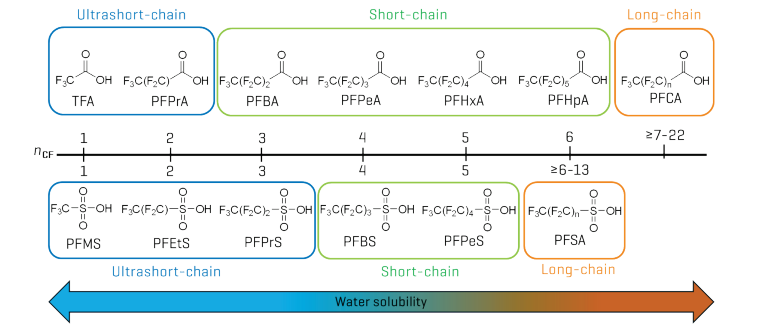
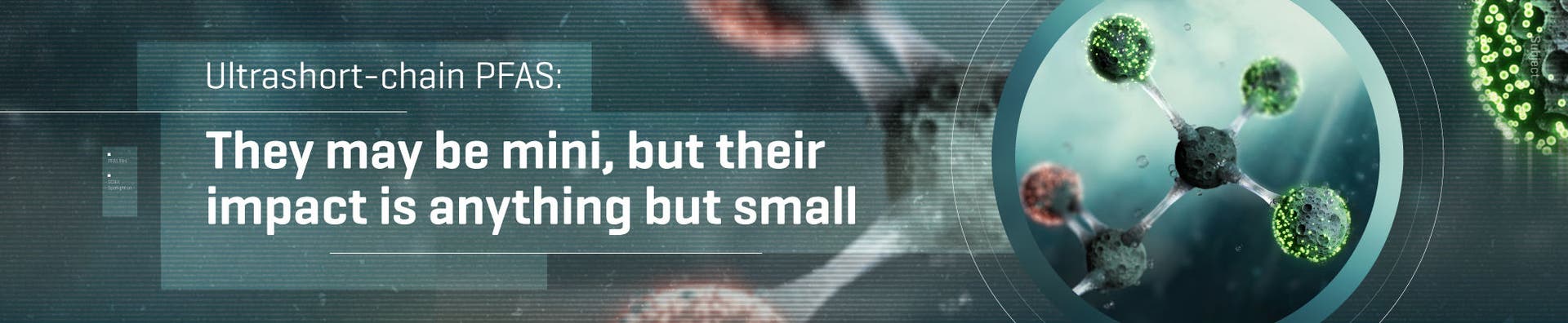
Ultrashort‑chain PFAS are perfluoroalkyl acids containing one to three fully fluorinated carbons (C1 to C3). This class of compounds commonly includes trifluoroacetic acid (TFA), perfluoropropanoic acid (PFPrA), and perfluoromethane sulfonic acid (PFMS), and like their longer-chain counterparts, are highly persistent and extremely water‑soluble, properties that allow them to move readily through environmental and agricultural systems and often travel far from their original sources. They are difficult to remove using conventional water‑treatment strategies and continue to enter the environment through industrial emissions, atmospheric transformation, and the degradation of longer‑chain PFAS. Once considered lower risk because they do not bioaccumulate to the same extent as larger PFAS molecules, ultrashort‑chain PFAS are now under increased scrutiny for their potential impact on water quality, food safety, and ecosystem health. They are among the fastest‑growing priorities in environmental monitoring and regulatory oversight.

Ultrashort‑chain PFAS differ from short‑chain (typically C4 to C6) and long‑chain PFAS (C7 and above) primarily by carbon‑chain length and the resulting physicochemical properties:
 

  • Water solubility: As the carbon chain becomes shorter, water solubility increases significantly. Ultrashort‑chain PFAS, having only one to three carbons in the chain, are the most water‑soluble of the PFAS family, which contributes to their high mobility.

  • Hydrophobicity and sorption: Longer‑chain PFAS possess higher hydrophobicity and bind more strongly to soils, sediments, and biological tissues. In contrast, ultrashort‑chain PFAS exhibit weak sorption, meaning they pass more freely through soils and surface waters instead of accumulating. 

  • Bioaccumulation behavior: Long‑chain PFAS are well known for their tendency to bioaccumulate in wildlife and humans, while short‑chain PFAS show reduced but still measurable persistence in organisms. Ultrashort‑chain PFAS are typically found in fruits and vegetables rather than meats or other protein-rich foods because of their tendency to accumulate in water and plants. 
     

Why do ultrashort-chain PFAS matter?

The extreme water solubility and persistence of ultrashort‑chain PFAS allow them to move rapidly through natural and human systems, resulting in widespread distribution in drinking water, rainwater, soils, and food products. Their high mobility means they can reach remote ecosystems and agricultural environments, contributing to sustained low‑level exposure. Although they do not bioaccumulate to the same extent as long‑chain PFAS, their constant presence in water resources raises concerns about sustained environmental loading and chronic exposure.

Global scientific bodies have noted that ultrashort-chain PFAS contamination can affect ecosystem integrity, disrupt immune and endocrine pathways, and persist for decades due to their resistance to breakdown. As global attention expands to include these smaller PFAS, accurate measurement is essential for environmental assessments, regulatory reporting, and consumer protection.

What are the analytical challenges?

Recognized as the most mobile and persistent perfluoroalkyl acids found in the environment, ultrashort-chain PFAS pose unique analytical challenges. Their extreme polarity, poor retention, and susceptibility to background contamination make them especially difficult to measure using conventional LC‑MS/MS workflows. As regulations expand beyond long‑ and short‑chain PFAS, laboratories must adopt robust, high‑sensitivity analytical methods capable of quantifying ultrashort-chain PFAS at sub‑ng/L levels while maintaining throughput and data quality essential for routine testing.

Top analytical obstacles for analysis of ultrashort-chain PFAS:
 

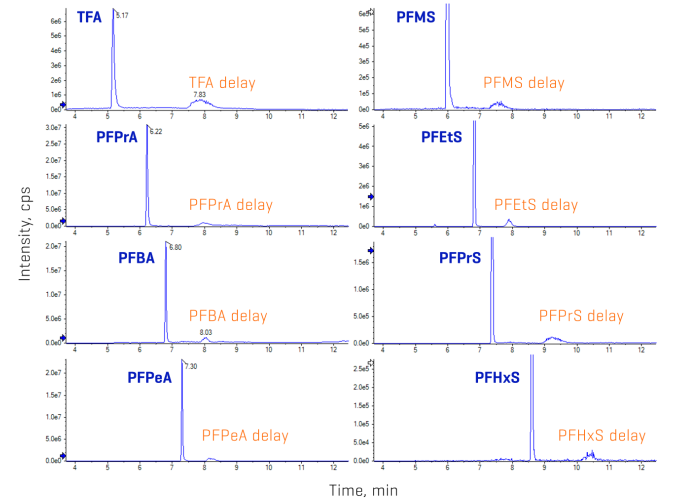
  • Limited LC retention: Their polarity causes them to elute near the void, complicating separation from early‑eluting interferences

  • Ubiquitous background: TFA and related acids are common laboratory and solvent buffers, potentially causing pervasive background signals

  • Sensitivity requirements: Regulatory and environmental monitoring demands sub‑ng/LLOQs, which are difficult to achieve without specialized chromatographic strategies.
     

How does SCIEX help overcome key challenges?

LC‑MS/MS is a key technique for studying ultrashort‑chain and other difficult-to-measure PFAS molecules because it provides the sensitivity and selectivity needed for highly polar, low‑retention compounds. Using the combined capabilities of SCIEX and Phenomenex illustrates how chromatography, mass spectrometry, and consumables work together in a complete workflow.

Enhanced selectivity from mixed‑mode and optimized reversed‑phase chromatography help increase retention and minimize background, which is especially important for trace‑level analytes such as TFA, PFPrA, and PFMS. Isotope‑dilution calibration and streamlined sample‑prep approaches further support accurate quantitation across drinking water, surface water, food, beverages, and other complex matrices.

LC-MS/MS methods have been developed by experts with decades of experience in PFAS research. Together with Phenomenex columns, sample‑prep tools, and “Designed for PFAS” standards, workflows have been optimized to maintain low background and reproducible performance, emphasizing consistency and data quality.

References

  1. https://www.eea.europa.eu/publications/emerging-chemical-risks-in-europe
  2. https://www.oecd.org/content/dam/oecd/en/publications/reports/2021/07/reconciling-terminology-of-the-universe-of-per-and-polyfluoroalkyl-substances_a7fbcba8/e458e796-en.pdf
  3. https://www.epa.gov/sites/default/files/2019-02/documents/pfas_action_plan_021319_508compliant_1.pdf
  4. https://ntp.niehs.nih.gov/ntp/ohat/pfoa_pfos/pfoa_pfosmonograph_508.pdf
  5. https://www.epa.gov/sdwa/and-polyfluoroalkyl-substances-pfas
  6. https://link.springer.com/article/10.1007/s00204-025-04126-9

Interesting facts about ultrashort-chain PFAS

  • TFA is by far the most consistently and commonly detected PFAS worldwide, appearing broadly across global environmental monitoring programs.
  • TFA not only comes from the degradation of longer-chain PFAS but also from the breakdown of fluorinated gases, as well as fluorinated pharmaceuticals and pesticides.
  • Environmental concentrations of ultrashort PFAS are steadily increasing, driven largely by indirect formation from precursor compounds.
  • A major source of ultrashort PFAS is atmospheric degradation of fluorinated gases such as refrigerants, which contributes substantially to their presence in rainfall and surface waters.
  • Ultrashort and short‑chain PFAS now dominate PFAS exposure in some populations, making up 69–100% of total PFAS measured in homes and human serum in a 2023 U.S. study.
  1. https://link.springer.com/article/10.1007/s00204-025-04126-9
  2. https://cdnmedia.eurofins.com/european-east/media/4s0ht23e/ultrashort-pfas-in-drinking-water-and-drinks_240905.pdf
  3. https://pubs.acs.org/doi/pdf/10.1021/acs.est.2c06715 
     

Why SCIEX?

  • High‑sensitivity, high‑efficiency quantitation: Direct‑injection LC‑MS/MS workflows on the SCIEX 7500+ system, combined with isotope‑dilution calibration, delivers reproducible trace‑level measurements with low‑ng/L to sub‑ng/L LOQs across diverse water and beverage matrices.

  • Reliable chromatographic retention and separation: Optimized chromatographic methods, including the use of the Phenomenex Luna Omega PS C18 column, enhance retention of ultrashort‑chain PFAS and achieve clean separation from early‑eluting background species, supporting confident identification and quantitation.

  • Robust method performance across compounds and matrices: Stable retention of TFA, PFPrA, PFMS, PFEtS, and PFPrS, paired with recoveries of 80% to 120% and less than 20% CV at low‑level spikes, ensures consistent performance in real‑world samples.

  • Broad applicability with minimized contamination risk: Reduced sample preparation, reliable detection across drinking water, lake and rainwater, juices, teas, wines, and other beverages, and workflows designed to limit contamination help maintain throughput and data quality.

Explore more below:

A fast and ultra-sensitive method for analysis of TFA in multiple water sources

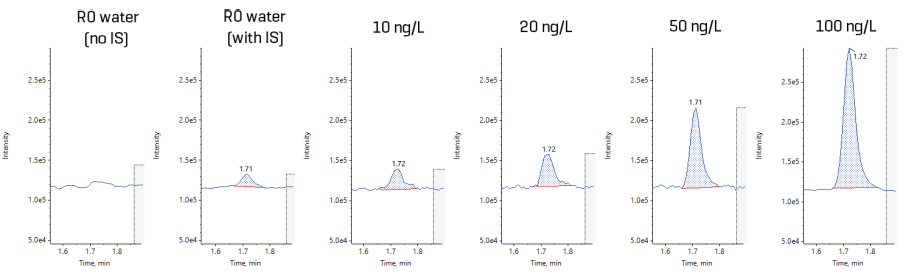
This technical note describes a robust, ultra-fast method for the quantitation of trifluoroacetic acid (TFA) in multiple water matrices, achieving a lower limit of quantitation (LLOQ) of 20 ng/L.

Explore more

Simultaneous quantitation of ultrashort-, short- and long-chain PFAS in water by a single direct injection LC-MS/MS method

This technical note describes a direct injection LC-MS/MS method for the simultaneous quantitation of ultrashort-, short- and long-chain per- and polyfluoroalkyl substances (PFAS), in water.

Learn more

Quantitation of ultrashort- and short-chain PFAS in beverages by a direct injection LC-MS/MS method

This technical note describes a direct injection LC-MS/MS method for the quantitation of ultrashort- and short-chain per- and polyfluoroalkyl substances (PFAS) in beverages.

Explore more

PFAS analysis solutions

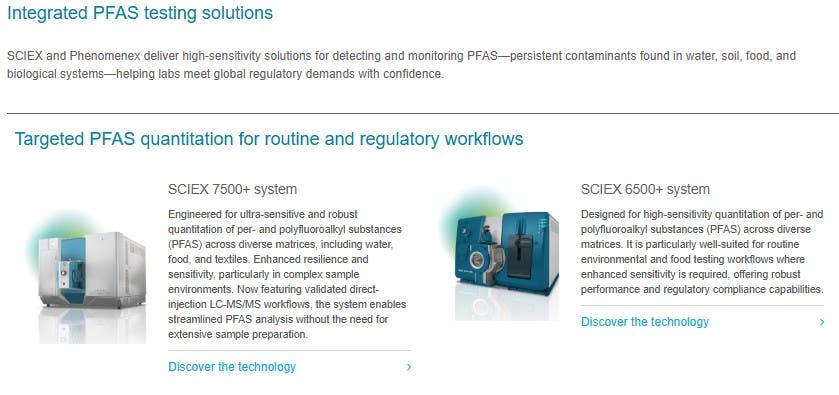
SCIEX and Phenomenex deliver high-sensitivity solutions for detecting and monitoring PFAS-persistent contaminants found in water, soil, food, and biological systems-- helping labs meet global regulatory demands with confidence. 

Read more

The forever changing world of PFAS testing

In this eBook, industry experts, research leaders, and internal application scientists present different perspectives enabling the scientific community to find the methodology and solutions that fit their needs.

Learn more

Blog post: The rise of TFA in Europe’s cereals: How SCIEX and Phenomenex empower accurate detection of this “forever chemical”

Read blog

Solution

Ultimate quantitation

Benefits:

  • Reliably quantify at low limits
  • Future-proof your methods
ExionLC AE system

Reproducibility, reliability and carryover performance to match your quantitative workflows. Dependability you can count on, from injection to injection and batch after batch.

Learn more
SCIEX 7500+ system

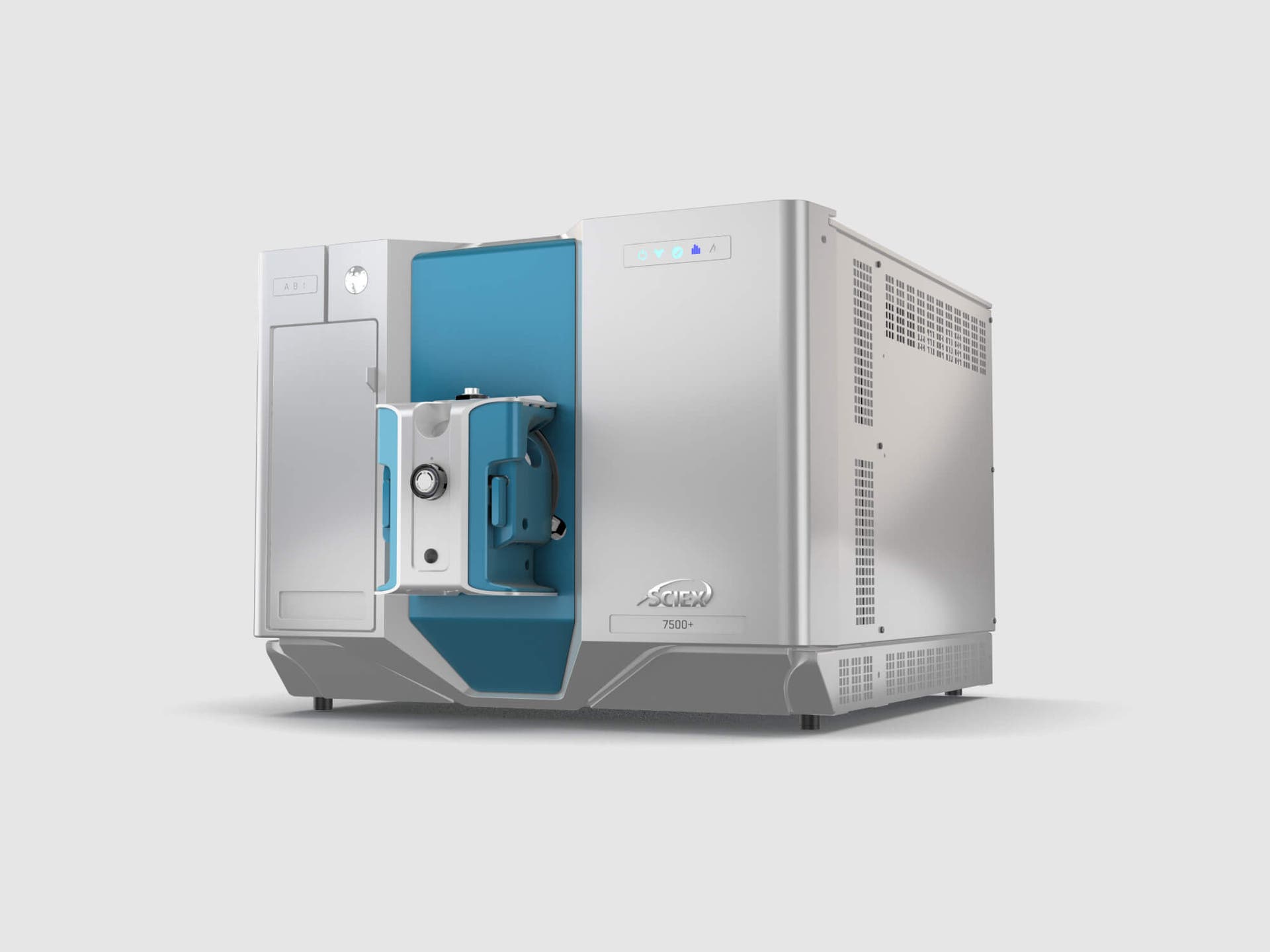
A new standard for instrument resilience and robustness. Engineered to maintain our highest sensitivity for up to twice as long in complex matrices.

Learn more
SCIEX OS software

Unleash the analytical power of the next-generation software platform for data acquisition and processing.

Learn more
Service

Keep your instruments performing at their peak, with multiple options for response time, repair coverage and maintenance.

Learn more

In case you missed it…

Catch up on past months topics

Each month, the Spotlight on series will highlight a different challenging molecule or class of compounds that is related to LC-MS solutions unmatched in sensitivity and accuracy that will help customers meet today’s and future needs.

Ultra-short chain PFAS

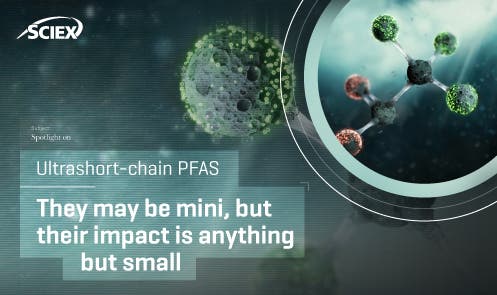
PFAS are often associated with long-chain “forever chemicals,” but growing concern is shifting to ultrashort-chain PFAS. With just 1–3 fully fluorinated carbons, these compounds are highly water soluble, mobile, and persistent — allowing them to travel far through water, soil, and agricultural systems. Understanding PFAS minis requires sensitive, selective analysis. Discover how SCIEX LC MS/MS workflows are helping labs detect and monitor ultrashort-chain PFAS across matrices

Learn more
Mass Guard technology

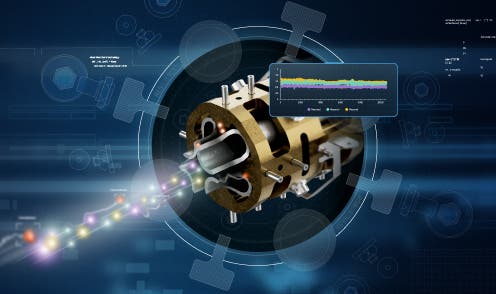
As labs push for ever‑lower quantitation limits in complex matrices and high‑throughput workflows, increasing ion transmission can also increase contamination—putting signal integrity, uptime, and productivity at risk. Sensitivity only delivers value when systems stay clean, stable, and online, even with challenging “dirty” matrices. Mass Guard technology reduces the risk and frequency of instrument contamination, and keeps your lab moving forward. Log in to learn more.

Learn more
Cyclic peptides

Cyclic peptides are stable, bioactive molecules that resist enzymatic breakdown and can target protein–protein interactions, making them valuable for treating conditions such as autoimmune disease, transplant rejection, and inflammation. While these complex molecules are challenging to analyze, advanced LC MS platforms like the SCIEX 7500+ and 7600+ systems deliver the sensitivity and resolution needed to advance their therapeutic potential.

Learn more
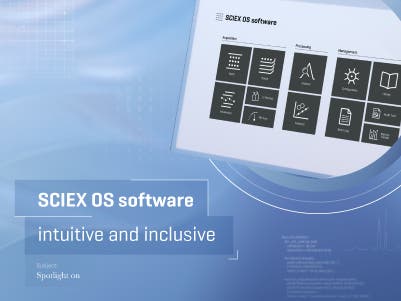
SCIEX OS software

SCIEX OS software streamlines instrument control and automates data processing to simplify lab workflows and support fast, informed decisions. It serves both new and experienced users by maintaining compliance through audit trails and role-based access, while automating routine tasks so scientists can focus on discovery. Designed for all the latest SCIEX mass spectrometry systems and now enhanced with Windows 11 support to meet IT security policies and reduce cybersecurity risks.

Learn more


GLP-1

GLP-1 is a multifaceted hormone that regulates blood glucose, influences appetite and weight, and provides cardiovascular benefits. Continued research and development of GLP-1-based therapies promise to advance and expand potential uses. The sensitivity, specificity, and versatility of LC-MS plays a major role in advancing GLP-1 research with new insights.

Learn more
Bile acids

Bile acid biochemistry was once poorly understood, but growing interest in the gut-brain axis and microbiome has sparked new research. LC-MS technology is advancing knowledge of bile acids' roles and potential as therapeutic targets and biomarkers.

Learn more
Oligonucleotides

Oligonucleotides are pivotal in genetic research, diagnostics, and therapeutics. Explore the intricacies of these molecules and how LC-MS technologies are propelling their research to new heights, enabling scientists to achieve exceptional levels of accuracy in oligonucleotide characterization and quantitation.

Learn more
Lipid mediators

Lipid mediators, a highly potent family of signaling molecules, perhaps best known for their role in inflammation. Due to their potent biological activities and often transient existence, precise and sensitive analytical techniques are essential for their study.

Learn more
Nitrosamines

Get a deeper understanding of what makes nitrosamines a concern, what is being done to understand and test for nitrosamines, and how SCIEX LC-MS solutions can help give you confidence in your quantitation needs: for today and tomorrow.

Learn more
PFAS

PFAS are an extensive, complex group of manufactured chemicals that are ubiquitous throughout the environment, accumulate from many different sources and whose consumption is currently unavoidable. With accumulating toxicity a rising concern, sensitive and resilient analysis is key to understanding exposure risks. LC-MS is considered the gold standard for detecting and quantifying PFAS molecules and has become the “defacto” methodology for analysis.

Learn more
Targeted protein degraders

Targeted protein degraders (TPDs), a cutting-edge approach in the field of drug development. By leveraging an event-driven mechanism that degrades unwanted or harmful proteins, rather than the traditional occupancy-driven approach, TPDs offer several significant therapeutic benefits that make them particularly promising for treating challenging conditions.

Learn more