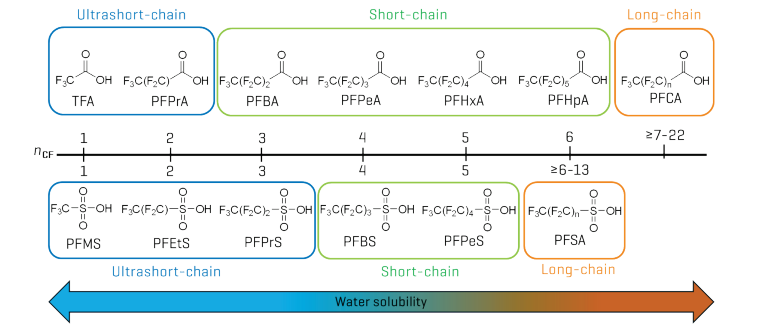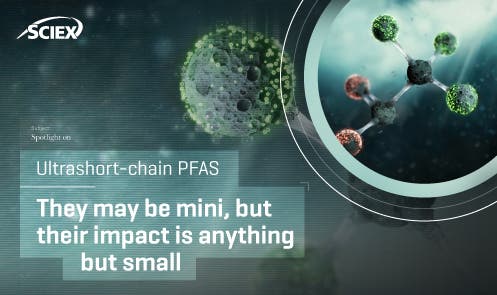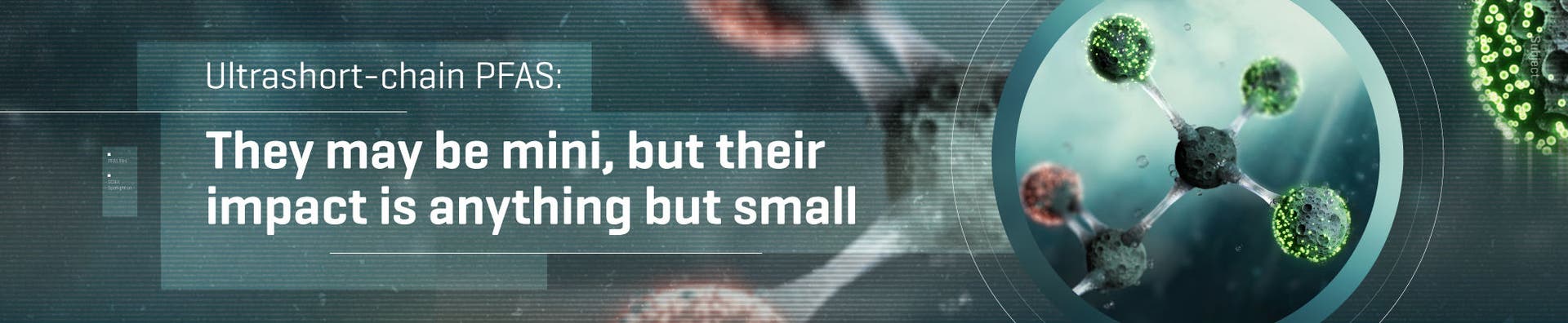
Ultrashort‑chain PFAS are perfluoroalkyl acids containing one to three fully fluorinated carbons (C1 to C3). This class of compounds commonly includes trifluoroacetic acid (TFA), perfluoropropanoic acid (PFPrA), and perfluoromethane sulfonic acid (PFMS), and like their longer-chain counterparts, are highly persistent and extremely water‑soluble, properties that allow them to move readily through environmental and agricultural systems and often travel far from their original sources. They are difficult to remove using conventional water‑treatment strategies and continue to enter the environment through industrial emissions, atmospheric transformation, and the degradation of longer‑chain PFAS. Once considered lower risk because they do not bioaccumulate to the same extent as larger PFAS molecules, ultrashort‑chain PFAS are now under increased scrutiny for their potential impact on water quality, food safety, and ecosystem health. They are among the fastest‑growing priorities in environmental monitoring and regulatory oversight.
Ultrashort‑chain PFAS differ from short‑chain (typically C4 to C6) and long‑chain PFAS (C7 and above) primarily by carbon‑chain length and the resulting physicochemical properties:
- Water solubility: As the carbon chain becomes shorter, water solubility increases significantly. Ultrashort‑chain PFAS, having only one to three carbons in the chain, are the most water‑soluble of the PFAS family, which contributes to their high mobility.
- Hydrophobicity and sorption: Longer‑chain PFAS possess higher hydrophobicity and bind more strongly to soils, sediments, and biological tissues. In contrast, ultrashort‑chain PFAS exhibit weak sorption, meaning they pass more freely through soils and surface waters instead of accumulating.
- Bioaccumulation behavior: Long‑chain PFAS are well known for their tendency to bioaccumulate in wildlife and humans, while short‑chain PFAS show reduced but still measurable persistence in organisms. Ultrashort‑chain PFAS are typically found in fruits and vegetables rather than meats or other protein-rich foods because of their tendency to accumulate in water and plants.