Spotlight on: QTRAP 

What is QTRAP?

In laboratories around the world, scientists are increasingly confronted with a paradox: they must measure ever‑smaller traces of chemicals - drugs in blood, pollutants in water, metabolites in food - while also proving, with certainty, what those substances actually are. For years, these tasks required different kinds of instruments, or multiple analytical runs. SCIEX QTRAP systems collapse that divide.

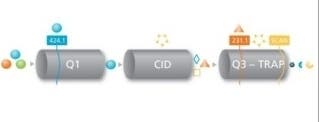
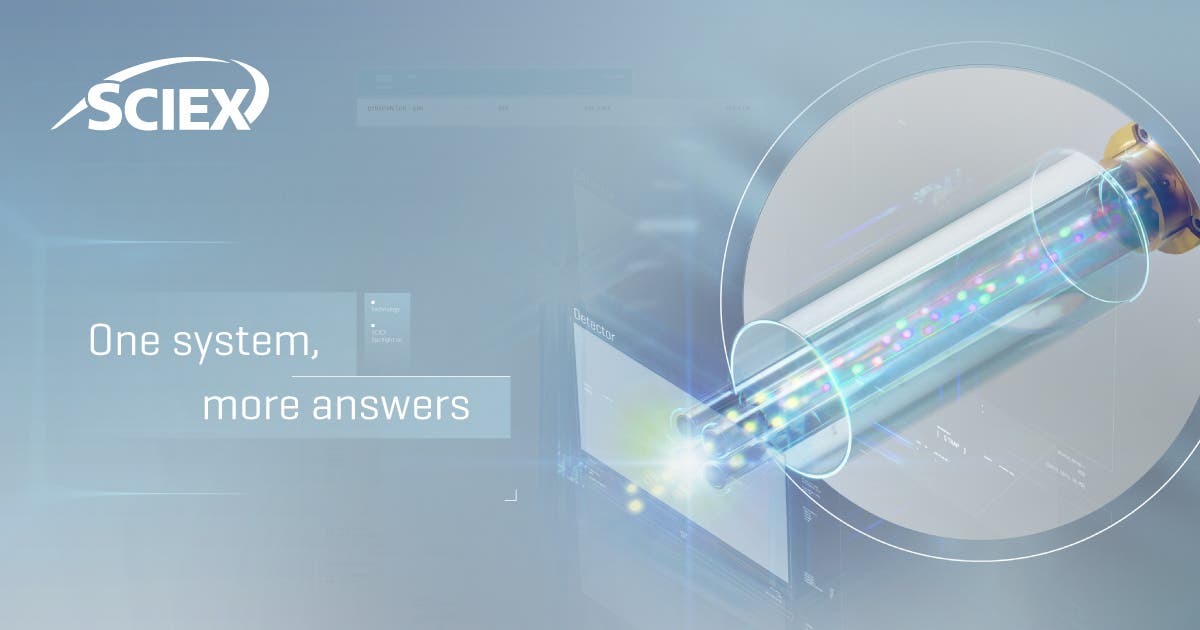
SCIEX QTRAP systems are hybrid mass spectrometers that pair a traditional triple quadrupole that excels at quantifying known compounds with extraordinary sensitivity with a linear ion trap (LIT) as Q3 to trap and accumulate ions, delivering information-rich, structural information simultaneously. This means you get precision quantitation and structural insight - not just in one platform, but in one run.

How does it work? RF (radio-frequency) fields are applied to the quadrupole rods to confine the ions radially while DC voltages are applied to the lenses at both ends, essentially creating a potential barrier that keeps the ions inside the trap. The ions are cooled briefly with background gas, and then scanned out depending on the type of scan function selected. The result is high-sensitivity data that brings qualitative information to a triple-quad backbone.

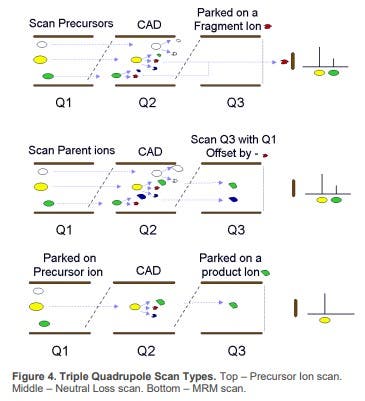
SCIEX QTRAP systems support the full suite of traditional triple quadrupole scan modes, including MRM, product‑ion scans, precursor‑ion scans, and neutral‑loss scans, plus all the LIT‑based scan functions such as Enhanced Product Ion (EPI), high‑sensitivity precursor‑ion experiments, and MS³‑style workflows (MRM3). All this functionality comes without any changes in sensitivitym robustness, or performance factors.
Why hybrid triple quadrupole–linear ion trap architecture matters

This dual capability matters because modern analytical questions rarely stop at “how much?” Regulators, clinicians and researchers increasingly need proof - confirmation that a detected signal truly belongs to a specific compound, not an interference or artifact.

By unifying quantitation and ion‑trap–based confirmation, QTRAP instruments streamline screening, identification, and quantitative processes within one workflow.

Conventional triple quadrupoles provide excellent sensitivity for targeted analysis but are limited in their ability to generate detailed structural information, and in MRM mode any structural information is simply not captured. Ion traps and QTOF-type instruments, conversely, enable rich MS/MS spectra but do not match the quantitative robustness of triple-quad instruments.

QTRAP systems integrate both modalities and have several benefits:
 

  • They have a high ion storage capacity which reduces space-charge effects and allows more ions to be interrogated per experiment

  • Linear ion traps scan on the same time scale as triple quadrupole scans, making them well-suited for workflows where high duty cycles are important

  • SCIEX QTRAP systems retain all the quantitative triple quadrupole functionalities with no loss in sensitivity, while simultaneously able to perform survey scans making it an incredibly versatile instrument

By enabling both high‑sensitivity quantitation and ion‑trap–based confirmation, QTRAP systems give laboratories access to a unified workflow for screening, identification, and quantitation. This dual‑mode performance has made QTRAP systems versatile tools across fields such as environmental testing, food and beverage analysis, drug discovery, and protein or metabolite characterization.

What analytical challenges do QTRAP systems overcome?

Analytical laboratories frequently encounter challenges that conventional triple quadrupoles alone cannot fully resolve. The hybrid functionality of QTRAP systems is designed to address these needs:
 

  • Structural ambiguity in targeted workflows
    In complex matrices, MRM transitions may be insufficient to definitively confirm analyte identity. Enhanced Product Ion (EPI) scans generate information‑rich MS/MS spectra that strengthen structural confirmation.

  • Co‑eluting interferences and matrix complexity
    High‑matrix samples often contain isobaric or near‑isobaric interferences. MRM³ (MS³) capability adds an additional fragmentation stage to improve selectivity and reduce false positives, without additional sample prep.

  • Quantitation and verification in a single injection
    Many methods require both accurate quantitation and structural verification. QTRAP supports simultaneous MRM quantitation and linear ion trap–based confirmation within the same method, streamlining workflows in environmental, food, forensic, and clinical applications.

  • Detection of low‑abundance species
    Ion trapping enhances signal quality for analytes with weak or noisy transitions, enabling detection of trace‑level metabolites or degradation products that may be missed by standalone triple-quad systems

How SCIEX implements QTRAP system architecture

The introduction of QTRAP to our triple quadrupoles marked a major transition in SCIEX instrument development. QTRAP systems were the first commercial integration of triple‑quadrupole and linear‑ion‑trap technologies in a single platform., extending the analytical range of SCIEX quantitative instruments by adding powerful discovery‑oriented scan modes while maintaining the speed, ruggedness, and sensitivity that define SCIEX Triple Quad platforms.

And because QTRAP capabilities are built on the same core architecture as SCIEX Triple Quad systems, laboratories can adopt these advanced scan modes without additional hardware or changes to existing chromatographic setups. This consistency allows teams to extend established methods without disrupting validated workflows or reoptimizing separation methods. Additionally, there is no need to change established MRM conditions nor add complexity to day-to-day operations.

Overcome quantitation challenges due to complex matrices, increase throughput by decreasing sample rechecks, find unknowns in your samples, and identify your compound with confidence using specific and user-configurable libraries—all without sacrificing accurate quantitation results. 

Capabilities and milestones of QTRAP systems

  • QTRAP systems were among the first LC‑MS/MS platforms to integrate a triple‑quadrupole analyzer with a linear ion trap, enabling combined quantitative and structural workflows within a single instrument.
  • Successive generations have expanded linear ion trap‑based scan performance, improving ion‑capture efficiency and MS/MS spectral quality for low‑abundance analytes.
  • QTRAP systems offer a broad set of trap‑enabled scans, including EPI, precursor‑ion, neutral‑loss, and MS³‑type experiments, which allow analysts to collect both targeted and exploratory data in the same acquisition.
  • The systems have supported key advancements in applications such as metabolite identification, impurity profiling, structural confirmation, and multi‑class screening in environmental, food, clinical, and pharmaceutical workflows.
  • The hybrid architecture continues to serve as a foundation for workflows requiring more detailed information than standard MRM alone can provide, without the need to add a separate ion‑trap or high‑resolution MS instrument.

Why choose QTRAP systems from SCIEX?

  • QTRAP systems combine the quantitative robustness of SCIEX Triple Quadrupole instruments with added qualitative depth from linear ion‑trap scan modes, offering a unified platform for diverse analytical needs.

  • SCIEX engineering, such as stable ion‑optics, proven source designs, and reliable electronics, supports fast and reproducible performance when switching between MRM and LIT‑based scans.

  • Mature method frameworks and coordinated acquisition software simplify the creation of hybrid workflows, minimizing training time and easing integration into established laboratory processes.

  • QTRAP systems provide long‑term value for labs that require both trace‑level quantitation and structural confirmation, eliminating the need to maintain multiple systems for complementary functions.

Explore more below:

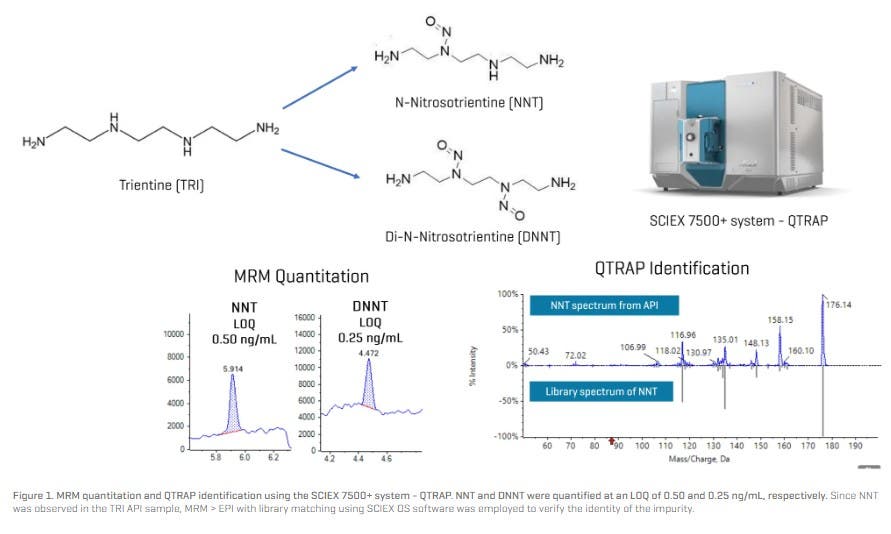
Trientine NDSRI analysis using QTRAP identification and MRM quantitation

This technical note demonstrates a comprehensive method for sensitive MRM quantitation and confident identification of compounds in an API using the SCIEX 7500+ system.

Explore more

Powerful scan modes of QTRAP technology

Learn about the many scan modes that enable simultaneous quantitative and qualitative experiments on the same triple quadrupole platform, without performance losses.

Learn more

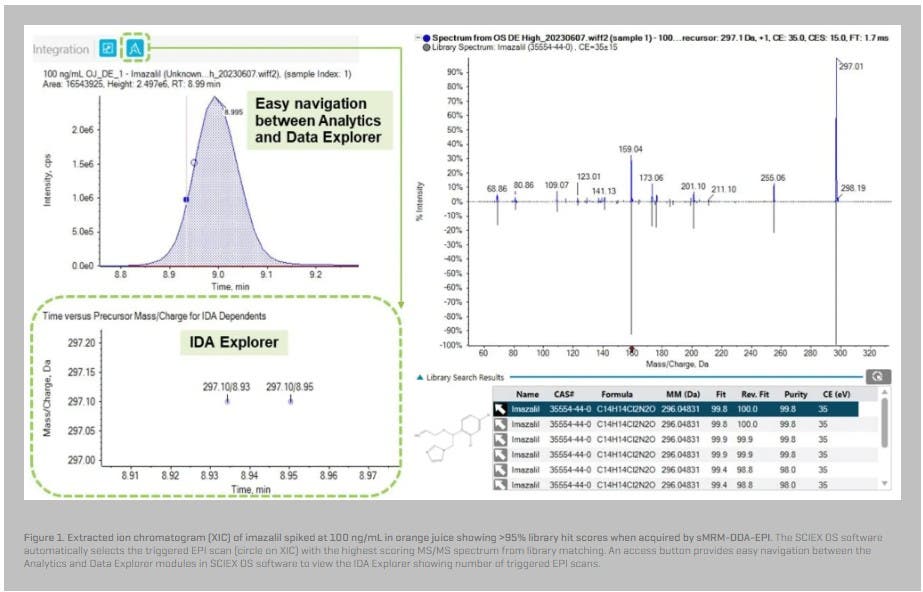
Improving confidence in pesticides identification in food using QTRAP technology

Here we describe a MS/MS spectral library searching workflow for the confident identification of >200 pesticide in orange juice on the SCIEX 5500+ system. 

Explore more

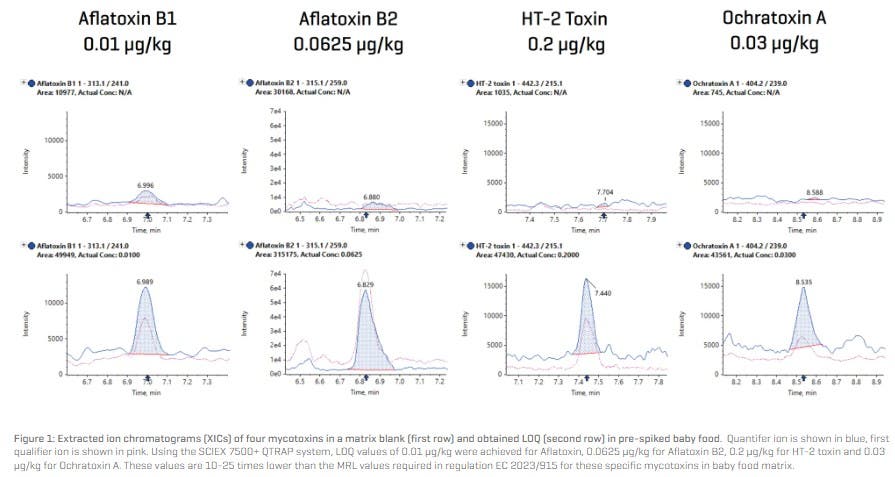
Quantitation of mycotoxins and tropane alkaloids in food using SCIEX 7500+ system and QTRAP technology

Simultaneous MRM and MRM3 experiments in a single analytical method were used to remove matrix interferences and reduce baseline noise.

Read more

Quantification of the therapeutic peptide exenatide in human plasma with MRM3

A bioanalytical assay for exenatide in human plasma was successfully developed using MRM3 to reduce baseline noise and chromatographic interferences, improving analytical performance compared to standard MRM approaches.

Learn more

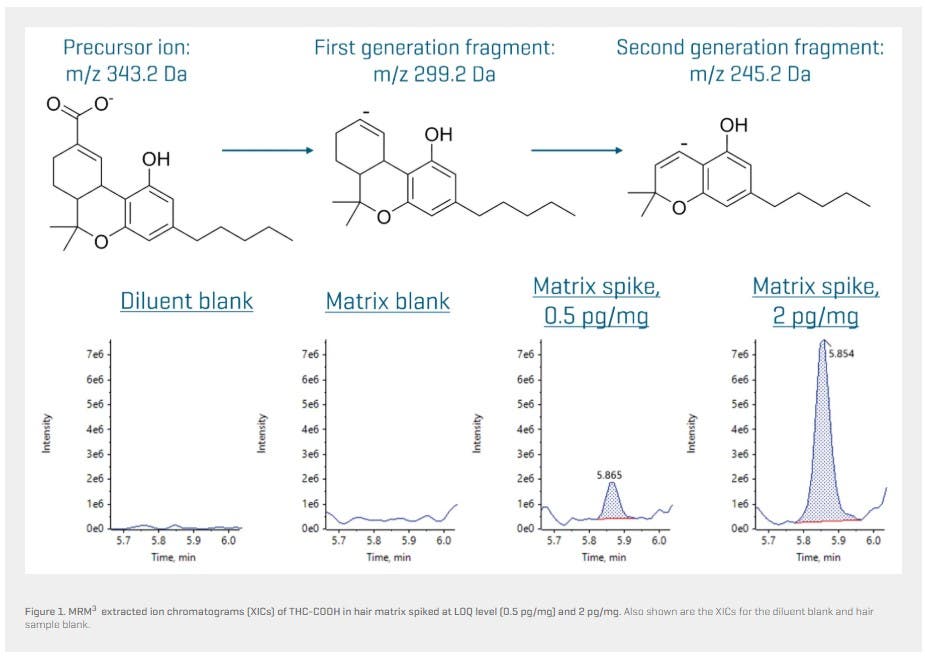
Quantitation of 11-nor-9-carboxy-THC (THC-COOH) in hair samples using MRM3 acquisition

Achieve chromatographic separation from hair matrix interferences and a 10-fold lower limit of quantitation (LOQ) relative to MRM method when using the QTRAP 6500+ system and MRM3 acquisition

Read more

Solution

Ultimate quantitation

Benefits:

  • Reliably quantify at low limits
  • Future-proof your methods
ExionLC AE system

Reproducibility, reliability and carryover performance to match your quantitative workflows. Dependability you can count on, from injection to injection and batch after batch.

Learn more
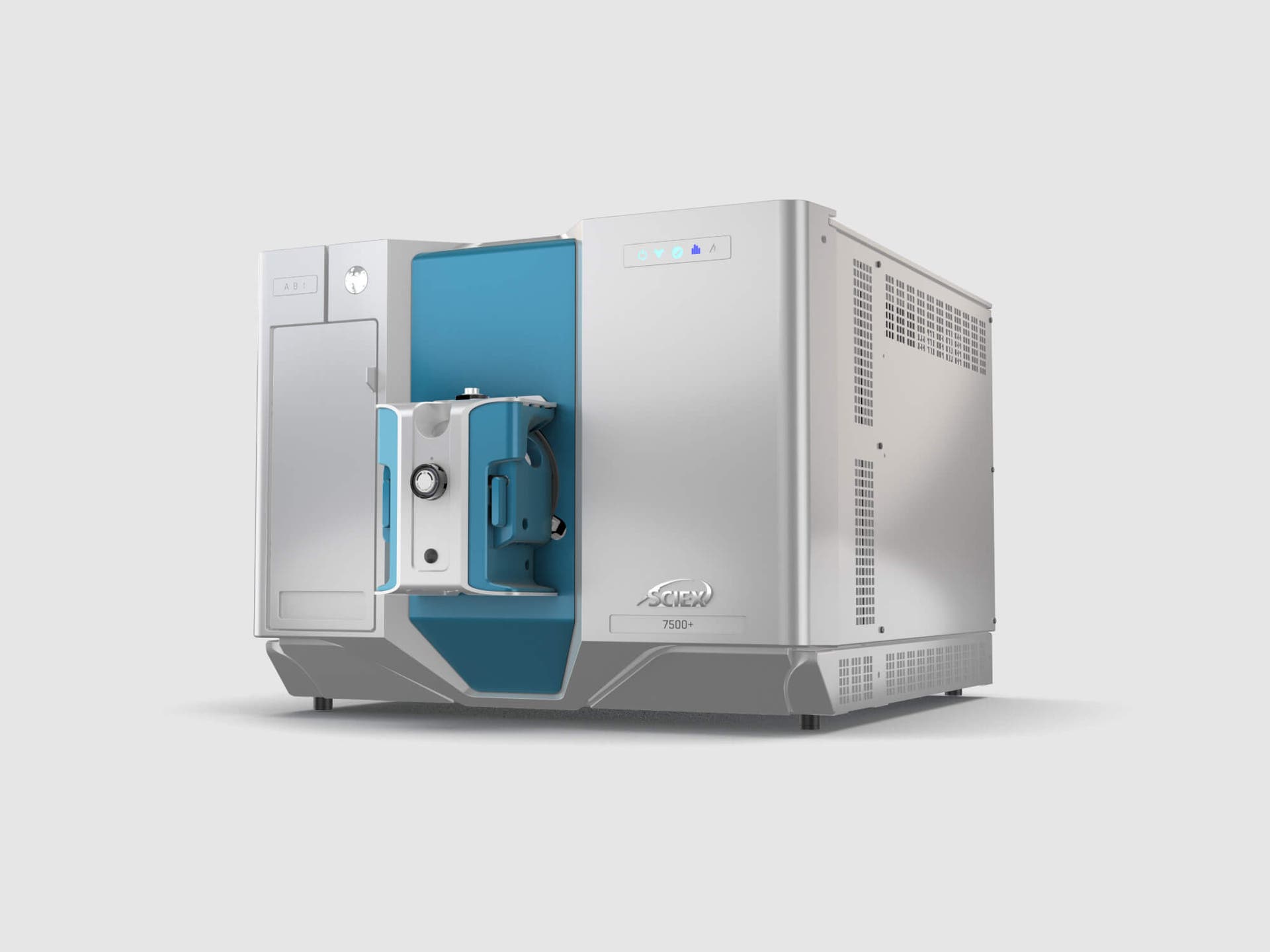
SCIEX 7500+ system

A new standard for instrument resilience and robustness. Engineered to maintain our highest sensitivity for up to twice as long in complex matrices.

Learn more
SCIEX OS software

Unleash the analytical power of the next-generation software platform for data acquisition and processing.

Learn more
Service

Keep your instruments performing at their peak, with multiple options for response time, repair coverage and maintenance.

Learn more

In case you missed it…

Catch up on past months topics

Each month, the Spotlight on series will highlight a different challenging molecule or class of compounds that is related to LC-MS solutions unmatched in sensitivity and accuracy that will help customers meet today’s and future needs.

QTRAP

Scientists need more than accurate quantitation; they need confidence in their results. QTRAP systems combine the sensitivity of a triple quadrupole with the structural insight of a linear ion trap, enabling quantitation and confirmation in a single workflow. Discover how QTRAP technology helps laboratories gain deeper analytical insight without adding complexity.

Learn more
Ultra-short chain PFAS

PFAS are often associated with long-chain “forever chemicals,” but growing concern is shifting to ultrashort-chain PFAS. With just 1–3 fully fluorinated carbons, these compounds are highly water soluble, mobile, and persistent — allowing them to travel far through water, soil, and agricultural systems. Understanding PFAS minis requires sensitive, selective analysis. Discover how SCIEX LC MS/MS workflows are helping labs detect and monitor ultrashort-chain PFAS across matrices

Learn more
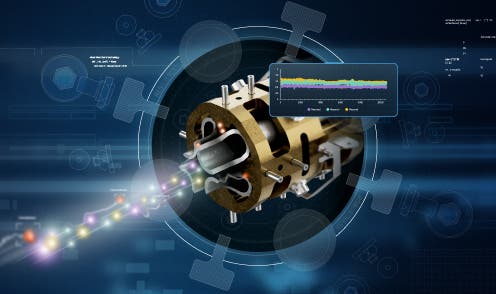
Mass Guard technology

As labs push for ever‑lower quantitation limits in complex matrices and high‑throughput workflows, increasing ion transmission can also increase contamination—putting signal integrity, uptime, and productivity at risk. Sensitivity only delivers value when systems stay clean, stable, and online, even with challenging “dirty” matrices. Mass Guard technology reduces the risk and frequency of instrument contamination, and keeps your lab moving forward. Log in to learn more.

Learn more
Cyclic peptides

Cyclic peptides are stable, bioactive molecules that resist enzymatic breakdown and can target protein–protein interactions, making them valuable for treating conditions such as autoimmune disease, transplant rejection, and inflammation. While these complex molecules are challenging to analyze, advanced LC MS platforms like the SCIEX 7500+ and 7600+ systems deliver the sensitivity and resolution needed to advance their therapeutic potential.

Learn more


SCIEX OS software

SCIEX OS software streamlines instrument control and automates data processing to simplify lab workflows and support fast, informed decisions. It serves both new and experienced users by maintaining compliance through audit trails and role-based access, while automating routine tasks so scientists can focus on discovery. Designed for all the latest SCIEX mass spectrometry systems and now enhanced with Windows 11 support to meet IT security policies and reduce cybersecurity risks.

Learn more
GLP-1

GLP-1 is a multifaceted hormone that regulates blood glucose, influences appetite and weight, and provides cardiovascular benefits. Continued research and development of GLP-1-based therapies promise to advance and expand potential uses. The sensitivity, specificity, and versatility of LC-MS plays a major role in advancing GLP-1 research with new insights.

Learn more
Bile acids

Bile acid biochemistry was once poorly understood, but growing interest in the gut-brain axis and microbiome has sparked new research. LC-MS technology is advancing knowledge of bile acids' roles and potential as therapeutic targets and biomarkers.

Learn more
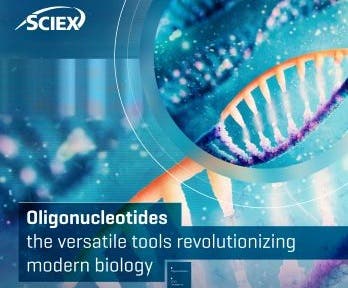
Oligonucleotides

Oligonucleotides are pivotal in genetic research, diagnostics, and therapeutics. Explore the intricacies of these molecules and how LC-MS technologies are propelling their research to new heights, enabling scientists to achieve exceptional levels of accuracy in oligonucleotide characterization and quantitation.

Learn more
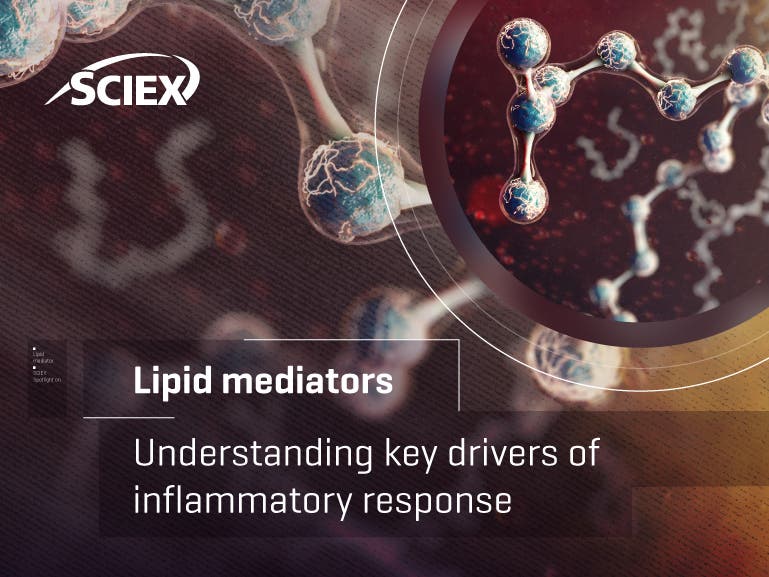
Lipid mediators

Lipid mediators, a highly potent family of signaling molecules, perhaps best known for their role in inflammation. Due to their potent biological activities and often transient existence, precise and sensitive analytical techniques are essential for their study.

Learn more
Nitrosamines

Get a deeper understanding of what makes nitrosamines a concern, what is being done to understand and test for nitrosamines, and how SCIEX LC-MS solutions can help give you confidence in your quantitation needs: for today and tomorrow.

Learn more
PFAS

PFAS are an extensive, complex group of manufactured chemicals that are ubiquitous throughout the environment, accumulate from many different sources and whose consumption is currently unavoidable. With accumulating toxicity a rising concern, sensitive and resilient analysis is key to understanding exposure risks. LC-MS is considered the gold standard for detecting and quantifying PFAS molecules and has become the “defacto” methodology for analysis.

Learn more
Targeted protein degraders

Targeted protein degraders (TPDs), a cutting-edge approach in the field of drug development. By leveraging an event-driven mechanism that degrades unwanted or harmful proteins, rather than the traditional occupancy-driven approach, TPDs offer several significant therapeutic benefits that make them particularly promising for treating challenging conditions.

Learn more